Zeus is a god of apparent paradox: sublimely regal yet ridiculously fickle, a giver of laws but a slave to his own passions, a being of incredible power who is desperate to possess that which he cannot have. As the leader of the Greek pantheon on Mount Olympus, Zeus was the god of kingship (and the associated elements of law, oaths, the state and the protection of property) and the god of storms, controlling lightning, wind and thunder.In many ways, one of ancient Greece’s most complex gods is also the most understandable, since he seems so human, and because there is plenty of information about him that survived, including the original legends about his birth, his early deeds and his many relationships with other gods, lovers, and humans. Furthermore, scholars have been able to analyze the historical roots of “Zeus” as a concept, identifying what gods he is related to among other cultures, where the legends of Zeus originated, and what this information says about the ancient Greeks.One of the reasons Zeus remains one of the most recognizable gods in history is because of the spread of his influence. Due to the conquests of Alexander the Great, Zeus was brought along with other elements of Hellenization to Egypt and the Near East, and a few centuries later, Rome all but adopted him as their own chief god, Jupiter. From there, he was exported around the Roman Empire and fused with numerous other local gods in the process. Ultimately, Zeus was a prominent god from the period of pre-recorded history until the Christianization of Greece, which was complete by the early 7th century A.D.The Greek god Hades is something of an enigma. On the one hand, people can view him through the lens that was a byproduct of the Christian tradition, as a terrifying lord of death seated upon his ebony throne, an unseen force of power moving through the world. Certainly, many of the ancient Greeks themselves saw the god in this light, whispering his name and making sacrifices of black sheep on dark nights and allowing the blood to trickle down into the earth to reach the underworld. On the other hand, there is a parallel Greek tradition that depicts Hades as a regal god and more of a dark parallel to his brother Zeus, who bears the same icons of sovereignty and may have some deep link to him in a primordial sense.The name “Hades” literally means “Unseen”, but the Greeks had a superstitious fear of calling Hades by his proper name and thus created numerous ways of referring to the god. For instance, “Euboleus” means “Giver of Good Counsel,” and “Polydectes” meant “he who receives many,” “Stygeros” means “hateful one,” and “Polydegmon” meant either “grey man” or “hospitable one.” The most popular name was “Plouton” which means “wealth-giver” and referred to Hades’ role in guarding the treasures of the earth. That name was eventually adopted and altered by the Romans to become their god “Pluto.” Other names used for the god included Aidoneus, Ais, Clymenus and Pylartes.Poseidon is one of the most easily recognizable characters in all of ancient Greek mythology. His signature trident is iconic; one sight of it invariably floods the modern mind with images of aquatic chariots and daunting typhoons. But there is so much more to the character of Poseidon than maritime denizens and disasters, which shouldn’t really come as a surprise.Poseidon was one of the most revered gods of the ancient Mediterranean for centuries — if not millennia — and that kind of reverence brings with it the layering of myths, rituals, and history like the strata of sediments on a river bed. The idea of a god like Poseidon being only the god of the sea is too minimalistic and too reductionist to come anywhere near the truth of how an ancient worshipper may have pictured him in her prayers.
save
$4.99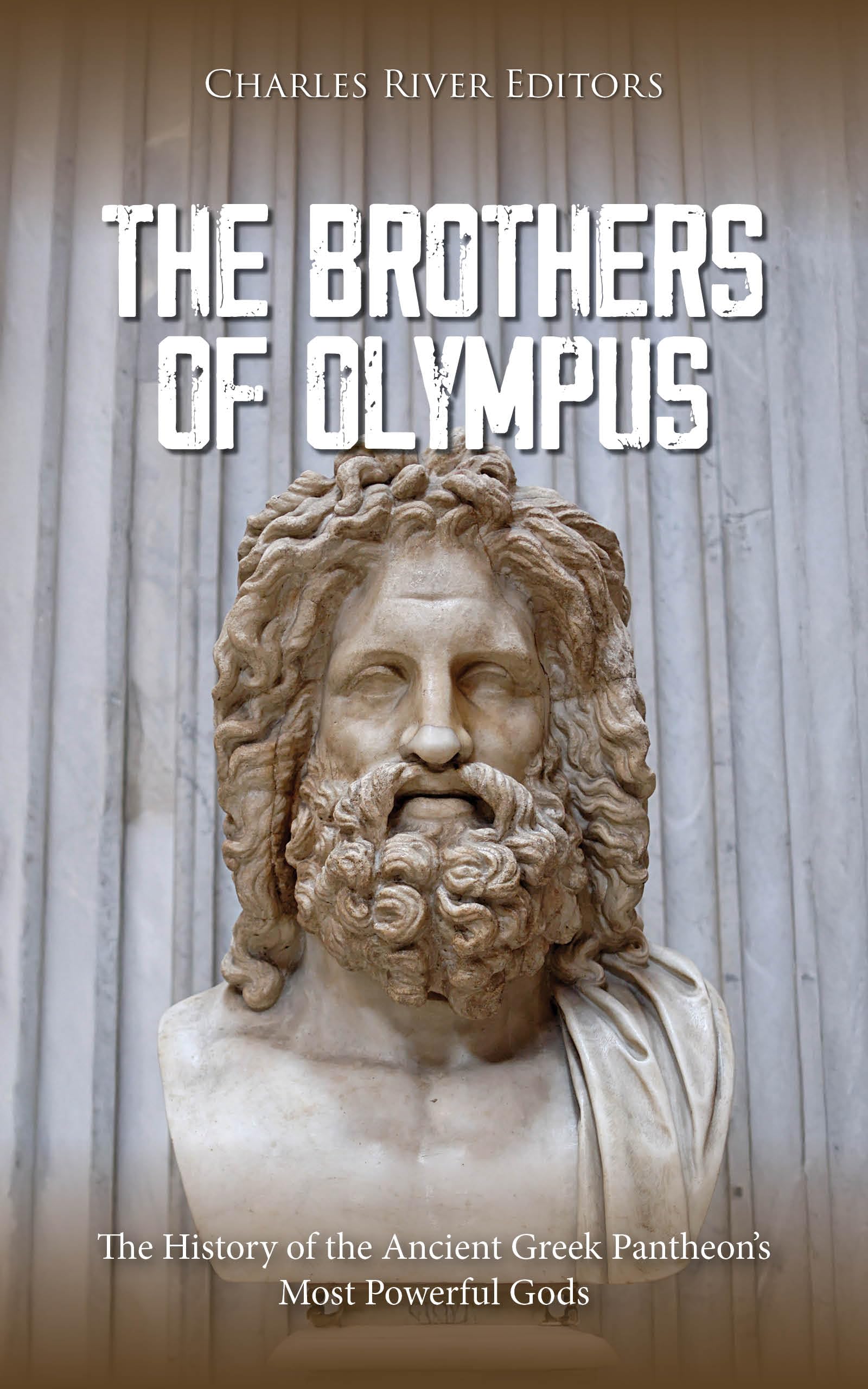
The Brothers of Olympus: the History of the Ancient Greek Pantheon’s Most Powerful Gods
$0.00$4.99
Explore the complexities of Greek gods Zeus, Hades, and Poseidon, revealing their human-like traits, myths, and historical impact across cultures and time. Ideal for myth enthusiasts!