
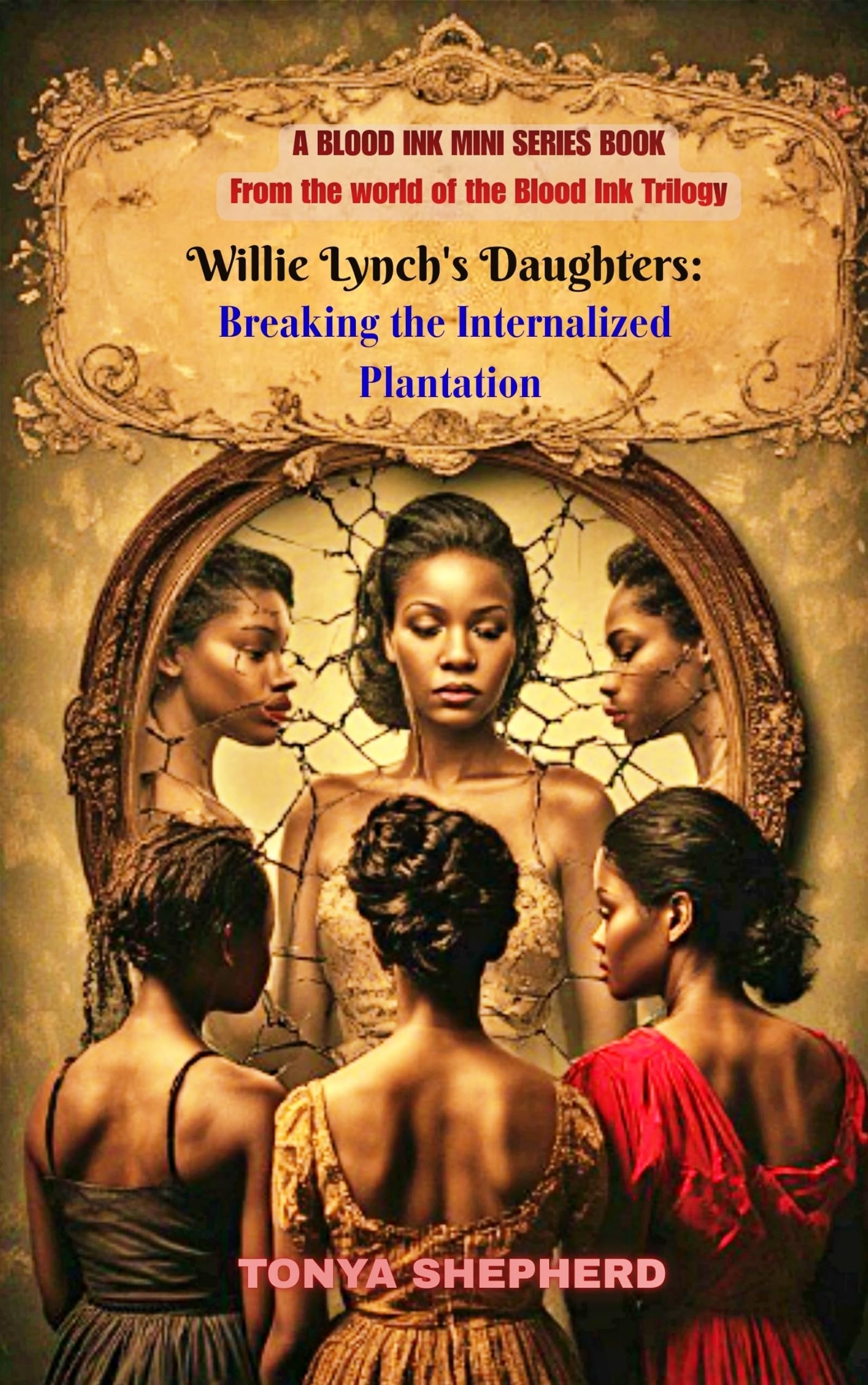
Content Warning: This book contains mature themes, including graphic depictions of historical racialized violence, psychological trauma, colorism, and systemic abuse. It is intended for mature readers ready to engage in honest, healing conversations about the inherited wounds carried by Black women.
In Willie Lynch’s Daughters: Breaking the Internalized Plantation, I examine the Black female psyche through the lens of America’s original sin. This book explores how the infamous “Willie Lynch Letter”—a brutal blueprint for enslaving a people—specifically weaponized Black womanhood. More importantly, it is a guide toward recognizing these internalized chains and breaking them.
Introduction: The Unmaking of Flesh confronts the original wound: the unspeakable reality of being female and enslaved—the negation of bodily autonomy, the weaponization of womb and breast. Before we can understand the internalized plantation, we must witness the external one.
Part 1 returns to the source—the Willie Lynch Letter itself—the seed from which gendered violence grew.
Part 2: Where Was God? sits in the discomfort of this question echoing through generations, exploring the theological crisis enslavement created without offering easy answers.
Part 3: The Master’s Girl confronts how the hypersexualization of Black women was an engineered strategy whose echoes still resonate in contemporary relationships and the internal compass of what feels like “worth.”
Part 4: The Double Yoke forms the heart of this work, confronting the unique burden of racial and gendered oppression. It examines why a “fake” document feels devastatingly true to those who’ve lived its legacy, how Lynch’s blueprint targeted “The Woman” as critical leverage, and colorism as a manufactured hierarchy dividing sisters.
It names the mental chains still caging Black women—the “Mammy,” “Sapphire,” and “Jezebel”—not as stereotypes but as weapons, scripts still performed. It explores lateral violence, the “Strong Black Woman” trap, mother-daughter inheritances, the trust deficit poisoning relationships, and social media as a “Digital Plantation” where Black women’s pain is harvested for public consumption.
Freedom offers a pathway toward dismantling the internalized plantation—a call to radical self-interrogation and rejecting scripts never ours to follow.
Part 5 offers a transparent conversation with the AI that assisted this work. Parts 6-7 provide reading recommendations and acknowledge the larger conversation about collective liberation.
Willie Lynch’s Daughtersis an act of love in its most rigorous form—a mirror held up not to shame, but to reveal. It is an invitation for Black women to see the architecture of their own cages, recognize the gatekeepers within, and finally walk free.


