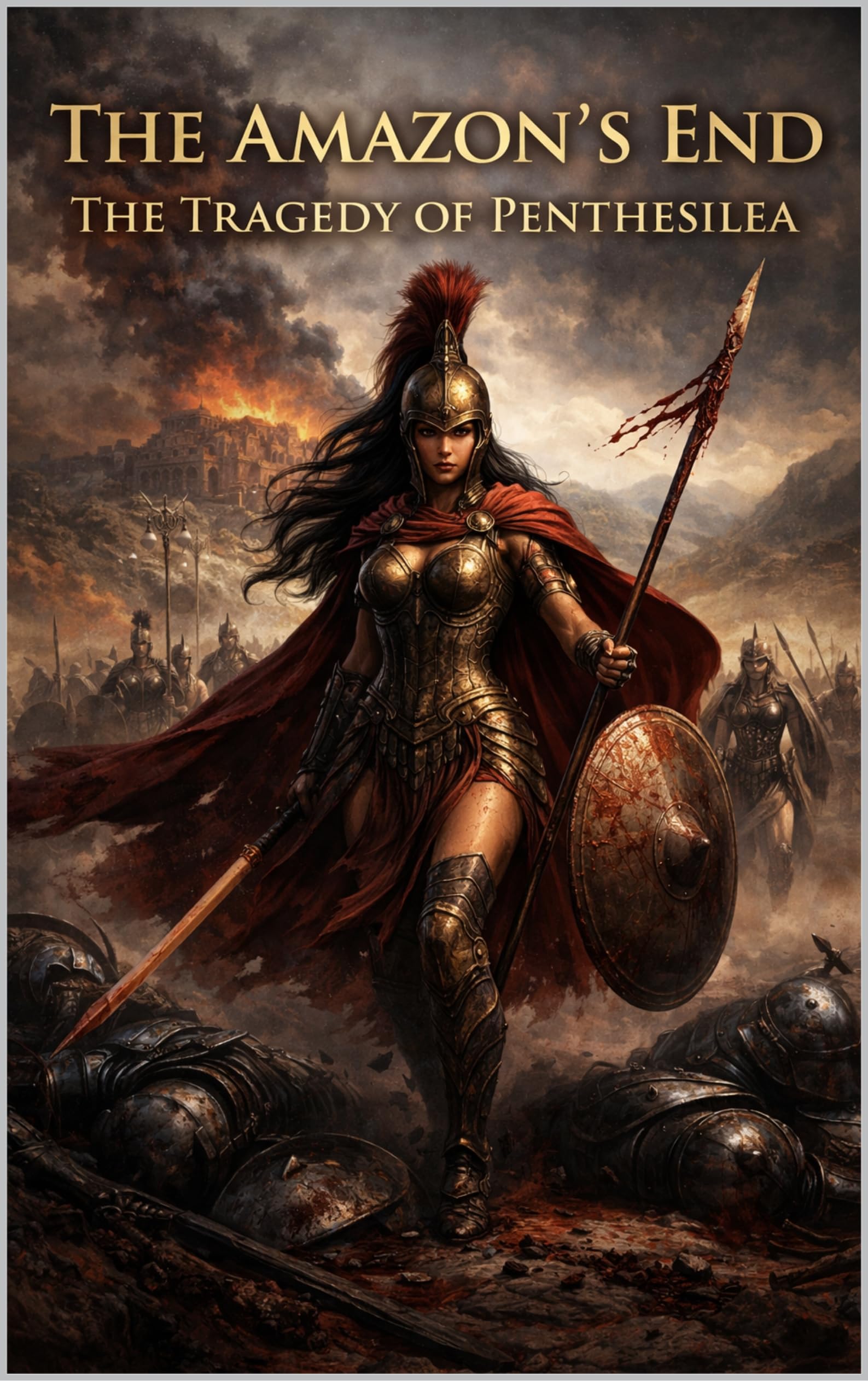
She killed her sister. That was the accident. What came after was not.
Penthesilea is war-queen of the Amazons — until the morning a single javelin throw kills the one person in the world she cannot survive losing. In the months that follow she stops eating, stops sleeping, starts seeing her sister at the edges of rooms. She has learned something about grief: it does not stay in the rooms you build for it. And she has learned something about the death wish: it is very good at presenting itself as purpose.
When news arrives that Troy is falling, she leads thirteen warriors south across five hundred miles of mountain and plain to fight for a city that cannot be saved. The queen of Troy sees through her immediately. You are not a woman who has come to save a city, Hecuba tells her. You are a woman who has come to die in front of one. Penthesilea does not deny it.
On the plain of Troy she will meet Achilles — half-divine, wholly alone, sitting in his tent since Patroclus died, waiting in the dark for something he cannot name. When he watches her fight, he understands: she fights the way he fights, without self-preservation, as though the outcome is already decided. He has been doing the same thing, only more slowly.
They will duel for an hour on the morning plain. He will laugh. She will bleed. It will be the finest fight of the war — and the saddest, because what they discover in each other, they discover too late.
The Amazon’s End is a novel about guilt that cannot be paid off through suffering, about grief that has nowhere left to go, about what we are willing to give away for the chance to put down what we have been carrying. It asks what it costs to be truly seen — when the only language you both speak is bronze.
He killed her, and then he loved her. The order of those two things is the whole story.