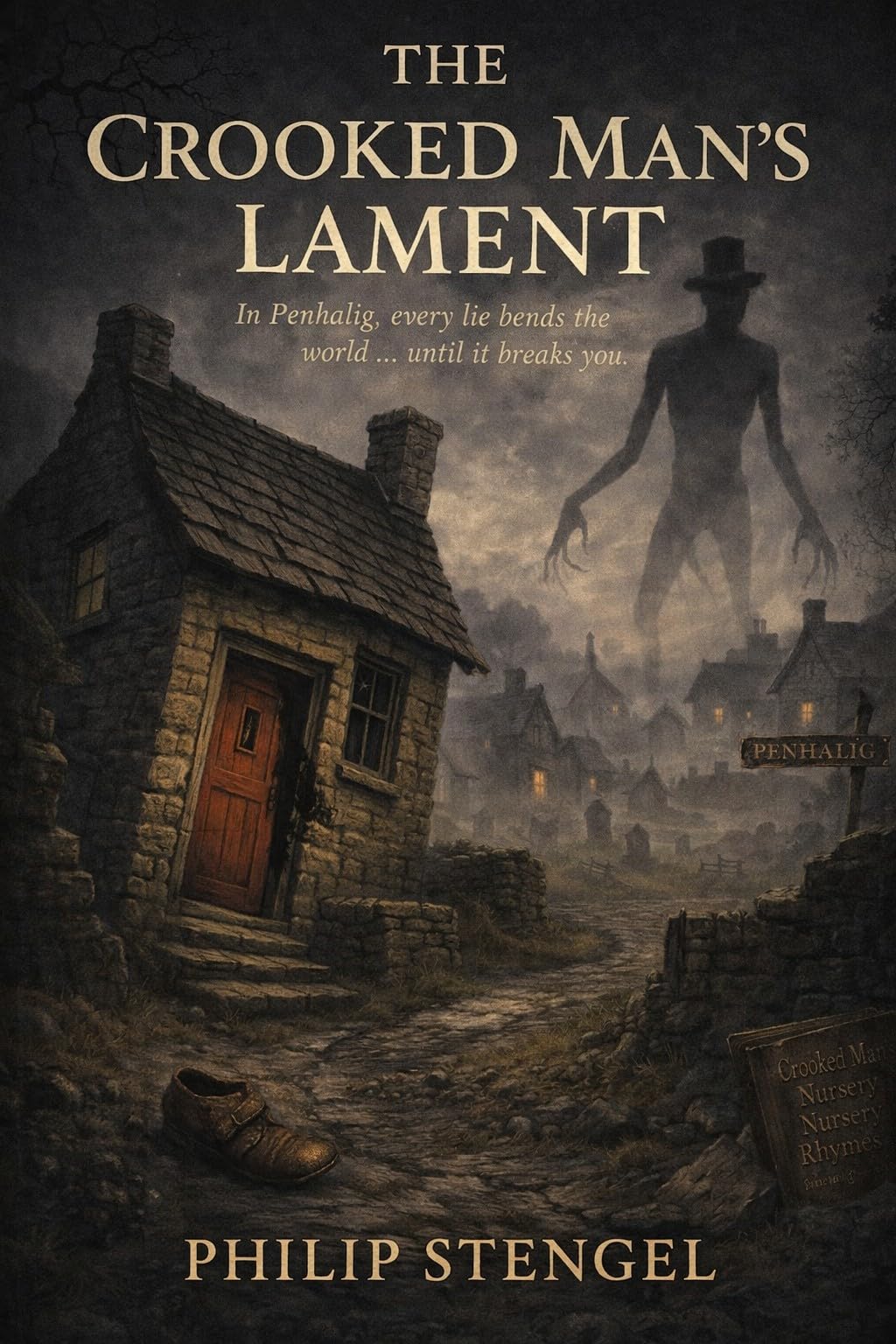
When Lila Cawthorne returns to the moor village of Penhalig after her father’s death, she expects grief, probate, and the familiar bitterness of a place she left behind years ago. Instead she finds a village physically and morally out of line. Doorframes lean. Gravestones bow. Roads fold back on themselves. Children speak altered nursery verses as if they are weather reports. And in the corners where walls stop meeting cleanly, something old has started listening again.
As Lila digs into her father’s cottage, she uncovers the true wound beneath Penhalig’s dread: a hidden ledger proving that Arthur Cawthorne betrayed his neighbors during the strike years, naming private meetings, family weaknesses, and village loyalties in exchange for his own protection. The land has kept that score. What the village buried in silence has begun returning as judgment, bending timber, stone, roads, hymns, and human bodies into the shape of unconfessed lies. The Crooked Man is not just a folklore figure. He is consequence given form.
What begins as gothic village mystery expands into psychological and folkloric horror about inherited guilt, communal silence, and the terrifying cost of telling the truth too late. By the novel’s final movement, Lila learns that exposing the ledger is not enough. A place bent by generations of concealment requires a witness, a reckoning, and a price. The Crooked Man’s Lament is a dark moral horror novel about confession, judgment, and the nightmare of discovering that a village can become the shape of the lie it chose to keep.