“Whether it was witchery, such as afflicted people in past centuries and the darker ages, whether some gifted fiend of hellish nature, practicing sorcery for selfish enjoyment, or some more modern science akin to that of mesmerism, or some hobgoblin native to the wilds of the country, or a disembodied soul shut out from heaven, or an evil spirit like those Paul drove out of the man into the swine, setting them mad; or a demon let loose from hell, I am unable to decide; nor has anyone yet divined its nature or cause for appearing, and I trust this description of the monster in all forms and shapes, and of many tongues, will lead experts who may come with a wiser generation, to a correct conclusion and satisfactory explanation.” – M.V. Ingram, An Authenticated History of the Bell Witch
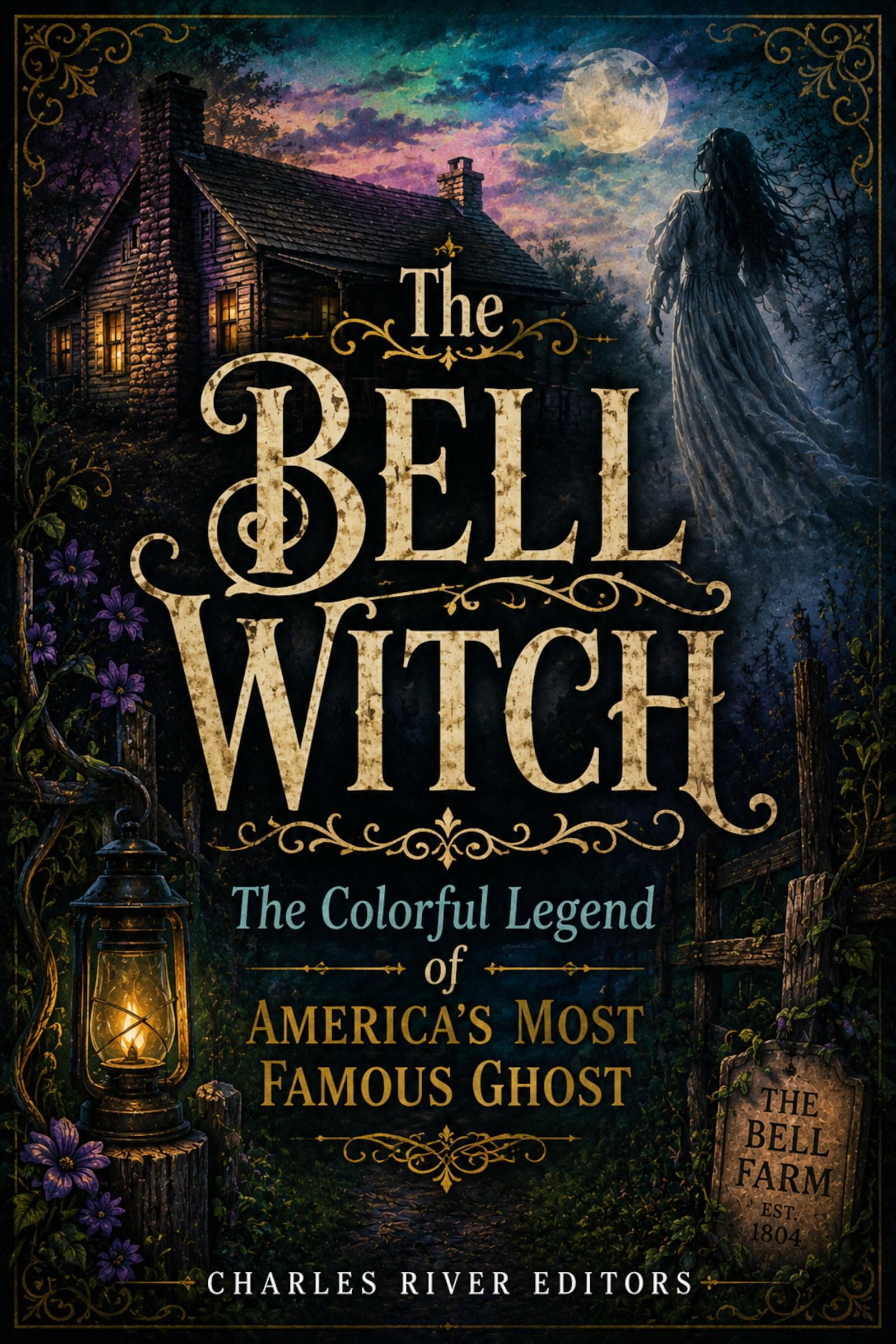
There is a small graveyard on a rise outside Adams, Tennessee, on what used to be the Bell farm. The stones are old and worn but still readable. John Bell, born 1750. Lucy Williams Bell, his wife. The children who survived them, who married and farmed, and at last lay down beside their parents. The farm itself is gone, the log house collapsed more than a century ago, and the cornfields grew back to woods. But the graveyard remains, and the road that still passes it gets its fair share of people who come from a long way off to visit it.
They come because of what allegedly happened on that farm between 1817 and 1821, because many believe that during those four years, something occupied the Bell house. It knocked on the walls at night, dragged invisible chains across the upper rooms, pulled the bedclothes off the children, and pinched the 13-year-old daughter until her arms ran blue. It quoted the Bible in a clear human voice and sang Methodist hymns in tune. It attended church services in two different houses simultaneously, according to the testimony of witnesses who later compared notes. It even claimed to have killed John Bell with a small dark vial of poison left in his cupboard. Then, one day, it announced that it was leaving, and it left, never to be heard from again.
This is what the family and hundreds of their neighbors said. A Methodist circuit rider attested to it, as did the two Springfield doctors who came to investigate and the county justice of the peace. James Johnston, who sat up with John Bell through the worst of the nights, also told a similar story. As far as the record shows, none of them ever recanted.
The story of the Bell Witch has been told in Robertson County for over 200 years, and it has been written about in two major works: M.V. Ingram’s An Authenticated History of the Bell Witch, published in 1894, and Charles Bailey Bell’s The Bell Witch: A Mysterious Spirit, published in 1934. Dozens of works have followed, including novels, and the story may even have served as partial inspiration for The Blair Witch Project. The story has filled the front pages of the Tennessee papers more than once during the periodic flare-ups of public interest that the legend produces every few decades.
It even brought a major general from the United States Army to the farm one autumn evening in 1819. Andrew Jackson rode out from the Hermitage with a company of men, a heavy wagon of provisions for a week’s stay, and a self-styled witch tamer who carried a pistol loaded with a silver bullet. He left the Bell farm at first light the next morning, two days earlier than he had intended, and he never wrote of what happened there. The remark attached to his name from that night – that he would rather face the entire British army at New Orleans than spend another night beneath John Bell’s roof – has been relayed through the accounts of other men, and some people insist the fact that he never wrote anything to contradict those accounts is evidence of its own kind.
Somehow, the legend of the Bell Witch only keeps growing.