Three different traditions all call themselves “Kabbalah” — and almost no beginner book tells you which is which.
The ancient Jewish one, born in medieval Spain and reshaped in sixteenth-century Safed. The Western occult one, fused with Tarot and astrology by the Golden Dawn around 1900. The celebrity red-string version, sold in branded study centers. Same word on the spine. Three completely different books.
If Kabbalah has ever felt confusing, this is most of the reason. The fault isn’t yours — the word has been stretched across centuries of borrowing. This book begins by pulling the three streams apart on page one, then builds the authentic Jewish tradition from the ground up, one term at a time, in plain English you can actually read on a Sunday afternoon.
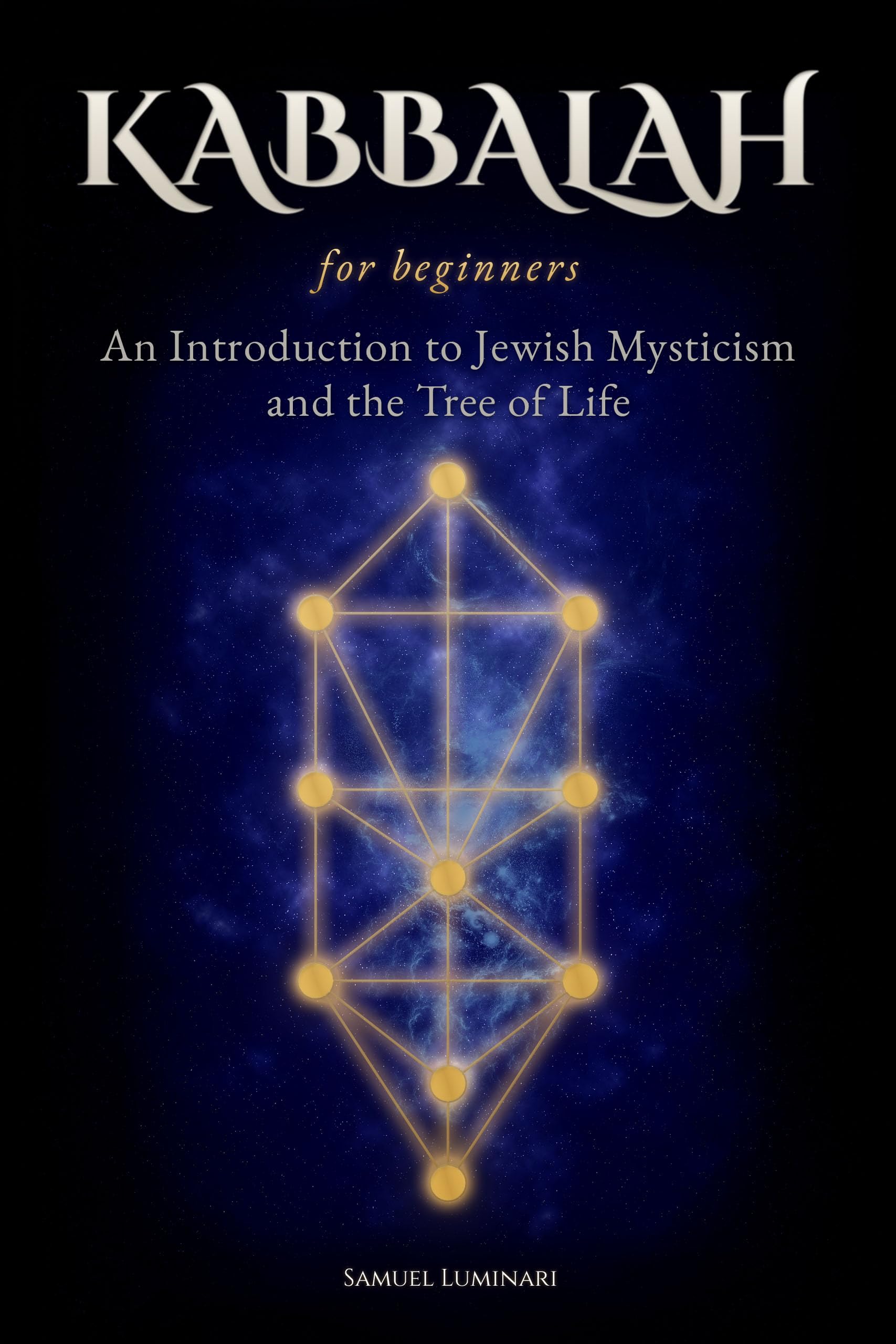
What you will actually understand by the endAll ten Sefirot — Keter, Chokhmah, Binah, Chesed, Gevurah, Tiferet, Netzach, Hod, Yesod, Malkhut — what each one means, and why Keter and Malkhut are not “top” and “bottom” but the same point seen from two directions.The Tree of Life as a working diagram: the three Pillars, the Lightning Flash of descending creation, the Four Worlds (Atzilut, Beriah, Yetzirah, Asiyah), and how to “read” a single sphere in context.The Lurianic story that gives Kabbalah its emotional weight: Tzimtzum (God’s self-contraction), Shevirat ha-Kelim (the shattering of the vessels), and Tikkun olam — the idea that your ordinary daily actions help mend a broken world.The teachers and texts in their real historical context: Isaac Luria (1534–1572) and the Safed circle, Moses de León and the Zohar, the Sefer Yetzirah, the Bahir, and the Talmudic Pardes story of the four who entered the orchard.Sourcing you can trustEvery primary text quoted is drawn from confirmed public-domain originals — the Hebrew Bible, the Zohar, the Bahir, the Sefer Yetzirah, the Talmud, the Hekhalot texts. The scholarly backbone draws on Gershom Scholem and Daniel C. Matt; the writing style on Karen Armstrong. Nothing invented. Nothing dated by marketing. When the dating is contested, the book says so plainly — that honesty is the point.
What this book is notNot a Kabbalah Centre product. No red strings, no blessed water, no promises about wealth, love, or “manifestation.” Also not a dry academic monograph — no footnote-voice, no untranslated jargon. The serious middle path: respectful of the tradition, honest about uncertainty, written for an intelligent adult who has never read a page of Hebrew.
For you ifYou’re spiritually curious and want a single trustworthy primer that doesn’t insult your intelligence or sell you something. Religious readers, spiritual-but-not-religious readers, and the merely curious can all use it.
Open Chapter 1, and within thirty seconds you’ll know which Kabbalah any book on the shelf is really selling.