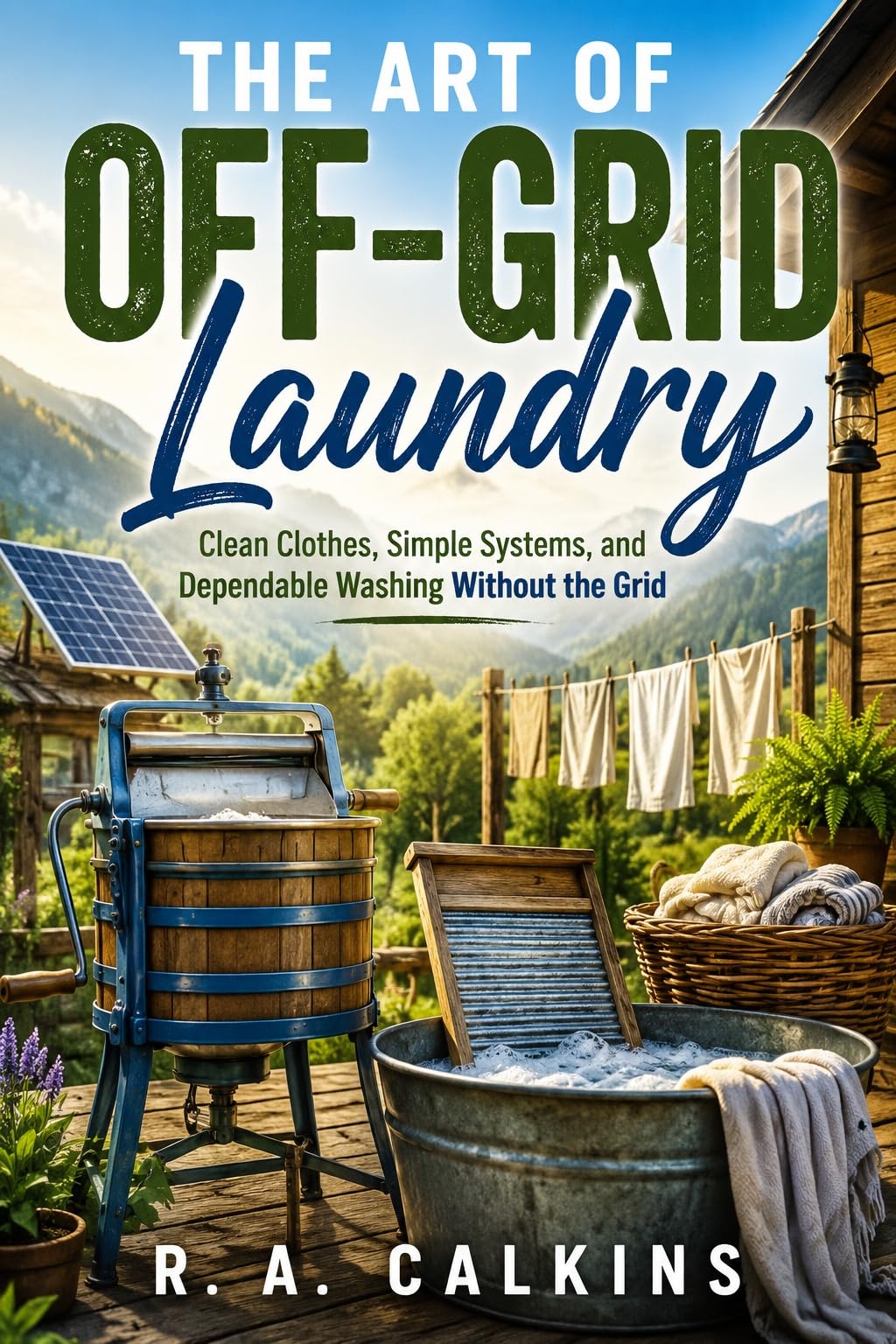
The Art of Off-Grid Laundry is a practical, plainspoken guide to keeping clothes, towels, bedding, workwear, and household linens clean when ordinary laundry systems are limited, unreliable, or unavailable. Written for readers who want dependable washing without unnecessary complication, this book explains the full laundry chain: sorting, pre-treating, washing, rinsing, wringing, drying, storing, maintaining tools, conserving water, and building a system that fits real life.
This guide is intentionally text-only and complete in itself. There are no picture pages, PDF downloads, or separate visual extras to track down. Every method, checklist, and explanation is included directly in the book so the reader can learn the system from clear written instruction.
Whether you live off-grid full time, keep a cabin, prepare for power outages, haul water, use solar power, line-dry laundry, care for children or elders, manage work clothes, or simply want to reduce dependence on modern appliances, this book walks through the decisions that make laundry succeed under simple conditions.
Inside, you will learn how to think through laundry as a complete household system rather than a pile of clothes and a bottle of soap. The book covers hand washing, bucket-and-plunger washing, washboards, compact washers, wringers, spin dryers, clotheslines, drying racks, indoor drying, outdoor drying, greywater, low-water washing, emergency laundry, bad-weather laundry, travel and cabin laundry, and long-term laundry readiness.
You will also learn how to avoid the common failures that make off-grid laundry frustrating: sour towels, stiff clothing, poor rinsing, slow drying, musty storage, detergent residue, muddy wash water, lint transfer, odor problems, overfilled basins, weak clotheslines, damp bedding, and laundry systems that depend too heavily on one tool or one person.
This book gives special attention to the parts of laundry that many people overlook. It explains why rinsing matters as much as washing, why water removal changes everything, why drying capacity must be planned before the load begins, why towels need their own discipline, why bedding should be protected with washable layers, why work clothes must stay separate, and why the clean basket, storage shelf, and clothesline are all part of the laundry system.
The chapters also cover practical household situations: families with children, single adults, couples, homesteads, cabins, campers, low-water homes, rainy climates, cold winters, strong solar households, no-power systems, emergency grid-down periods, sensitive skin, baby laundry, elder care, illness laundry, kitchen cloths, animal towels, shop rags, and utility laundry.
The purpose is not to make laundry harder. It is to make it understandable, steady, and workable. A good off-grid laundry system does not require expensive equipment or perfect conditions. It requires clear principles: use water wisely, sort by soil and purpose, measure detergent, rinse thoroughly, remove water well, dry completely, store only what is truly dry, maintain the tools, and teach the household.
The Art of Off-Grid Laundry is for readers who want useful knowledge they can apply with ordinary hands. It is a guide for building confidence with simple tools, making better clothing and towel choices, preventing waste, protecting fabric, caring for the people in the home, and keeping clean cloth available when convenience is limited.
Clean socks, dry towels, fresh bedding, usable work clothes, and orderly household linens are not small things. They support comfort, health, dignity, and peace in daily life. This book shows how to keep them in service with wisdom, patience, and dependable practice.