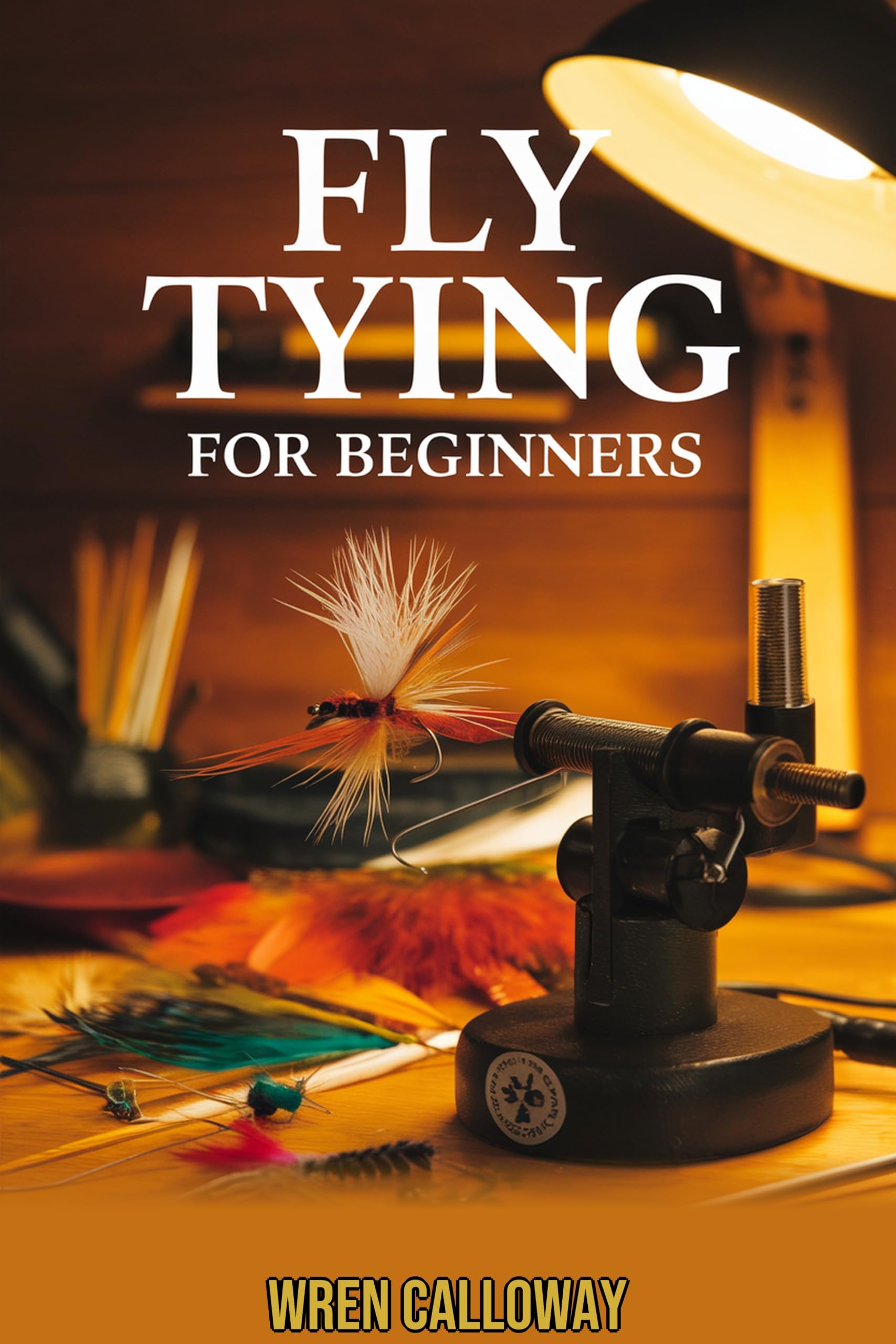
You can buy flies. A good fly shop carries proven patterns at prices that make sense. But there is a moment — standing in a trout stream, watching a fish rise to a fly you tied yourself at your kitchen table the night before — that buying flies will never give you.
This book teaches you to tie four flies that will catch trout in any river in North America. Then it teaches you the skills to tie hundreds more.
Fly tying is not as hard as it looks. The videos make it seem like you need surgeon’s hands and decades of practice. You don’t. You need a vise, thread, a few materials, and a willingness to tie ugly flies until the ugly ones start looking right. That transition happens faster than you expect — usually by the third or fourth fly.
Inside — 14 chapters, 4 core patterns, 24 technique photos:
– Four complete fly patterns with step-by-step instructions: Woolly Bugger (streamer), Pheasant Tail Nymph (nymph), Elk Hair Caddis (dry fly), Soft Hackle (wet fly) — one for each water column trout feed in
– Thread control and essential knots — the foundation skill that William Blacker documented in The Art of Fly Making
in 1842 and that has not changed since: waxed silk, firm wraps, running knots
– Materials guide — thread, hooks, feathers, fur, dubbing, and where to buy without overspending
– Tool recommendations — the $60 vise that works and the $200 vise you don’t need yet
– Matching the hatch — reading what trout are eating, selecting the right fly, and the tradition that goes back to Alfred Ronalds’ Fly-Fisher’s Entomology (1836) — color plates matching natural insects to their artificial imitations
– Building your fly box — the 12 patterns that cover 90% of trout fishing situations by season
– Advanced techniques — dubbing loops, body building, hook selection, and your first complete session from empty table to six flies
– Troubleshooting — the 15 most common tying mistakes and how to fix them
– Historical pattern recipes — Blacker’s March Brown (“light brown mohair mixed with hare fur, ribbed with yellow silk, brown partridge hackle, hen pheasant wings”) is still tied under that exact name today, nearly 200 years later
Wren Calloway is a park ranger and outdoor educator in the North Carolina foothills. She ties flies on her back porch
overlooking a creek that holds wild brown trout — the same creek where she tests every pattern in this book. She is
the author of Pine Needle Basket Coiling for Beginners and Rock Tumbling for Beginners.
No fluff. No filler. Every pattern has been tied and fished before it made it into this book.