
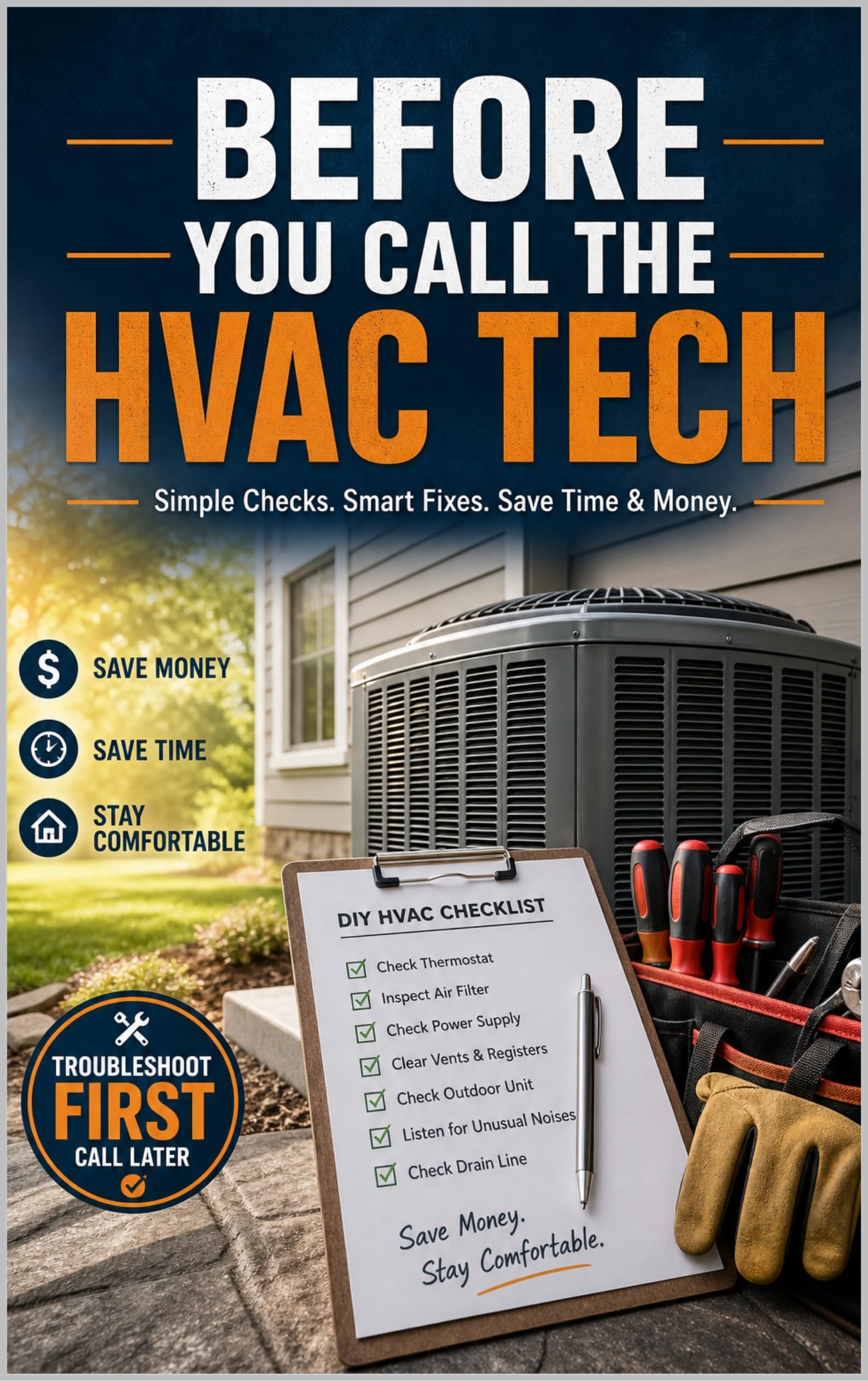
Your heating and cooling system does not need to be mysterious.
But ignoring the wrong warning sign can get expensive fast.
It usually begins with a small moment of uncertainty.
The thermostat says “Cooling,” but the house keeps getting warmer.
The furnace starts, stops, and tries again.
A strange puddle appears beside the indoor unit.
The heat pump suddenly produces a cloud of steam.
Or a breaker trips—and you have no idea whether resetting it is safe.
Most homeowners are never taught what their HVAC system is supposed to sound like, how it should behave, or which simple checks can prevent an unnecessary service call.
That changes with HVAC Care for Normal People.
Written in straightforward language, this practical homeowner’s guide helps you understand your heating and cooling system, perform safe basic maintenance, recognize common problems, and know exactly when DIY troubleshooting should stop.
Inside, you’ll discover:
• The five-minute thermostat test that can reveal whether you have a real equipment problem or a surprisingly simple setting mistake
• The hidden airflow issue that can make a working furnace or air conditioner appear broken
• Why one inexpensive filter choice may quietly increase noise, reduce comfort, and strain your system
• What heat-pump steam, long run times, and lukewarm air really mean—and the signs that are not normal
• The breaker-reset mistake that can turn a manageable repair into a serious electrical hazard
• How to recognize the difference between ordinary startup smells and odors that mean you should leave the house
• Why water beside an air handler may shut down your cooling before you notice the actual clog
• The safe homeowner checks to make before paying for an emergency service visit
• How to describe noises, smells, error codes, icing, and water leaks so a technician can understand the problem faster
• The maintenance calendar and budget system that helps you prepare for repairs before they become financial emergencies
You’ll also learn how to work through common situations involving:
• Central air conditioners and gas furnaces
• Heat pumps and electric backup heat
• Thermostats, schedules, batteries, and control messages
• Filters, supply registers, return grilles, and weak airflow
• Condensate drains, float switches, pumps, and unexpected leaks
• Humidifiers, dehumidifiers, ERVs, HRVs, and indoor humidity
• Strange rattles, whistles, grinding sounds, musty odors, and electrical smells
• Contractor estimates, permits, warranties, and service-call preparation
This is not a guide to opening electrical compartments, handling refrigerant, adjusting gas valves, or bypassing safety switches.
It is a guide to becoming the kind of homeowner who knows what to check, what to document, what questions to ask—and when the smartest move is shutting the system down.
Because the most expensive HVAC mistake is not always a failed part.
Sometimes it is running an iced system for another day.
Resetting a breaker one more time.
Ignoring water near electrical equipment.
Or paying for a repair without understanding what actually failed.
A little knowledge will not turn you into an HVAC technician.
It can help you prevent damage, avoid risky guesses, communicate clearly, and keep your home running more smoothly with less stress.


