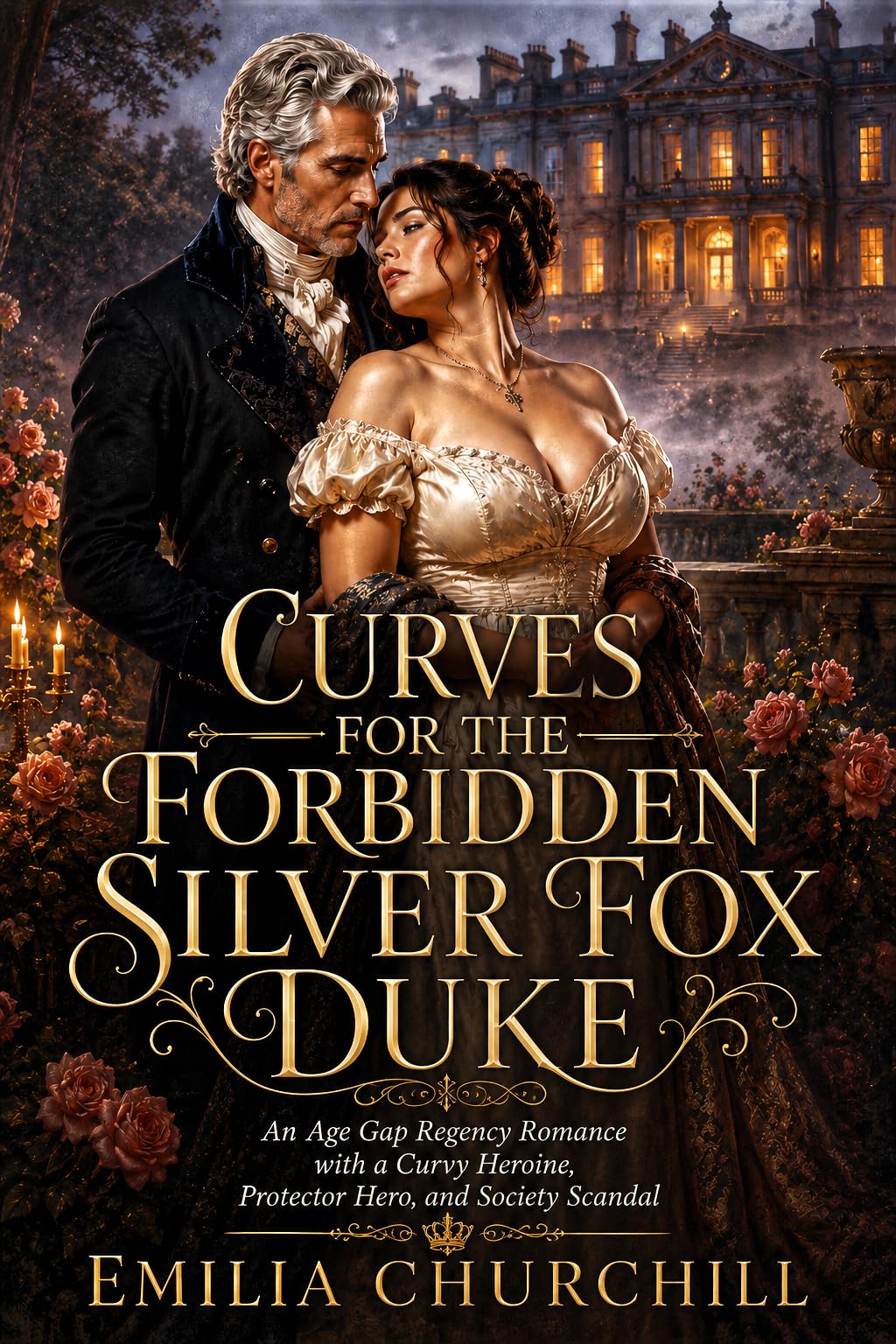
Miss Vivienne Harcourt arrived in London for the Season with two assets: a modest dowry and an uncommonly sharp mind. She expected snide remarks about her figure from other debutantes; she did not expect to become the subject of a vicious rumour that could end her prospects entirely. Cornered and humiliated at a Mayfair ball, she is rescued — improbably, inconveniently — by Frederick Darlington, the Duke of Ashbourne. Silver-haired, impassive, possessed of a silence so composed that half the ton is simply afraid of him.
Frederick has not attended a ball by choice in six years. Widowed young, quietly guilt-ridden over a marriage contracted for duty rather than feeling, he has decided that the Season exists chiefly to test his patience. That opinion survives until the moment he watches a young woman being publicly diminished — and finds, to his own vexation, that he cannot turn away.
What begins as a rational arrangement — his title as her shield, her company as his excuse to leave functions early — dismantles both of them with alarming efficiency. For Vivienne, it is the first time a man of consequence has looked at her as though she is entirely sufficient. For Frederick, it is the first time in a decade that someone has made him laugh aloud and then looked startled by the sound of it.
Set against the glittering, uneasy backdrop of the 1815 London Season — with Napoleon newly returned from Elba and the ton’s gaiety shot through with the particular brightness of people determined not to think about Waterloo — Curves for the Forbidden Silver Fox Duke is a story about a woman reclaiming her worth, and a man remembering he has one. Life feels shorter this spring. Choose well.
Witty, swoony, and quietly devastating — for readers who want their dukes seasoned, their heroines sharp, and their love stories earned the hard way.