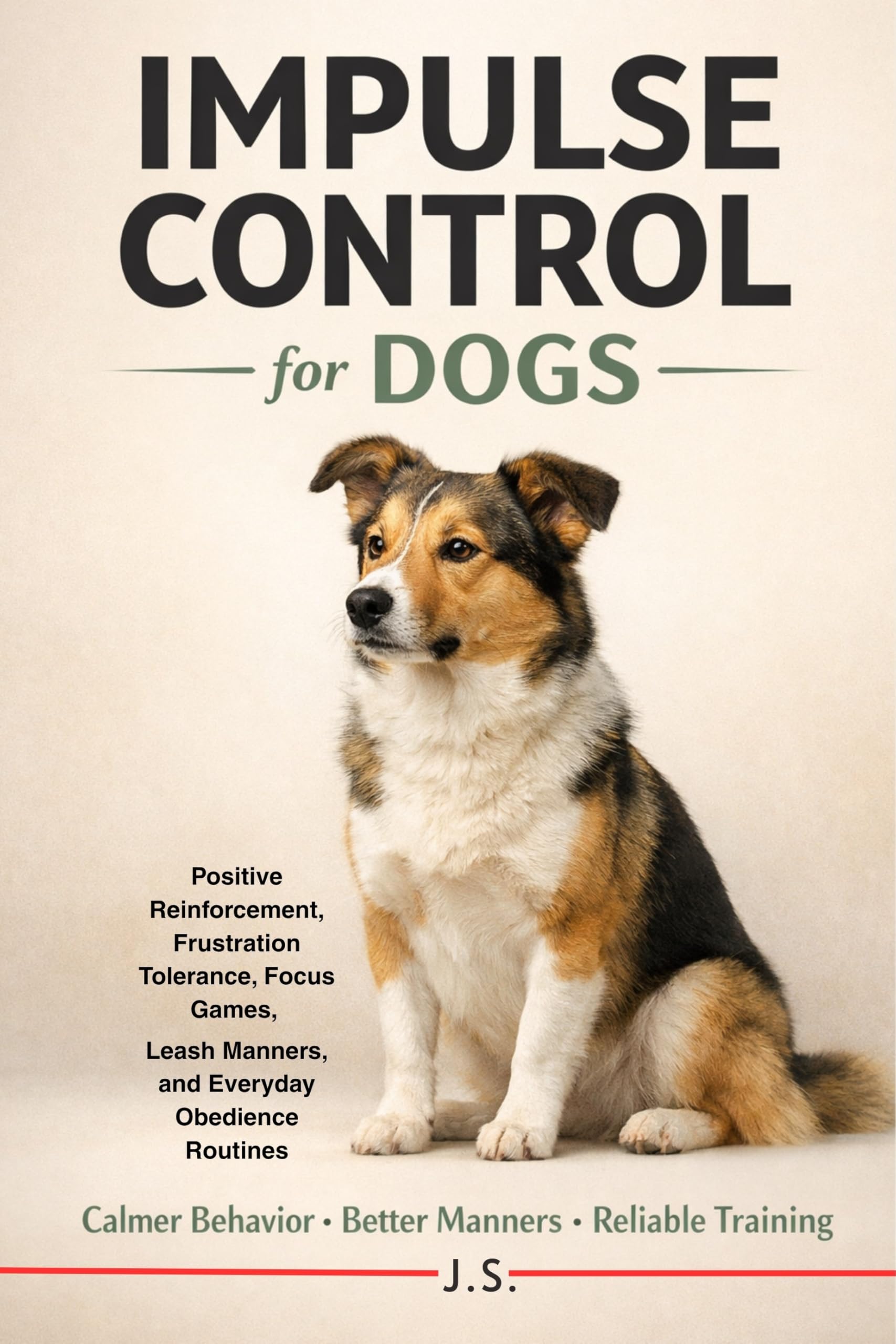
Is your dog always lunging, snatching, jumping, barking, pulling, or acting before thinking?
Do walks feel chaotic? Do greetings turn into flying paws? Does “leave it” work only when nothing exciting is nearby?
This book is built to help you change that.
Impulse Control for Dogs is a practical, step-by-step training guide that helps you raise a calmer, more focused, better-mannered companion using clear routines, simple games, and reward-based teaching. Instead of relying on punishment, confusion, or endless repetition, you will learn how to build patience, attention, and better choices in everyday life.
Whether you are working with a puppy, adolescent, rescue, or high-energy adult, this book shows you how to turn impulsive behavior into steady progress with training that is realistic, repeatable, and easy to use at home and on walks.
Inside this book, you will learn how to:
• teach calm behavior around food, doors, guests, toys, and distractions
• reduce jumping, grabbing, leash pulling, barking, and rushing
• build stronger focus before your dog makes poor choices
• improve patience without creating stress or shutdown
• use reward timing more effectively so lessons stick faster
• introduce frustration tolerance in a fair, gradual way
• practice self-control games that fit into normal daily life
• create better routines for greetings, walks, waiting, settling, and mealtime
• troubleshoot setbacks, overstimulation, inconsistency, and slow progress
• train in a way that strengthens trust, cooperation, and reliability
This is not a book full of vague theory.
It is a hands-on guide designed to help you understand why impulsive behavior happens, what makes it worse, and what to do instead. You will learn how arousal, environment, timing, reinforcement, and repetition shape behavior-and how small changes in your training can produce much better results.
You will also discover how to stop making some of the most common mistakes owners make when trying to teach patience and obedience, including:
• asking for too much too soon
• rewarding excitement by accident
• repeating cues until they lose meaning
• training only in easy settings
• expecting self-control without teaching the skill first
The goal is not to make your dog “perfect.”
The goal is to help your dog become more thoughtful, more responsive, and easier to live with in the moments that matter most.
That means calmer exits at the door. Better choices around food. Less frantic behavior on walks. More polite greetings.
Better waiting. Better listening. Better recovery after excitement. And more confidence in your ability to guide your dog
clearly and consistently.
This book is especially helpful if your dog struggles with:
• overexcitement
• poor leash manners
• rushing through doors
• stealing food or grabbing objects
• barking for attention
• breaking stays quickly
• reacting too fast in stimulating environments
• frustration when asked to wait
You do not need to be a professional trainer to use this book.
The exercises are written in plain language, with a strong focus on practical application, short sessions, and everyday success. You can start small, build gradually, and create visible progress through repetition, structure, and smart reinforcement.