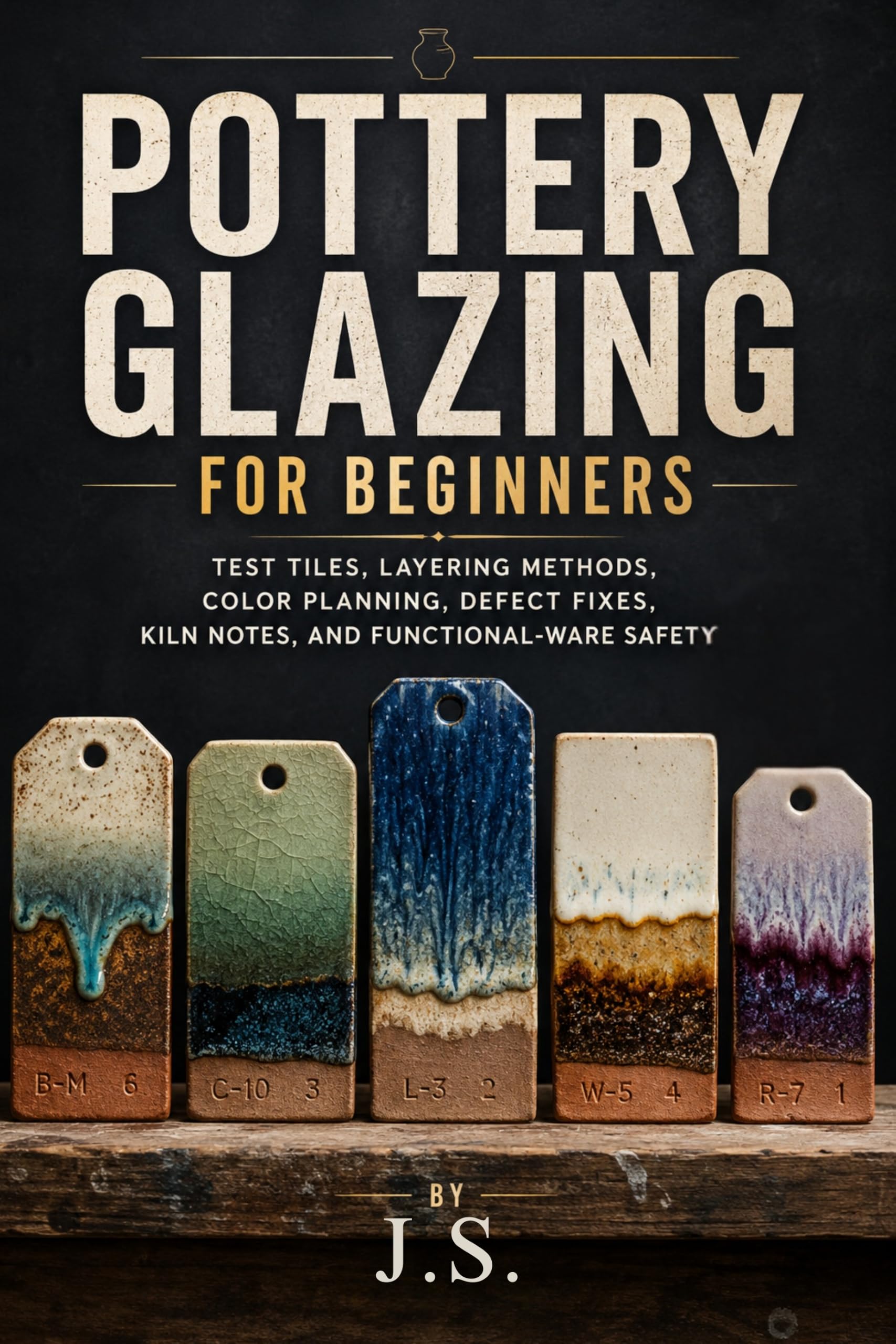
Turn unpredictable glaze results into clear, repeatable studio decisions.
Pottery glazing can feel unpredictable. A glaze that looks perfect on one clay body may turn patchy on another. A promising layered combination may run toward the foot. A smooth surface may reveal pinholes, crawling, crazing, or blistering after firing. Pottery Glazing for Beginners gives you a clear, practical system for working through those problems without drowning you in advanced chemistry or unexplained studio jargon.
Written for new potters, hobby ceramicists, community-studio members, and makers ready to improve their glazing decisions, this guide follows the complete process from clean bisque to careful kiln evaluation.
Inside, you will learn how to:
• Understand what glaze does before, during, and after firing
• Match clay bodies, glazes, and firing ranges more carefully
• Recognize crazing, shivering, and other signs of poor glaze fit
• Prepare bisque surfaces without spreading hazardous ceramic dust
• Choose between brushing, dipping, pouring, and controlled spraying
• Apply glaze more evenly around rims, handles, interiors, and feet
• Design useful test tiles that answer one clear question
• Compare glaze thickness, texture, clay bodies, and layer order
• Plan color around the form instead of relying on the jar color
• Build layered combinations while controlling overlap and movement
• Glaze mugs, bowls, plates, jars, vases, pitchers, and irregular forms
• Understand heatwork, witness cones, kiln placement, and cooling
• Diagnose crawling, pinholing, blistering, running, cloudiness, and rough surfaces
• Evaluate functional ware without making unsupported safety assumptions
Rather than presenting glaze photographs that may reproduce differently across clay bodies, kilns, lighting, screens, and printing, this book teaches you to create the most useful visual reference available: your own fired tests. You will learn what to record, what to compare, and how to move from a promising tile to a representative form without changing every variable at once.
The guidance is practical and decision-focused. Each topic explains what to check first, what to do next, what warning signs to notice, what commonly goes wrong, and when to stop and seek help from a material supplier, studio technician, kiln operator, or qualified ceramics professional.
You will also learn how to separate a design disappointment from a technical defect. A muddy overlap may be visually unsuccessful but stable. A beautiful flowing glaze may be technically unsuitable if it reaches the shelf or develops sharp defects. Knowing the difference helps you make better corrections instead of adding another coat and hoping the kiln appreciates the gesture.
Special attention is given to functional pottery. The book explains why gloss alone does not prove suitability, why layered glazes must be treated as new combinations, how to inspect rims and food-contact surfaces, and why microwave-, dishwasher-, oven-, or food-safety claims require reliable support for the exact materials and firing used.
This is an instructional handbook-not a recipe collection, blank logbook, or gallery of finishes. It is designed to help you develop sound studio judgment using known materials, controlled applications, representative tests, accurate observations, and repeatable methods.
Whether you are glazing your first cup or trying to understand why a familiar surface suddenly changed, Pottery Glazing for Beginners will help you replace vague guesswork with a calmer, more useful question:
What happened and what should I test next?