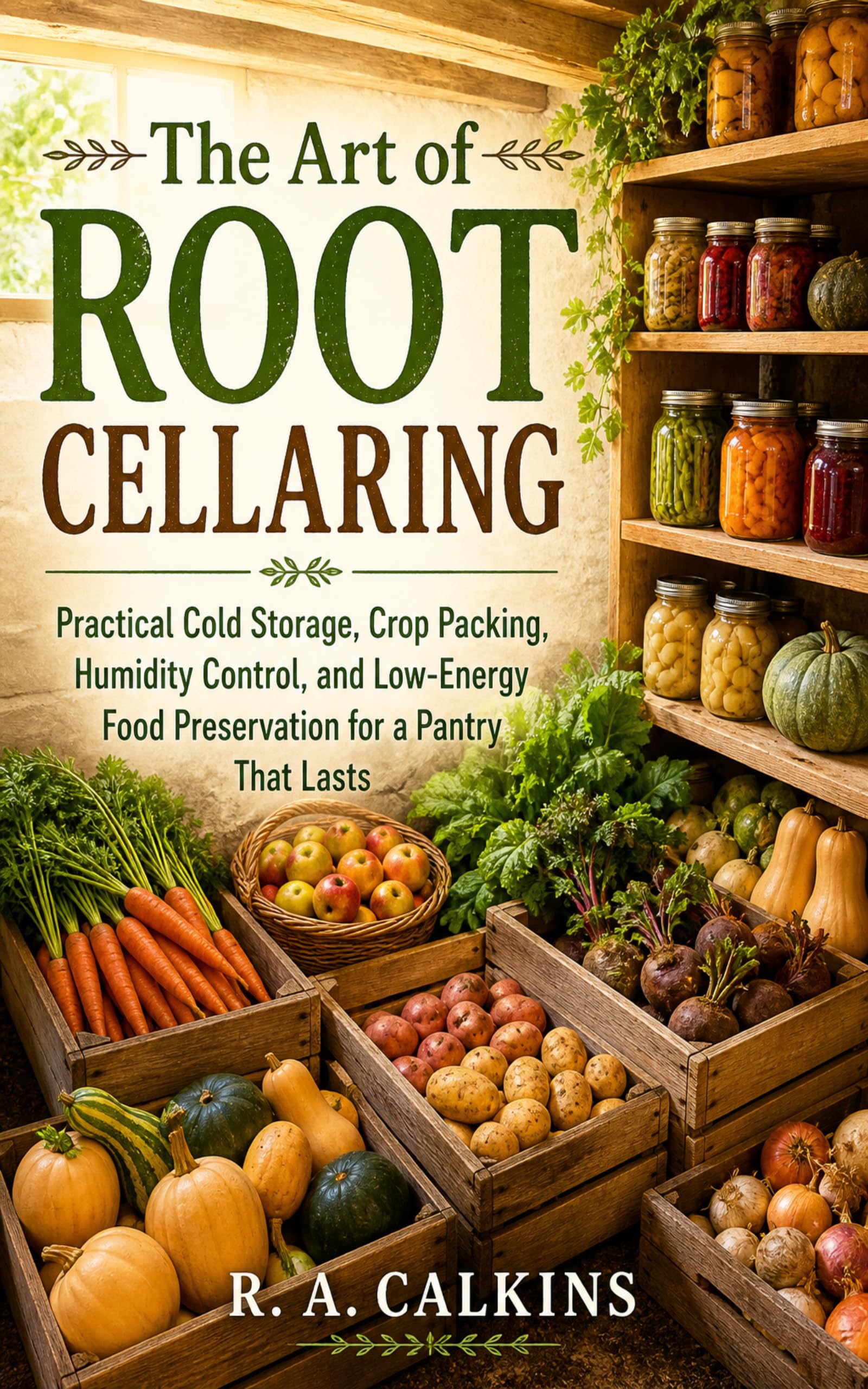
A root cellar is not just an old-fashioned room under the ground. At its best, it is a disciplined, efficient way to keep food in the narrow range between freezing and spoilage, dryness and rot, waste and needless expense. The Art of Root Cellaring is a practical guide to storing harvests with judgment, stability, and purpose so that more of what you grow or buy remains sound, usable, and ready for the table.
This book explains root cellaring in plain language for real households. It shows how to think about temperature, humidity, ventilation, darkness, crop handling, and storage zones without burying the reader under clutter. The emphasis is on useful instruction placed directly in the reading experience itself, so the guidance stays straightforward and shelf-ready, with no PDF downloads or picture sections to chase through while you are trying to put the information to work.
Inside, you will learn why root cellaring is one of the most practical low-energy food preservation methods available, and why it still matters in a world shaped by refrigeration, freezing, and constant resupply. You will see how root cellaring differs from canning, drying, and other preservation approaches by helping many foods remain much closer to their original form. A beet remains a beet. A carrot remains a carrot. A winter squash remains whole until it is needed.
The book also makes clear that successful storage is not achieved by cold alone. Different crops require different conditions. Root crops, potatoes, cabbages, apples, onions, garlic, winter squash, and sweet potatoes do not all keep best in the same environment. This guide walks through those differences and helps readers understand how to create better storage by thinking in zones, even in modest spaces.
Whether you have a traditional cellar, a basement corner, a crawlspace, an insulated bin, a garage setup, an outdoor clamp, or another adapted arrangement, this book helps you understand the governing principles behind long-keeping storage. It also covers crucial preparation before produce ever reaches the shelf: variety selection, harvest timing, gentle handling, sorting, curing, sanitation, and ongoing inspection.
This is not a romantic treatment of old ways for their own sake. It is a practical handbook for households that want to reduce waste, stretch the harvest, save money, and preserve food with steadiness and intelligence. Even a partial success in root cellaring can change a pantry. A longer-lasting supply of carrots, potatoes, onions, garlic, apples, cabbages, or squash means fewer losses, fewer replacement purchases, and better use of what the season provided.
If you want a clear, serious, and useful guide to practical cold storage, crop packing, humidity control, and low-energy food preservation, The Art of Root Cellaring offers a direct path toward a pantry that lasts.