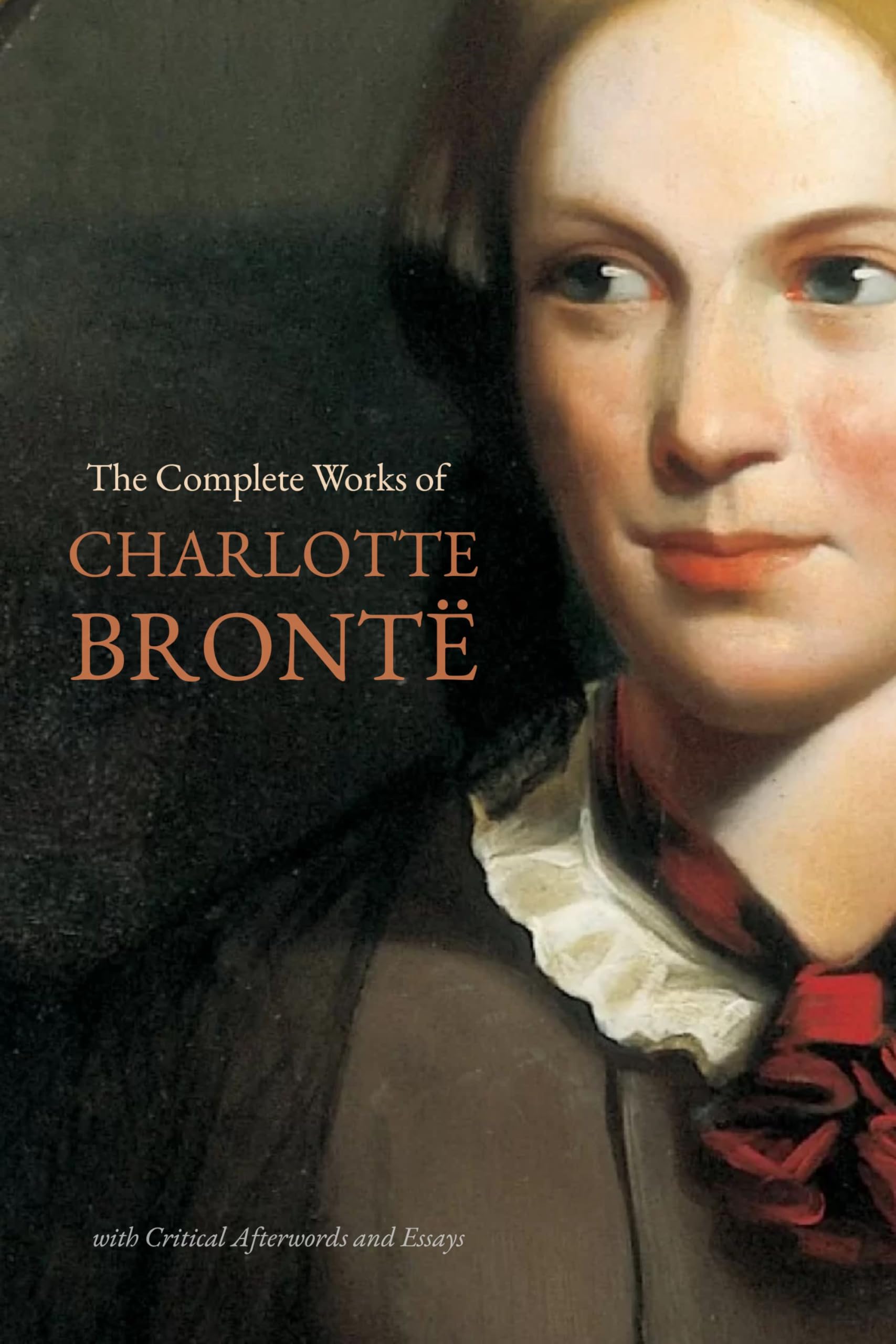
Charlotte Brontë published four novels. Every one of them is about a woman who has nothing and refuses to become nothing.
She is less fashionable than her sister Emily, less monumentally celebrated, and considerably more interesting. Emily wrote one novel of absolute genius and died. Charlotte wrote four — across seventeen years, through rejection, grief, and the deaths of everyone she loved — and each one is a different argument about the same problem: what a woman of intelligence and will is supposed to do in a world that has no place for her.
Jane Eyre (1847) announced the argument with a directness that shocked its first readers and has never stopped resonating: a plain, poor, dependent woman who will not be diminished, who chooses dignity over security, who refuses Mr Rochester on moral grounds and refuses St John Rivers on emotional ones, and who ends the novel having made every choice herself. It remains one of the most complete portraits of a self in English fiction.
Shirley (1849) is Brontë’s most explicitly political novel — set during the Luddite uprisings of 1811–1812, it maps economic crisis onto the lives of women with a precision that has no equivalent in Victorian fiction. Shirley Keeldar, who inherits a mill and refuses to be managed, is the woman Charlotte Brontë said she would have been had she been born with health and wealth and freedom.
Villette (1853) is her masterpiece and her most demanding book. Lucy Snowe arrives in a Belgian city with almost nothing, builds a life from near-zero in a foreign language, and narrates it all with an unreliability that is itself the subject of the novel. What Lucy tells us and what she withholds — and why — is the book’s real architecture.
The Professor — written first, published last, posthumously in 1857 — is the skeleton of everything that followed: the same themes, the same moral seriousness, not yet fully formed, and essential for understanding how the four novels constitute a single project.
✦ The complete, unabridged texts of all four novels — The Professor, Jane Eyre, Shirley, and Villette — together with The Twelve Adventurers and Other Stories (early writings) and Poems by Currer Bell, nothing condensed or omitted.
This edition also includes:
✦ The Architecture of Longing: A Critical Study of Charlotte Brontë’s Works — a reading of the four novels as a unified project: the recurring structures, the recurring arguments, and what changes across seventeen years of sustained literary intelligence
✦ The World That Made Charlotte Brontë: England, 1816–1855 — historical and cultural context: the publishing world that rejected The Professor repeatedly, the Brontë family’s singular circumstances, and the social conditions the four novels were simultaneously inhabiting and contesting
✦ About the Author — a biographical account of Charlotte Brontë’s life: from Haworth to Brussels, through the pseudonym Currer Bell, the deaths of her siblings, and the extraordinary productivity of her final years
For readers who enjoy:
✦ Classic English literature and the great tradition of the Victorian novel at its most psychologically acute
✦ Fiction about women who survive and choose — before survival was a genre and choice was assumed
<