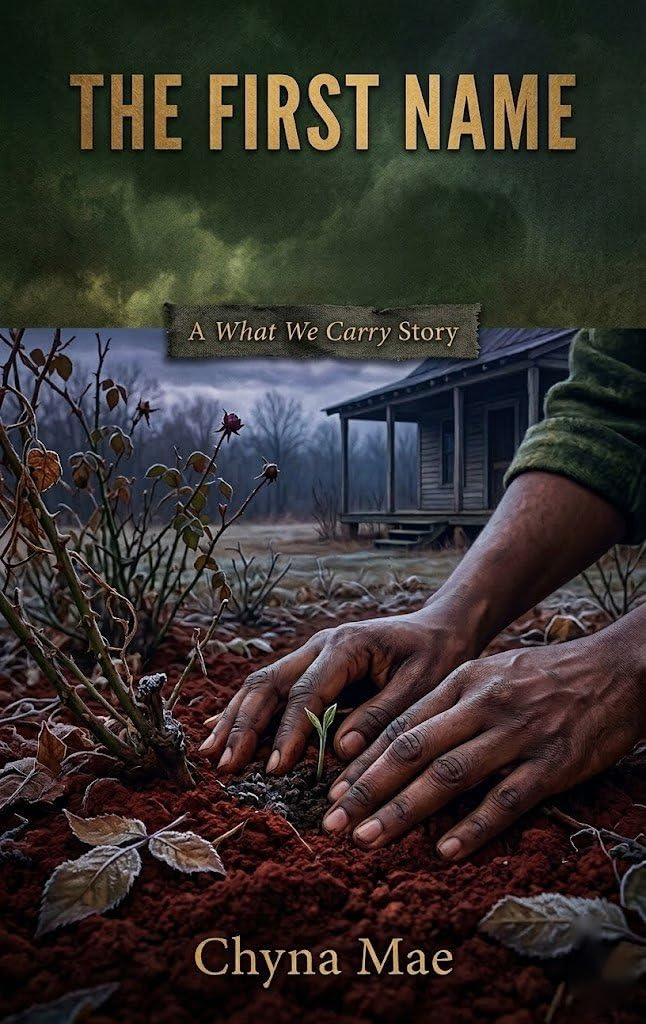
Before Ruth Antoine spoke her name, Bessie Mae Johnson waited seventy-two years to be found.
It is 1948 in Kettle County, Mississippi, and Bessie Mae Johnson is twenty years old, whole, and certain of her place in the world. She has the Johnson land — twelve acres of red Mississippi earth that her family has held for three generations. She has her mother’s kitchen, her grandmother’s wisdom, and a future she can feel growing beneath her feet like roots.
Then she meets James Reed at a funeral, and the future becomes something even larger. They marry. They build. Their daughter Dorothy arrives in November with her father’s eyes and her grandmother’s stubborn jaw, and the small house on the edge of the Johnson land fills with the particular joy of a life going exactly the way a life ought to go.
In August of 1952, Bessie Mae goes to Jefferson County Hospital for help with a difficult pregnancy. She trusts the white coats on the hill. She signs papers she cannot fully read in the cold institutional light. She goes under believing she will wake up fine.
She wakes up different.
She doesn’t have the words for what was done to her. Nobody gives her the words. The hospital seals her records. Her trusted doctor finds only silence when he asks questions. And Bessie Mae spends the next thirty-seven years carrying a wound she cannot name — blaming herself, wondering what is wrong with her, waiting for an explanation that never comes.
But Bessie Mae Johnson does not break. She pours the love that had nowhere else to go into every child who finds their way to her kitchen door. She feeds them, holds them, teaches them the names of things. She keeps a jar of peppermints on the counter and the door always open. She tends her garden. She passes down what her grandmother passed to her.
The land remembers, child. Every foot that walked it. Every hand that worked it. Every tear that fell into it.
She dies in December 1989, still not knowing. Her file waits in a hospital basement, buried under decades of silence, patient as seeds in winter ground.
This is her story.
And it is the beginning of another.
The First Name is a prequel to What We Carry, the story of the midwife who finally opens that basement door, speaks Bessie Mae’s name into the dust, and discovers that one woman’s wound belongs to over a thousand others.
Bessie Mae Johnson was the first name Ruth Antoine spoke. Find out what Ruth did with what she found.
What We Carry — available now on Amazon.