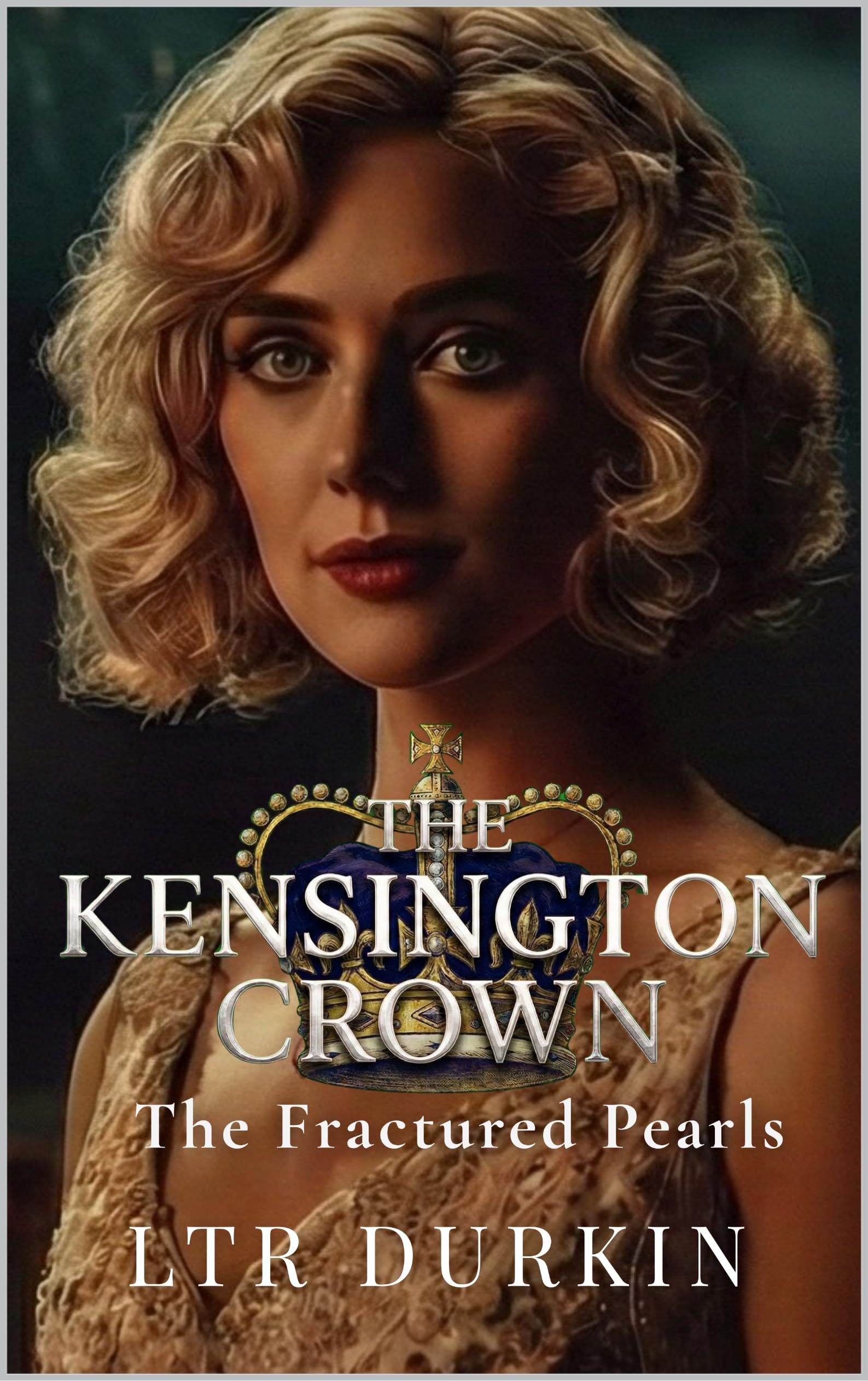
If Foundations of Sand was the opening move of a high-stakes game, The Fractured Pearls is the moment the board catches fire. In this second volume of the Crown of Kensington trilogy, the “engineered” narrative shifts from the brink of ruin to the brutal reality of strategic consolidation. The atmospheric fog of Book 1 has lifted, replaced by the “crystalline sharpness” of a February morning on the Serpentine, where the ice—much like the social order of the ton—is thin, beautiful, and dangerously brittle.
Two years have passed since the Summer Garden Assembly, and the alliance between the Hawthornes and the Valencourts is no longer a secret, but a target. Charlotte Hawthorne has fully shed her role as a debutante to become a seasoned political architect. She no longer simply observes the drawing rooms of London; she manipulates them, leveraging her understanding of property entails and the Board of Trade to protect her family’s interests. As she stands by the iron railings of the Serpentine, watching the “fractured patterns” of the ice, she recognizes that the truth is rarely whole—it is something to be managed, refracted, and used as a weapon.
The stakes are elevated by the cold, calculating vendetta of the Duke of Wrexham. Representing the dying gasp of institutional rigidity, the Duke views the Hawthorne-Valencourt partnership not merely as a social scandal, but as a philosophical threat to the British aristocracy. The conflict moves from the ballrooms into the “Storm Chamber,” a space of acoustic containment where Charlotte and Étienne must navigate a “tactical romance” against a man who would use the weight of tradition to crush their industrial modernity.
The Fractured Pearls is the perfect bridge for readers who love the intellectual sparring of The Gilded Age and the ruthless family loyalty of Succession. It is a story of “social defiance” where the Heirloom Pearls become a symbol of the immense pressure required to turn a carbon legacy into something as hard as a diamond. In this volume, the “logic of entry” is tested, the “sensory anchors” of the old world begin to crack, and the path to mastery is paved with the wreckage of comfortable illusions. This is Regency fiction for the strategist—where every signature on a document is as thrilling as a duel at dawn.