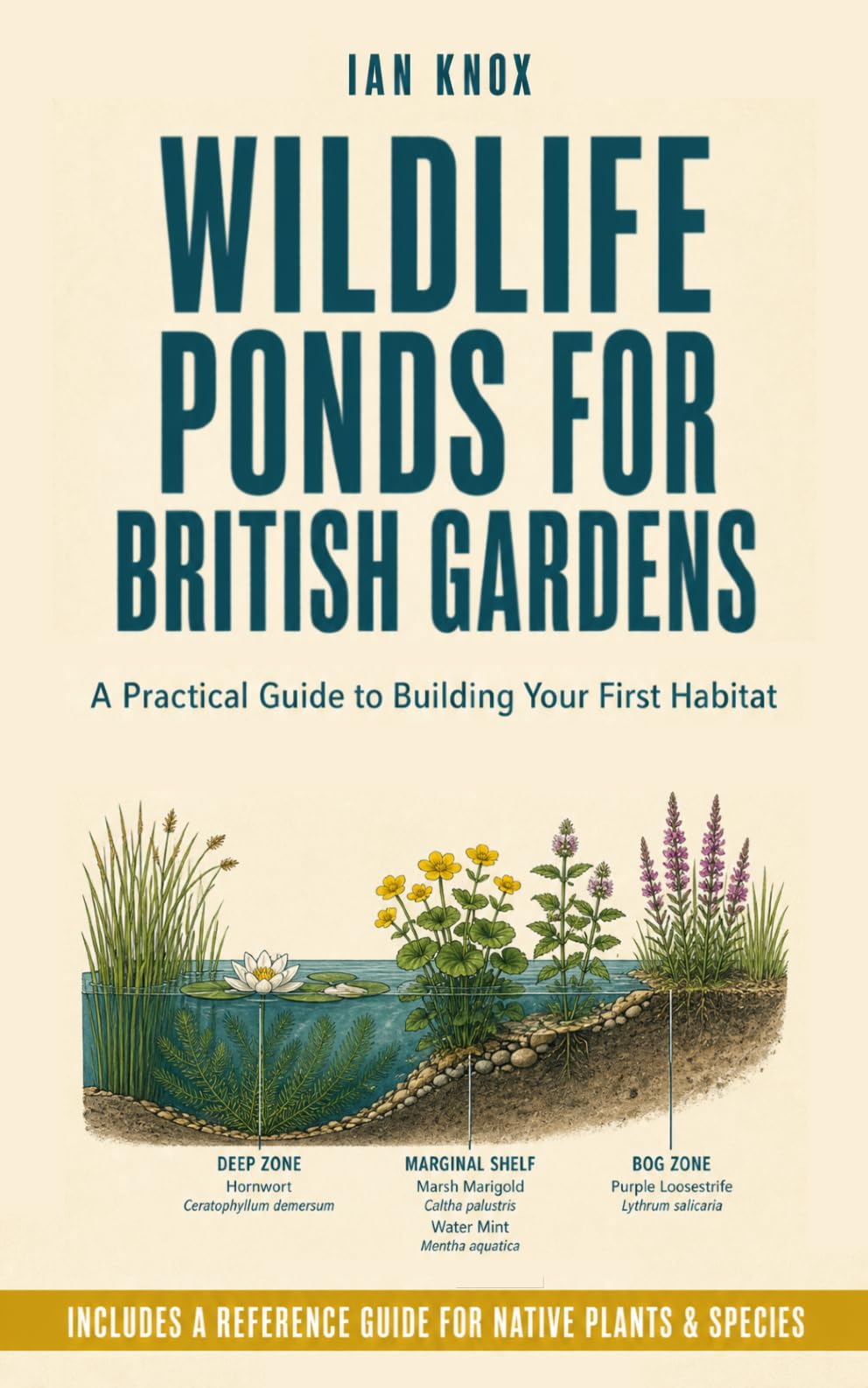
The Definitive Guide to Building a Wildlife Pond in Britain
Since the 1950s, Britain has lost over half a million field ponds. Native animal and plant populations have declined in parallel. The garden pond now plays a direct role in reversing that trend.
A well-built wildlife pond is a functional habitat. It supports breeding amphibians, aquatic invertebrates, and native wetland plants within a stable system that develops into a self-sustaining ecosystem.
This book sets out a complete construction method for building a working wildlife pond in a British garden. It follows a clear sequence of decisions and build steps designed to produce a reliable ecological outcome.
Every stage is defined. Every decision is deliberate.
Inside, you will learn how to:
Choose a site that supports long-term ecological establishmentForm depth zones suitable for amphibians, invertebrates, and plant growthBuild a functional wildlife pond in a two-day sequence for a small gardenEstablish a native planting system using six British species that drive biodiversityAvoid non-native and invasive species restricted under UK lawUnderstand how wildlife colonises a new pond from year one through to year three
The methods are based on the firsthand experience of Ian Knox, a retired civil engineer who built his own wildlife pond in March 2019 and has observed its development continuously since. Over seven years, he has recorded seasonal cycles, species colonisation, and ecological succession.
The result is a method grounded in long-term observation of a functioning system.
When followed correctly, it produces a stable pond that establishes quickly and increases in biodiversity over time.
No ornamentation. No guesswork.
A working wildlife pond built from the ground up.