During the first half of the 1st millennium CE, an empire arose in Persia that extended its power and influence to Mesopotamia in the east, Arabia in the south, the Caucasus Mountains in the north, and as far east as India. This empire, known alternatively as the Sasanian Empire or Sassanid Empire, was the last of three great dynasties in Persia—the Achaemenid and the Parthian being the first two dynasties—before the rise of Islam. In fact, many scholars consider the Sasanian Empire to be the last great empire of the ancient Near East because once it had been obliterated, Islam became the standard religion of the region, ushering in the Middle Ages.The Sasanian Empire was important for a number of reasons. Besides being the last of three great Persian dynasties, they carried on many Persian cultural traditions relating to religion and kingship. The Sasanians fostered and promoted the native religion of Zoroastrianism to the point of persecuting other religions from time to time. It was during the Sasanian period that the numerous Zoroastrian hymns, prayers, and rituals were collected under one book, known as the Avesta.The Sasanians also had a profound global influence through one of the most idiosyncratic religions of the ancient Middle Eastern world: Manichaeism. Like Zoroastrianism, the Manichaean religion has a rich history, as seen in its interactions with early Christianity and its unparalleled emphasis on secrecy. These exceptionally mysterious elements have appealed to the curiosities of thousands of scholars who have studied the development of this ancient belief system and where it came from. Manichaeans primarily revere the teachings and life of their prophet Mani who formed a synthesis of various religious traditions contemporaneous to his life. Although hardly a well-known religion in modern days (and, quite likely, an extinct religion in terms of practitioners), the Manichaean religion is an important witness to the development and interchanging ideas seen in early Iranian and Christian religion.Many scholars have been fascinated with the beliefs and teachings of Manichaeism, dating as far back as the early Church. Christian theologians who acted as heresy hunters (including Augustine of Hippo) took it upon themselves to attack Mani’s new religion on the grounds that it was just another dangerous heresy that had cropped up in the fertile ideological soils where the powerful Roman and Persian worlds collided. As such, Manichaeism was dismissed as an aberration of the truth and was critiqued in many writings of orthodox church leaders. This remained a powerful influence for scholars all the way up to the 20th century, largely due to the fact that few if any original Manichaean writings had survived the centuries.Similarly, thanks to the Sasanians’ efforts with regard to religion, modern scholars know much more about Zoroastrianism than they would have if the religion continued to disseminate orally. Their efforts also protected Zoroastrian knowledge in later years after the dynasty was long gone and Islam became ascendant in Persia.As a result, Zoroastrianism is technically still a living religion today, but the religion is mysterious and not widely known among those who don’t study it, and historians themselves are divided over when the religion’s prophet lived and when the religion was officially adopted in Persia. Zoroastrianism’s historical development has also failed to intrigue significant numbers of people, perhaps due to its geographical location and cultural background. Zoroastrianism developed among the Persian people, who have traditionally not been part of the standard Western, early Islamic, or Far Eastern cultural groupings, and when Persia later became part of the greater Islamic world, it was to the detriment of Zoroastrianism.
save
$4.99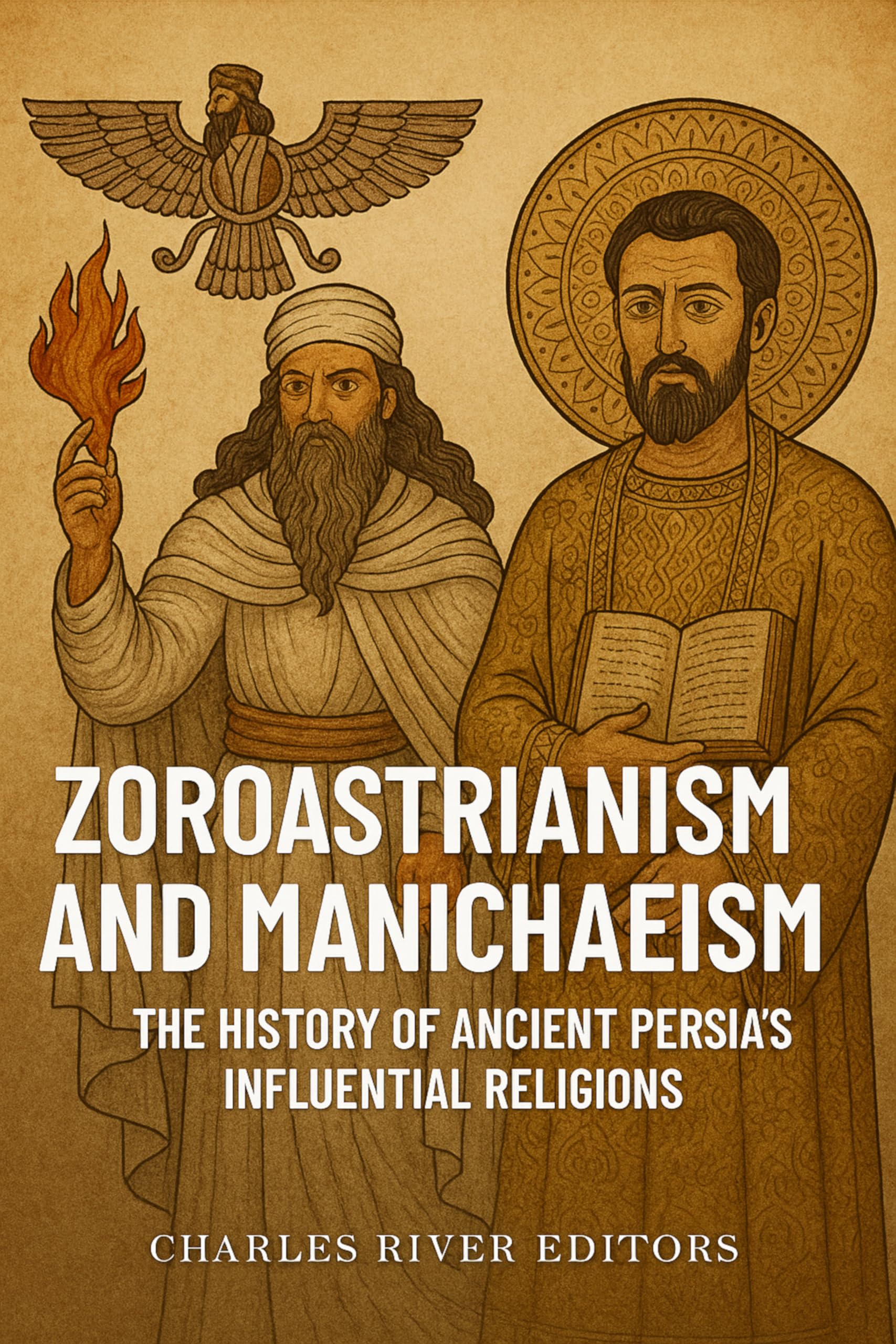
Zoroastrianism and Manichaeism: the History of Ancient Persia’s Influential Religions
$0.00$4.99
Explore the rise and impact of the Sasanian Empire, its promotion of Zoroastrianism, and the mysterious Manichaean religion, shaping the cultural landscape of ancient Persia before Islam’s dominance.