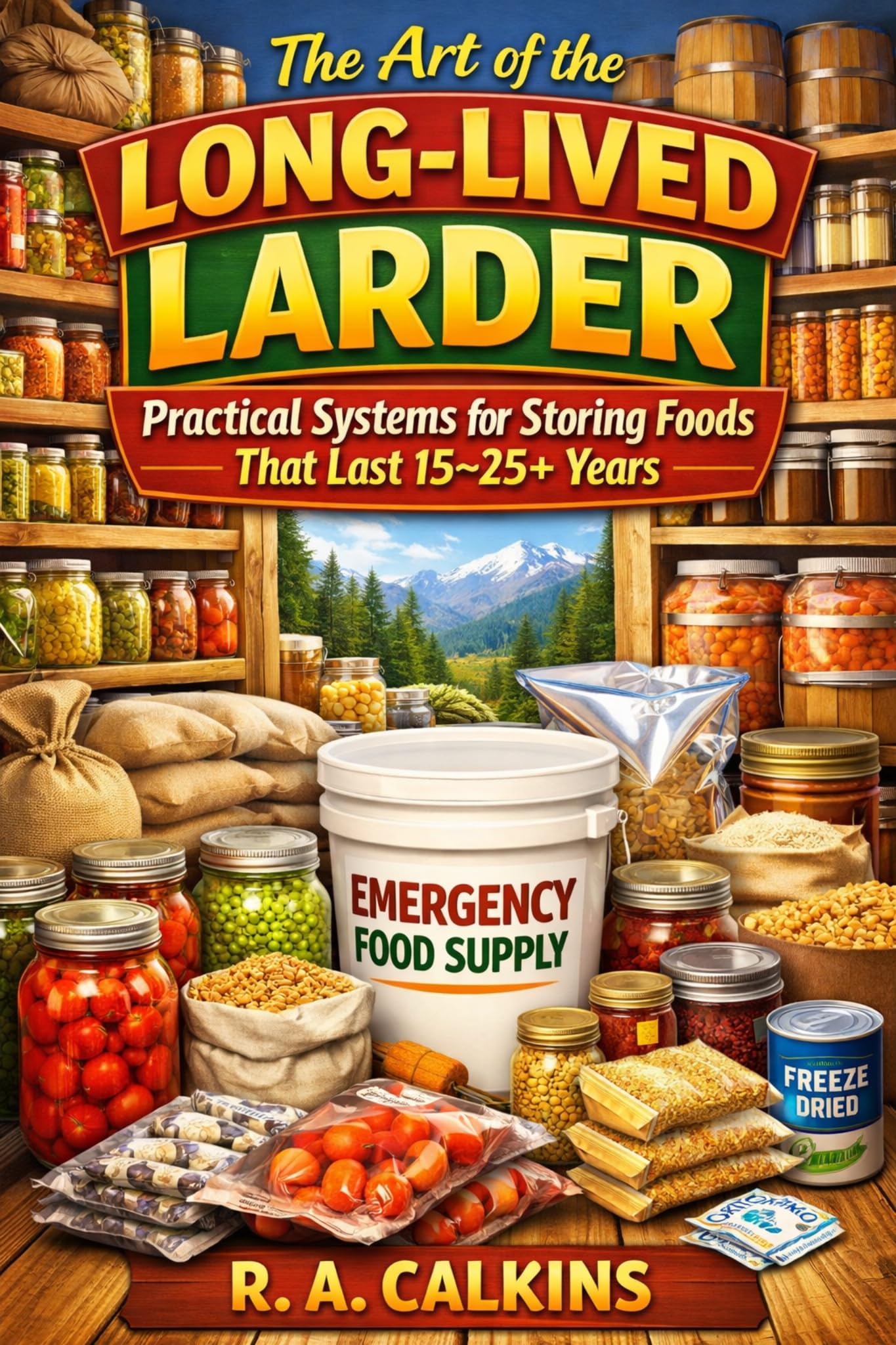
The Art of the Long-Lived Larder is a practical, workshop-style handbook for anyone who wants a pantry that truly endures — not marketing promises, but repeatable methods that yield 15, 20, or 25+ years of dependable food storage. This book reduces long-term preservation to three measurable controls (water, oxygen, temperature) and shows exactly how to apply them at household scale so your stores stay safe, usable, and surprisingly affordable.
Inside you’ll find:
• Clear science in plain numbers — what “water activity” means, why oxygen drives rancidity and microbial risk, and how temperature affects chemical change — all translated into conservative shelf-life targets you can plan around.
• The three systems that actually work for long life: food-grade Mylar + oxygen absorbers inside rigid buckets, commercial #10 cans, and professionally sealed freeze-dried/retort pouches — when to choose each and how to make them reliable.
• A repeatable workshop workflow with step-by-step packing rhythm, absorber-sizing math, heat-sealing technique, desiccant placement, and a one-week quality check that catches the common failures before they become problems.
• Exact, conservative life-expectancy ballparks for staples (white rice and wheat berries: 25–30+ years when packed and stored correctly; dry legumes: ~10–15 years; rolled oats and pasta: ~8–10 years), and plain guidance for foods that don’t suit multi-decade storage (high-fat foods, nut butters, oils).
• Practical cost and scale examples — a durable, stackable 5-gallon rice module costs roughly $10–$15 to build and yields an easy, inventory-friendly unit you can replicate.
• Safety and quality as separate clocks: how to keep food safe (follow tested canning procedures and prefer commercial retorted meals for ready-to-eat long-life entrees) while planning for sensory and nutrient decline.
• Troubleshooting, batch QC, conditioning and inspection routines, labeling and inventory habits, and climate-specific adjustments so your system survives real homes and seasonal variability.
This is a handbook for doers: conservative, workshop-proven rules, clear shopping lists, and printable checklists and CSV templates for inventory and rotation. Whether you’re building a starter pantry or converting a household system into a professionally disciplined store, this book gives the materials, the math, and the step-by-step practice to make long-term food storage honest, repeatable, and fit for real life.