
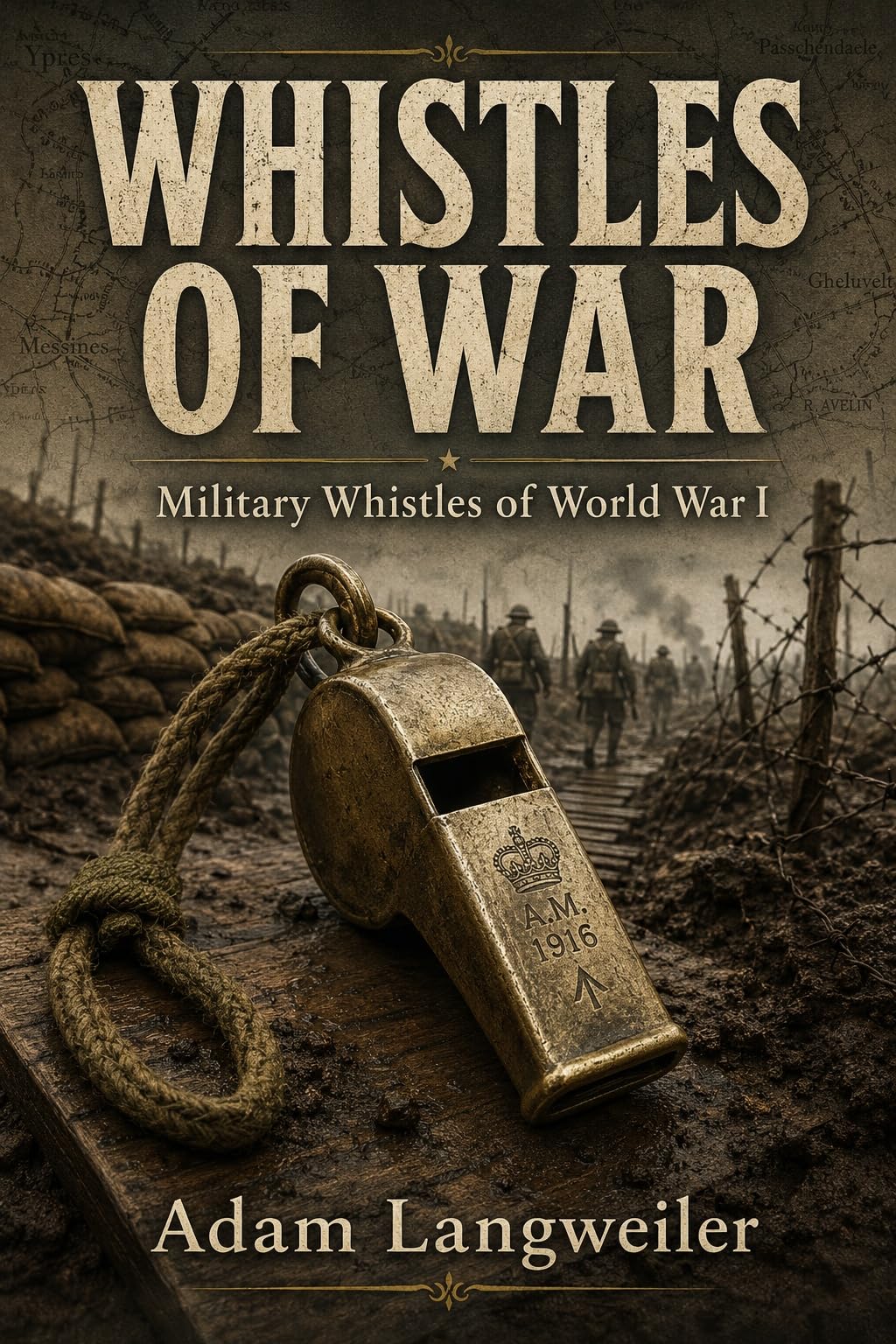
A small whistle could command men, warn of gas, control trenches, direct traffic, and become one of the most haunting sounds of the First World War.
In the mud, smoke, and noise of World War I, the human voice often failed. Artillery thundered, machine guns rattled, telephone wires were cut, and orders could disappear in the chaos of battle. Yet one small object remained simple, sharp, and effective: the military whistle.
Whistles of War: Military Whistles of World War I explores the forgotten history of these small but powerful tools of command. From British trench whistles and ACME/Hudson models to officer lanyards, gas alarms, naval calls, military police whistles, stretcher-bearer use, and private-purchase examples, this book reveals how sound helped armies function before modern battlefield communication.
Written for historians, collectors, reenactors, museum volunteers, and WWI enthusiasts, this guide combines narrative history with practical collecting advice. It explains how whistles were used, who carried them, how they were marked, how to identify originals, and how to avoid reproductions, fakes, and fantasy pieces.
Inside you will discover:
The history of military whistles before and during World War IThe role of whistles in trench warfare and “over the top” assaultsBritish, Canadian, Commonwealth, American, French, German, and Austro-Hungarian whistle useACME, J. Hudson & Co., Birmingham makers, Thunderer whistles, tube whistles, siren whistles, and naval callsHow whistles were carried on lanyards, chains, leather straps, and officer equipmentThe difference between military issue and private purchaseHow to identify original WWI whistles by marks, dates, materials, and constructionCollector warnings about fakes, reproductions, added broad arrows, and false battlefield claimsPreservation, cleaning, display, rarity, value, and provenance guidanceAppendices with timelines, maker markings, glossary terms, checklists, and suggested display labelsThe whistle is often remembered as the sound that sent soldiers over the top, but its real story is much broader. It was also a tool of training, warning, rescue, traffic control, shipboard order, gas defense, and daily military command.
Small enough to fit in the hand, yet loud enough to move men in war, the WWI whistle remains one of the most overlooked artifacts of the Great War.
Whistles of War gives this small metal voice its proper place in history.


