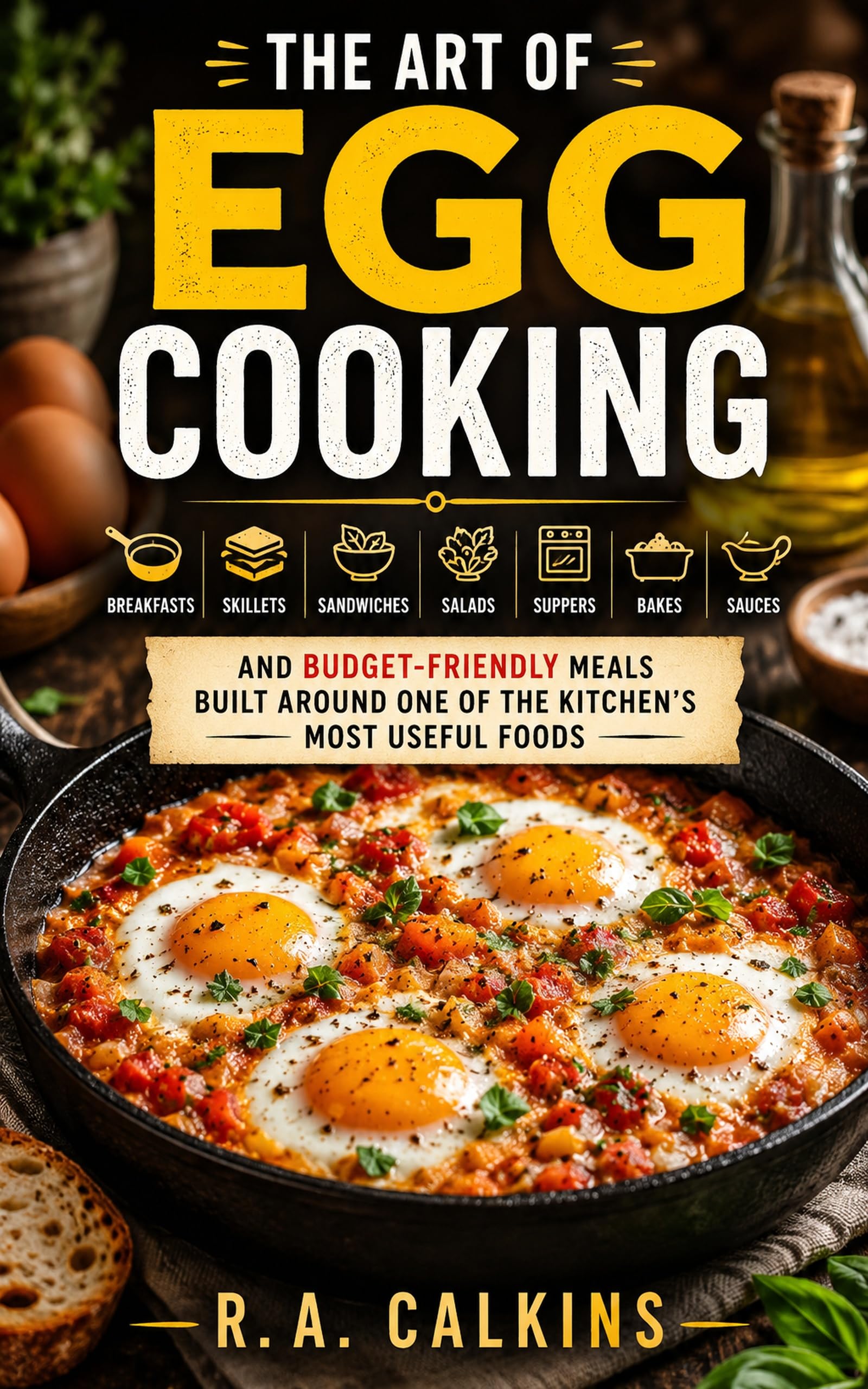
Eggs are one of the most useful foods in the kitchen, but they are often treated as if they belong only to breakfast or only to the simplest meals. The Art of Egg Cooking gives them the full attention they deserve, showing how one familiar ingredient can become breakfast, lunch, supper, meal prep, sauces, salads, sandwiches, bakes, and budget-friendly family food.
This book is built for real kitchens. It explains how eggs behave under heat, why timing matters, how texture changes the meal, and how to choose the right kind of egg for the job. A soft scramble, a folded sandwich egg, a crisp-edged fried egg, a jammy egg for bowls, a hard-boiled egg for salads, a frittata wedge for lunch, and an egg-thickened sauce are not the same thing. Each has a purpose, and this book teaches the reader how to recognize that purpose before the pan is even heated.
Inside, readers will find recipes and practical instruction for gentle scrambled eggs, fried eggs, omelets, breakfast bowls, egg sandwiches, wraps, egg salads, skillet suppers, rice and egg meals, bean and egg meals, noodle dishes, potato skillets, frittatas, casseroles, stratas, egg muffins, custards, mayonnaise, hollandaise-style sauces, egg-thickened soups, carbonara-style pasta, hard-boiled egg dressings, lunchbox meals, freezer-friendly breakfasts, and pantry-based suppers. The recipes range from beginner-friendly everyday meals to more careful techniques for cooks who want to improve their timing, texture, and confidence.
Rather than depending on pictures or sending readers away to extra PDF downloads, this book keeps the focus on clear written instruction: what to look for, when to lower the heat, when to stop cooking, how to season, how to fix common problems, and how to turn modest ingredients into complete meals. The goal is a cookbook that can stand on its own at the counter, beside the stove, and in the hands of a cook who wants practical guidance.
The book also gives special attention to budget cooking. Eggs pair beautifully with rice, potatoes, beans, bread, noodles, cabbage, greens, canned tomatoes, leftovers, and simple sauces. A few eggs can stretch a skillet, strengthen a salad, finish a bowl, bind a casserole, or turn pantry staples into a satisfying supper. This makes them especially useful for families, single cooks, packed lunches, quick breakfasts, and anyone trying to eat well without wasting food.
Readers will also learn how to avoid the most common egg mistakes: rubbery scrambled eggs, chalky boiled eggs, watery frittatas, bland egg salad, soggy sandwiches, broken sauces, overbaked casseroles, and meal-prep eggs that do not reheat well. The book explains why those problems happen and how better sequencing, moisture control, heat management, cooling, storage, and serving choices can prevent them.
The Art of Egg Cooking is for anyone who wants to do more with a carton of eggs. It is not a book of only breakfast recipes. It is a full practical guide to one of the kitchen’s most adaptable foods, showing how eggs can be tender, structured, supportive, economical, and satisfying in meals throughout the day.