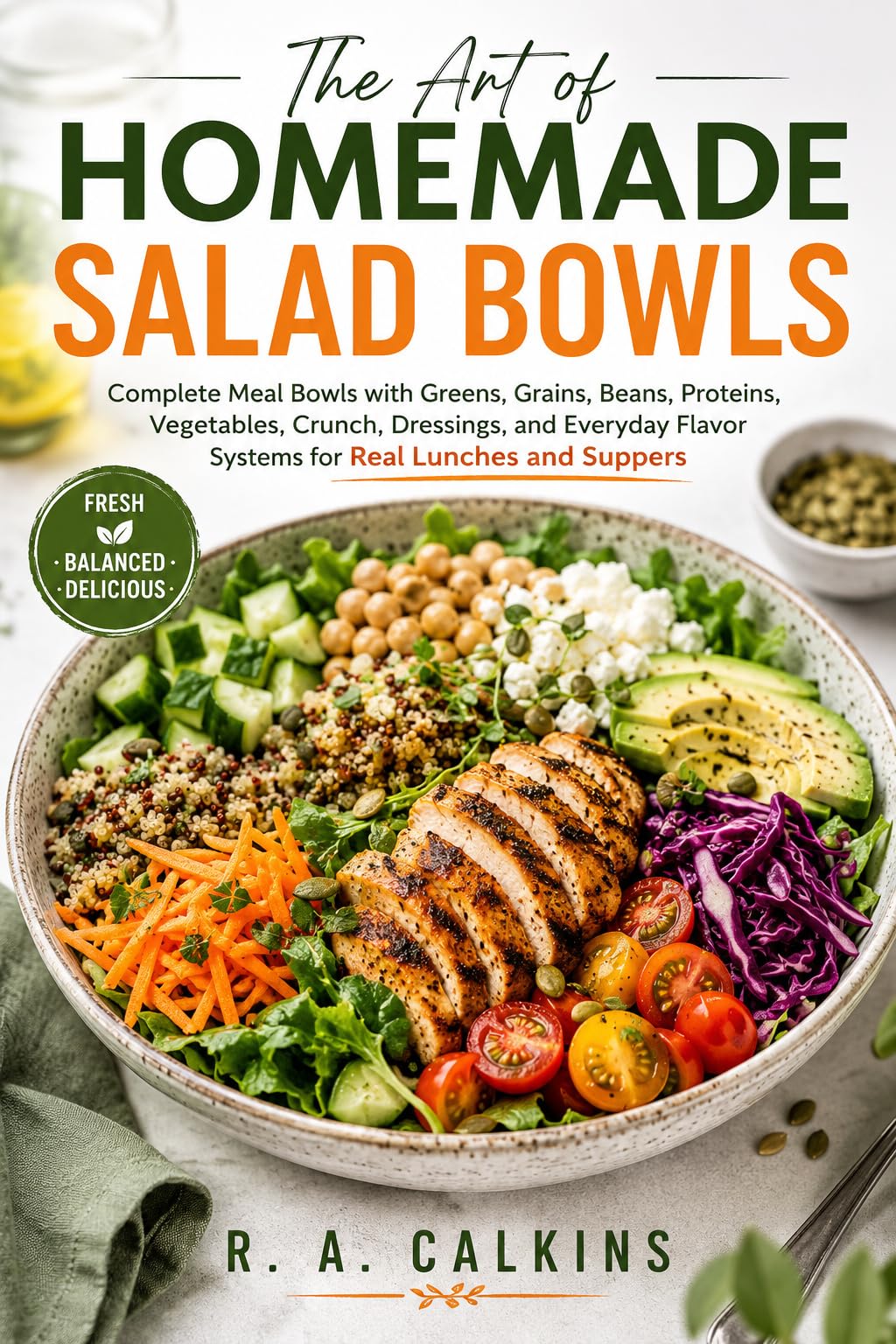
A salad bowl should be more than lettuce in a dish. It should eat like a meal.
The Art of Homemade Salad Bowls is a practical, full-meal cookbook for real lunches, suppers, packed meals, pantry meals, and everyday bowls built with balance, flavor, texture, and common sense. Instead of treating salad as a light side dish, this book teaches the home cook how to build satisfying bowls with greens, grains, beans, proteins, vegetables, crunch, dressings, and finishing touches that bring everything together.
Inside, you will learn the simple bowl-building method: choose a base, add something filling, include protein, build in vegetables, add contrast, dress with purpose, and season as you go. The book shows how to turn ordinary ingredients into complete meals that are fresh without being flimsy, hearty without being heavy, and practical enough for regular household cooking.
The recipes include leafy meal bowls, grain bowls, rice bowls, bean and lentil bowls, potato bowls, roasted vegetable bowls, protein-centered bowls, chopped cabbage bowls, warm supper bowls, packed lunch bowls, pantry bowls, and seasonal combinations. You will find bowls built with chicken, turkey, tuna, salmon, eggs, beef, pork, ham, beans, lentils, chickpeas, rice, barley, farro, potatoes, sweet potatoes, cabbage, romaine, spinach, kale, cucumbers, tomatoes, carrots, corn, mushrooms, green beans, apples, herbs, seeds, nuts, croutons, tortilla crunch, pickles, cheeses, and more.
The dressings and sauces are a major part of the book. You will learn how to use lemon vinaigrettes, mustard dressings, creamy herb dressings, peanut-lime sauces, sesame-ginger dressings, lemon-tahini dressings, buttermilk dressings, smoky lime dressings, cider-mustard dressings, pickle dressings, yogurt dressings, and other everyday flavor systems. These dressings are not just poured on top as an afterthought. They are used to season grains, wake up beans, brighten potatoes, support proteins, and make the whole bowl taste planned.
This book also teaches the practical side of bowl cooking: how to keep bowls from becoming dry, soggy, bland, too soft, or too random; how to store ingredients for make-ahead meals; how to pack lunches so the greens stay fresh and the crunch stays crisp; how to use leftovers wisely; and how to substitute ingredients without losing balance.
The recipes are written for cooks who want useful food, not complicated showpieces. Many bowls can be made from pantry staples, leftover meat, cooked rice, canned beans, boiled eggs, seasonal vegetables, sturdy greens, and a homemade dressing. Some bowls are cool and crisp. Some are warm and comforting. Some are meatless. Some are built around chicken, tuna, beef, eggs, or beans. All of them are meant to help the reader make better lunches and suppers with ingredients that are easy to understand and easy to use.
This is a straightforward cookbook focused on complete recipes, practical instruction, and clear kitchen method rather than photo sections or separate downloadable PDFs. The value is in the bowls themselves: the combinations, the dressings, the proportions, the substitutions, and the everyday judgment that helps a cook build meals with confidence.
Whether you want better work lunches, lighter suppers, hearty bowls for hungry households, economical meals from beans and grains, fresh ways to use leftover chicken or rice, or dependable dressings that make vegetables more appealing, this book gives you a complete system for making homemade salad bowls that satisfy.
Fresh, filling, flexible, and deeply practical, The Art of Homemade Salad Bowls helps turn ordinary ingredients into real meals—one well-built bowl at a time.