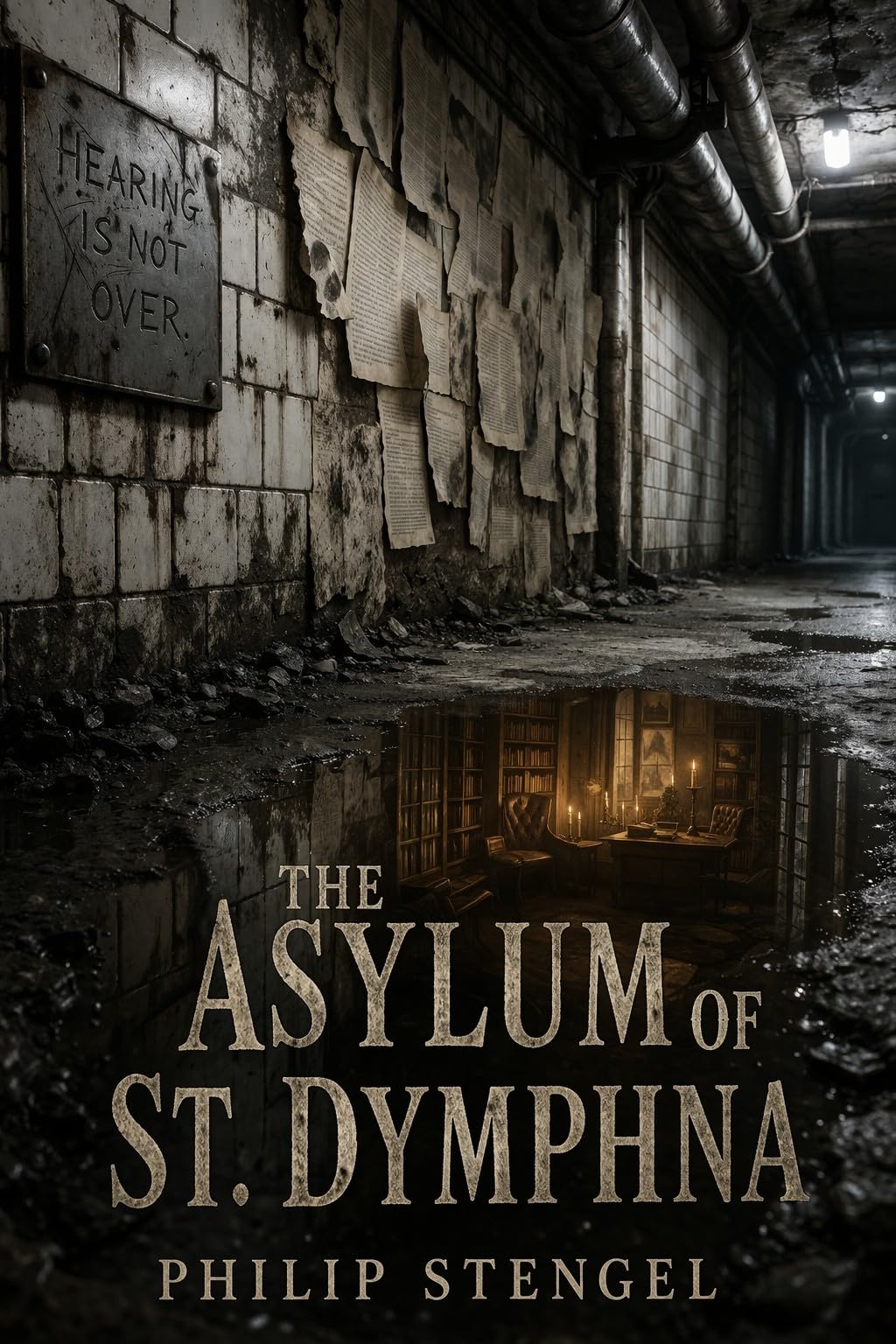
Some places do not heal the broken. They keep them.
Eight-year-old Alice is taken by a bone-white rabbit with a clockwork heart and dragged through a shadow that is not a shadow. She falls into a world of living anatomy and weaponized nursery rhymes. Bone vines grow under her skin. Mirrors grin back with a sharper version of her face. When the orderlies at St. Dymphna Asylum finally find her, sedation does not end the nightmare, it only changes the room. The wards are labyrinths, the clocks have surgeons’ hands, and the law is written on living glass that can erase your name.
In St. Dymphna, reality behaves like ritual. Rhyme binds. Silence breaks. To pass, Alice must complete the verse, answer the riddle, or pay in memory. The Chronosurgeon wants to cut her past out as a disease of time. The Cheshire Cat trades paths for pieces of her childhood. The Queen judges the Unverified and turns failures into decorations that hum broken lullabies. To survive, Alice must use the rules without becoming one of them.
Inside the book
Ritual horror with teeth: children’s rhymes as binding law, riddles as currency, mirrors that claim you by name
Biomechanical dread: bone forests, clock wards, sentient corridors, thrones that beat like hearts
A heroine under pressure: Alice learns the logic of the place, exploits loopholes, and pays real costs
Villains with systems, not capes: a surgeon of time, a predatory smile that collects names, a queen who legislates reality
A trial with two endings: be broken into the Court, or be crowned by it
Why it hits
This is psychological horror that treats folklore as a rulebook and institutions as living machines. Every victory scars. Every choice trades something you cannot easily replace. Identity is not a slogan, it is the bill that comes due when you speak the line that saves your life.
For readers who love
House of Leaves, Silent Hill, Pan’s Labyrinth, Alice retellings with teeth, institutional horror, cosmic logic that plays fair, and worlds where every image has a job.
Tone and style
Visceral without mindless splatter, lyrical without purple filler, mythic rules enforced with clinical precision. Short, escalating set pieces. Dialogue that cuts. Imagery you can smell: mildew, metal, and rose-black wind.
Content advisory
Psychological trauma, institutional abuse, body horror by implication and brief detail, sedation scenes, identity fragmentation, coercive rituals, symbolic violence involving children’s rhymes, and suicide referenced elsewhere in the mythos. The camera favors dread over gore. Reader discretion advised.
One rule to leave with
What is named can be claimed. What is silent is sentenced. Speak carefully, or the Court will finish the sentence for you.