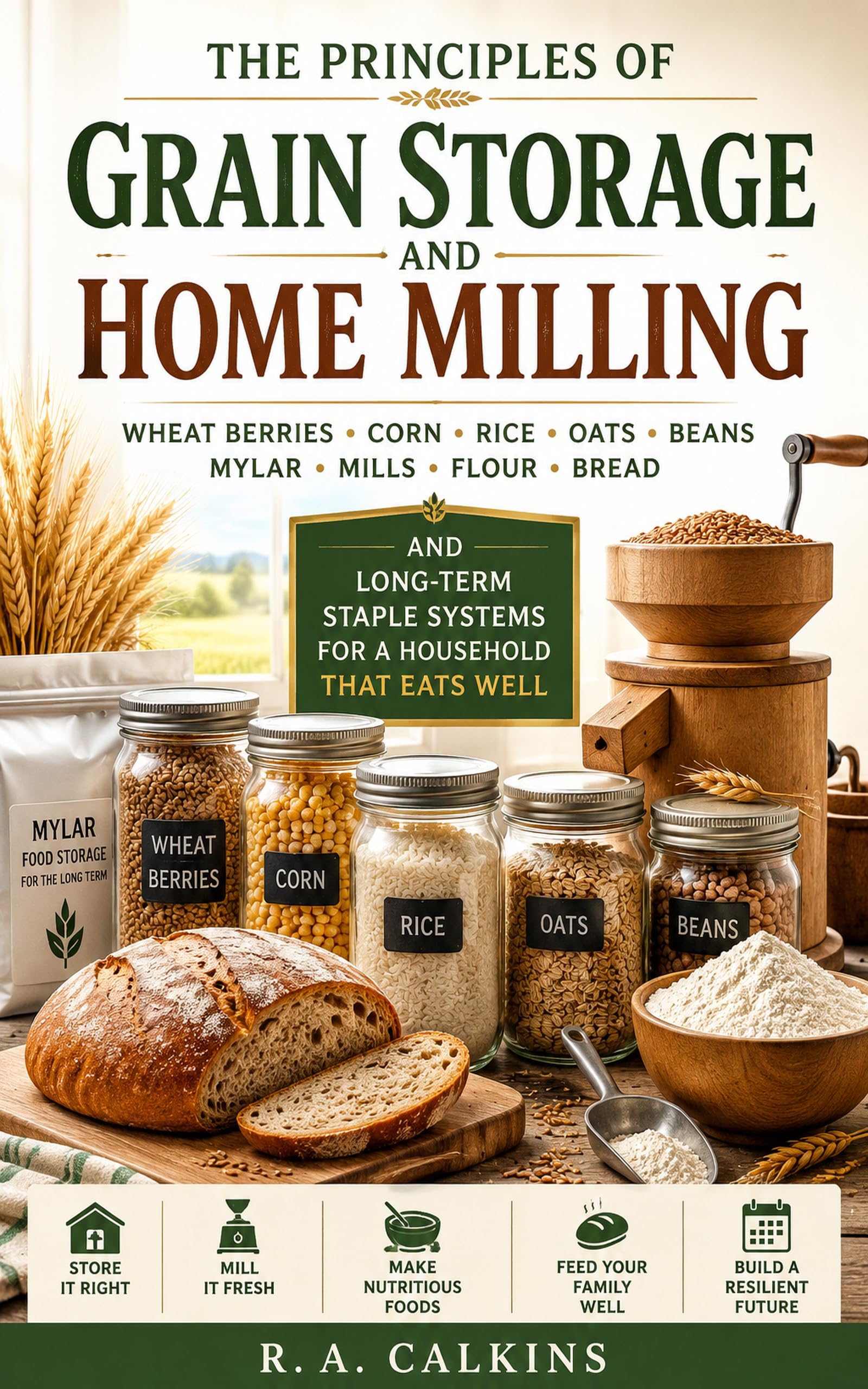
The Principles of Grain Storage and Home Milling is a practical household guide to building a stronger, wiser pantry around real staple foods: wheat berries, corn, rice, oats, beans, flour, bread, Mylar storage, grain mills, and long-term food systems that actually lead to meals. This is a plain, useful book meant to stand on its own without extra PDF downloads, photo sections, or outside packets—just clear instruction for readers who want dependable knowledge they can put to work.
Many people store food. Fewer understand how that food will actually feed their household.
This book is written for the reader who wants more than buckets in a corner. It is for the family that wants to know what to buy, how to protect it, how to rotate it, how to mill it, how to cook it, and how to make stored staples part of ordinary life before they are ever needed in harder times. Grain is not just inventory. When chosen and handled well, it becomes bread, porridge, tortillas, cornbread, rice bowls, soups, stews, pancakes, dumplings, biscuits, casseroles, and daily provision.
Inside, R. A. Calkins walks through the principles behind a grain-centered household pantry with a steady, practical voice. You will learn why whole grains often store differently than flour, why wheat berries and a grain mill can change what your pantry is able to do, why brown rice and white rice are not the same storage food, why oats vary by processing method, why dry beans deserve careful thought, and why long-term food storage must be planned around meals—not merely containers.
This book also explains the difference between storage and a system. Storage may simply ask, “Where can I put this?” A system asks better questions: How will this feed us? How long will it keep? What container protects it? How should it be labeled? How will it be rotated? What meals will it become? What tools, habits, and cooking methods does the household need before the food is truly useful?
Readers will find practical discussion of moisture, oxygen, heat, insects, rodents, light, packaging, labeling, rotation, and household use. The book covers Mylar bags, buckets, oxygen absorbers, inspection, dry goods, milling, flour freshness, and the ordinary kitchen habits that turn stored grain into food on the table.
Rather than encouraging fear, this book emphasizes order, prudence, gratitude, and daily usefulness. A strong pantry is not built around strange foods no one eats. It is built around staples the household can already prepare with confidence: rice and beans, oats, cornmeal, wheat, flour, pasta, soups, breads, and filling meals made from modest ingredients.
Whether you are new to bulk staples or already have wheat, rice, oats, corn, and beans on the shelf, this guide will help you think more clearly about what belongs in your pantry and why. It is especially useful for readers interested in home milling, long-term staple storage, frugal household systems, practical preparedness, and old-fashioned food wisdom applied to modern homes.
If you want a pantry that is more than emergency supplies—if you want stored food that can become real meals, real bread, and real household strength—The Principles of Grain Storage and Home Milling will help you build with understanding.