Turn “broken” thrift-store finds into high-fidelity audio gear.
Somewhere near you, a stereo receiver built in the 1970s is sitting at an estate sale or in the back corner of a thrift store, marked down to twenty dollars because the last owner decided it was broken. But here is the reality of the analog renaissance: most of that heavy, copper-wound, steel-chassis equipment is not actually broken. It is just dirty, tired, and waiting for someone who knows the difference between a fatal electronic fault and a fifteen-minute mechanical fix.
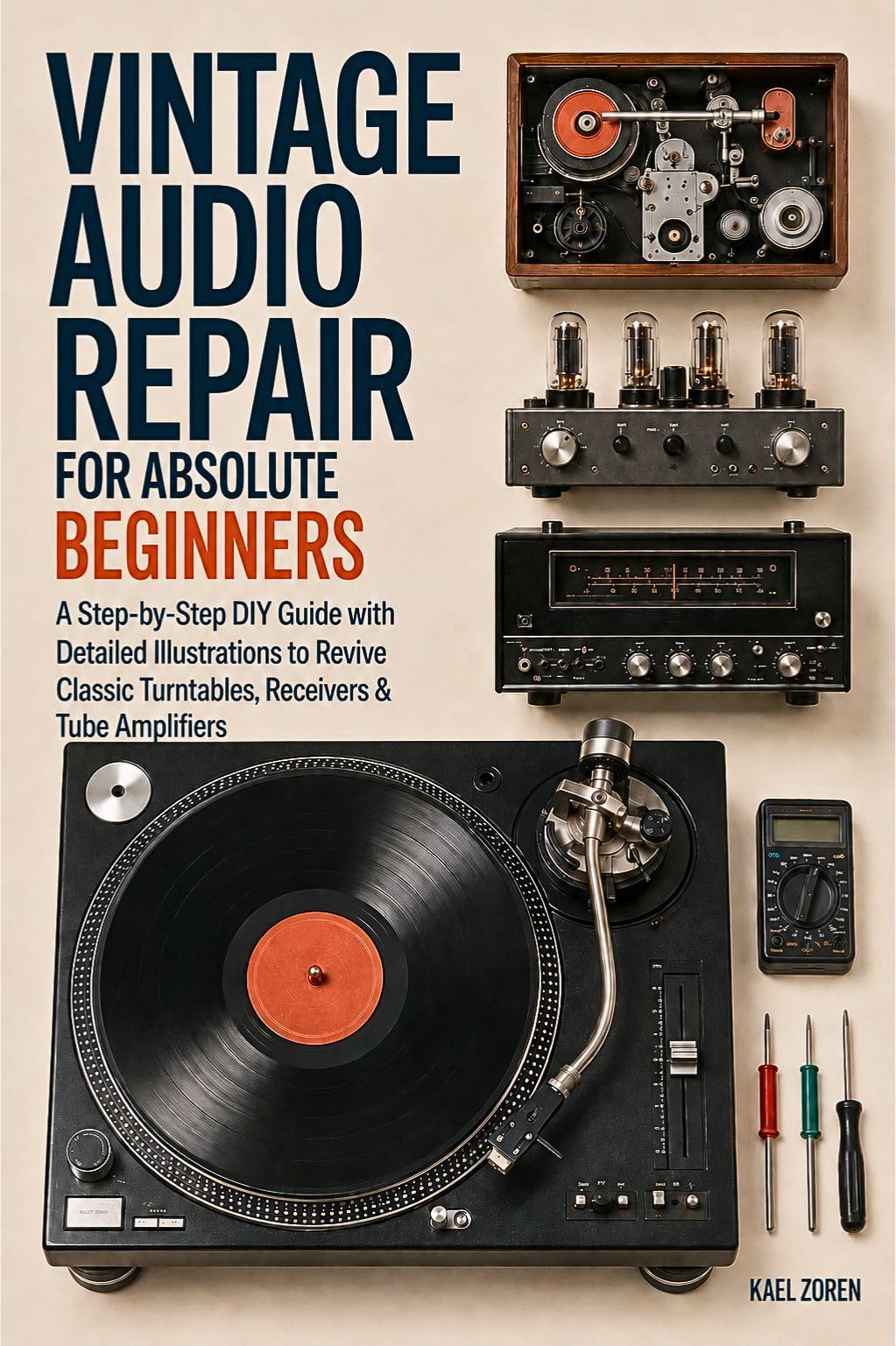
Vintage Audio Repair For Absolute Beginners is a step-by-step DIY guide for bringing classic stereo equipment back to life. Written for the everyday hobbyist, this manual skips the dense engineering theory and focuses entirely on the practical, real-world skills you need to safely diagnose and repair the common faults that actually take down aging gear.
Bring a sluggish belt-drive turntable back up to speed. Banish the crackling static from a solid-state receiver. Tackle your first tube amplifier restoration safely. This book gives you the exact roadmap to get it done.
Inside, you will learn how to:Set up a safe workbench: Solder clean joints, read a digital multimeter confidently, and build a “dim bulb tester” to power up unknown equipment without frying irreplaceable parts.Revive turntables: Fix slow platters, kill persistent ground hum, swap perished belts, and perfectly align your cartridge and stylus for distortion-free vinyl playback.Rescue solid-state receivers: Clean contacts correctly and learn exactly why using the wrong spray ruins carbon potentiometers. Isolate dead channels and perform a full capacitor recap to get that punchy, clear sound back.Work on tube amplifiers safely: Handle high-voltage circuits using the “one-hand rule” and build a capacitor discharge tool. Understand output tube matching and bias adjustment.Source parts and pick the right projects: Track down service manuals and cross-reference obsolete transistors. Spot the red flags that separate a rewarding project from an expensive money pit.You do not need an engineering degree to fix your own gear. You just need the right mindset, a few basic tools, and a reliable guide. Stop letting simple fixes turn beautifully built vintage electronics into landfill waste.
Pick up your copy today, clear off your workbench, and start saving classic audio.