A worm bin under a kitchen sink in a Portland apartment. That is where this book started. Ruth Meadows has kept worm bins for over a decade, scaled from one household bin to a system that produces enough castings to top-dress 400 square feet of garden beds per season, and documented every failure along the way — the pound of worms killed by too many citrus peels, the bin that went anaerobic in summer heat, the first-year overcrowding she corrected by splitting into two bins. Worm Farming for Beginners opens with the species question other books bury: Eisenia fetida (red wigglers), not Lumbricus terrestris (garden earthworms). Put garden worms in a bin and they die within a week. Get the species right and the rest of the system works. Inside you’ll find DIY bin setup for under $30, feeding charts with a clear what-to-feed/what-to-avoid table, temperature limits stated with consequences, troubleshooting organized by smell and symptom, three harvesting methods compared, and castings application rates for seed starting, transplanting, and foliar tea. No prior composting experience required — just a bin, a pound of worms, and this book. Setup costs under $70 total. First harvest of finished castings in 60 to 90 days.
save
$9.99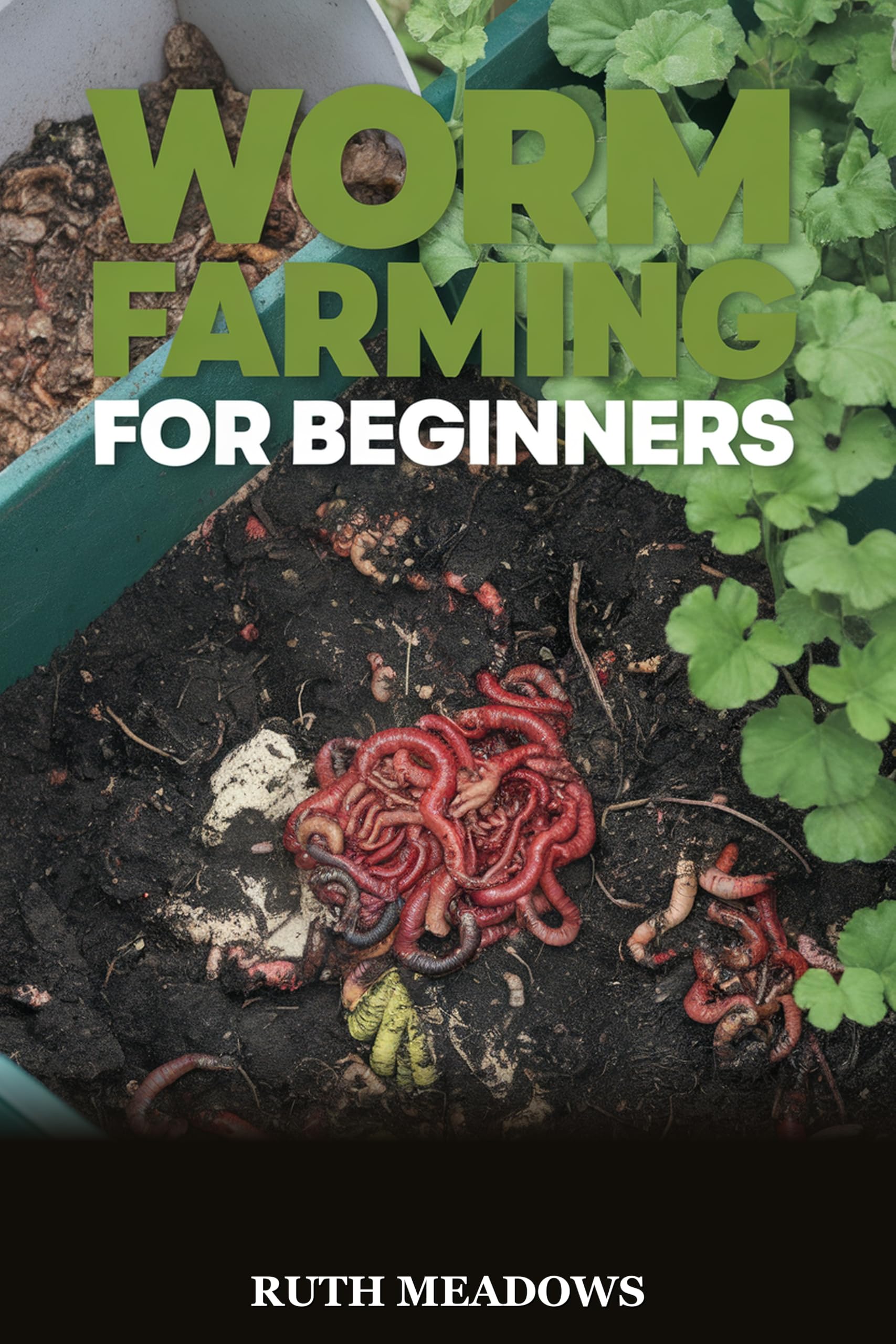
Worm Farming for Beginners: Setting Up Your Worm Bin, Making Rich Vermicompost, and Growing Healthier Plants at Home
$0.00$9.99
Practical beginner’s guide to indoor worm composting: DIY bins under $70, correct worm species, feeding and troubleshooting charts, harvesting methods, and usable castings in 60–90 days.