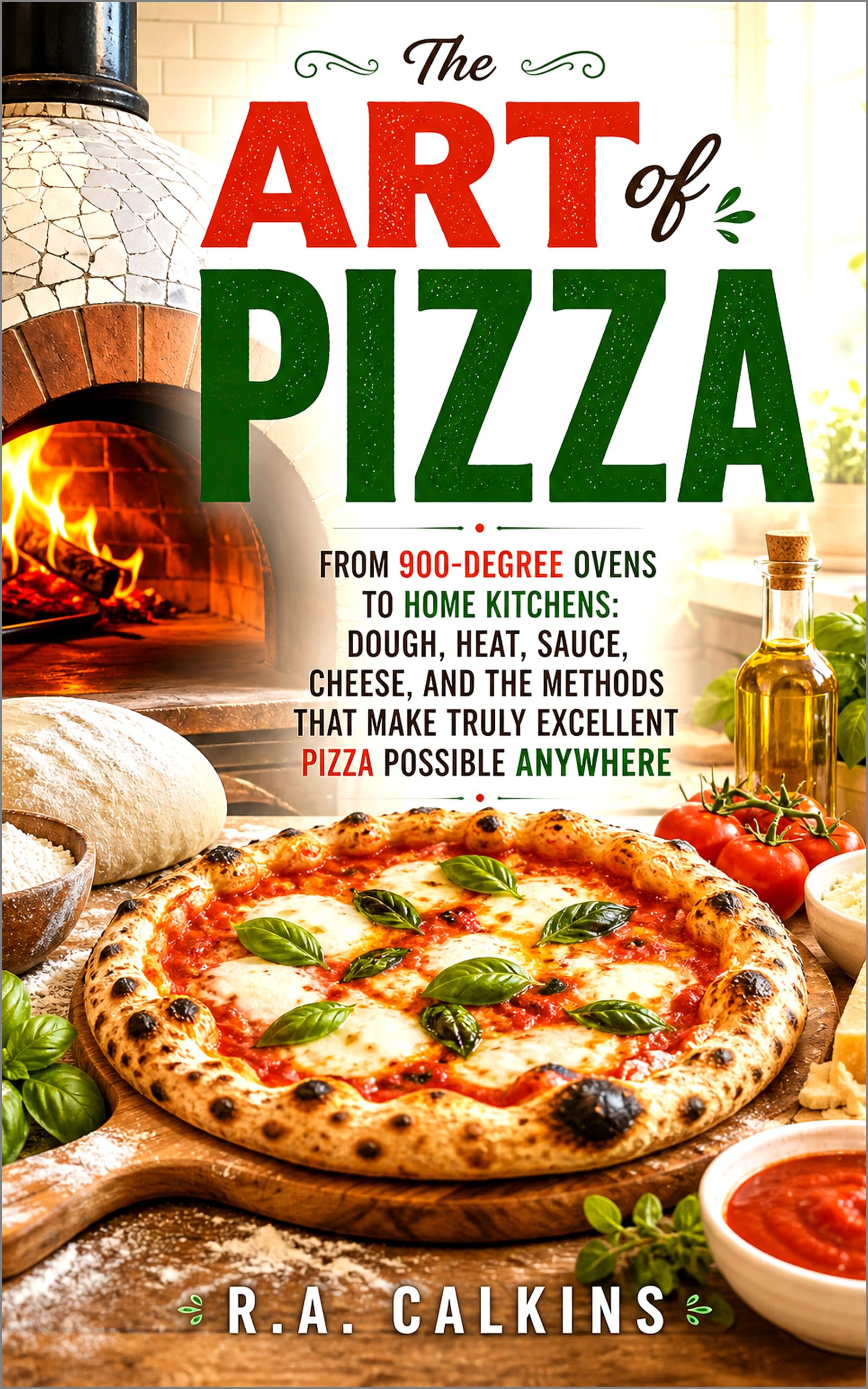
The Art of Pizza is a serious, richly explained guide to one of the world’s most beloved foods. Far more than a casual collection of recipes, this book examines pizza as a craft shaped by judgment, balance, ingredients, fermentation, structure, and heat. From blazing 900-degree ovens to ordinary home kitchens, it shows why truly excellent pizza is possible in more places than most people think—and why the difference between forgettable pizza and memorable pizza often comes down to understanding a few key principles and applying them well.
Inside these pages, you will explore the real foundations of outstanding pizza: dough that has strength, flavor, and proper fermentation; sauce that supports rather than overwhelms; cheese used with restraint and purpose; toppings chosen for harmony instead of excess; and heat managed with intelligence rather than guesswork. This book treats pizza with the seriousness it deserves, while still keeping the instruction practical, clear, and useful for real cooks working with real equipment.
This is a text-focused book designed for readers who want explanation, method, and substance. There are no PDF downloads and no picture section in this book, because the aim is to give you something more valuable: direct instruction, careful reasoning, and durable methods you can apply with confidence in your own kitchen.
Whether you are working with a stone, a steel, a cast-iron pan, a sheet pan, or a professional-grade oven, The Art of Pizza helps you understand what is happening and why. It explains how oven limitations can be overcome, how fermentation can improve results, how shaping affects bake and structure, how sauce and cheese placement influence balance, and how better decisions produce better pizza. Instead of chasing one dramatic trait at the expense of the whole, this book teaches you to build a complete pie in which crust, sauce, cheese, toppings, and bake all agree with one another.
You will also gain a stronger understanding of pizza styles, common mistakes, and the cause-and-effect thinking that leads to steady improvement. Why did the crust bake pale? Why did the center stay wet? Why did the dough tear? Why did the slice droop? Why did the top finish before the bottom—or the bottom before the top? These are the kinds of questions serious cooks must learn to answer, and this book is written to help you answer them well.
For readers who are tired of shallow pizza advice, scattered internet tips, and recipe-only approaches that never explain the deeper reasons behind success or failure, The Art of Pizza offers something more substantial. It honors both high-level pizza traditions and the determined home cook who wants to produce remarkable results with the tools already on hand.
If you want a pizza book that respects the craft, explains the method, and helps you make better decisions from the mixing bowl to the final bake, The Art of Pizza was written for you.