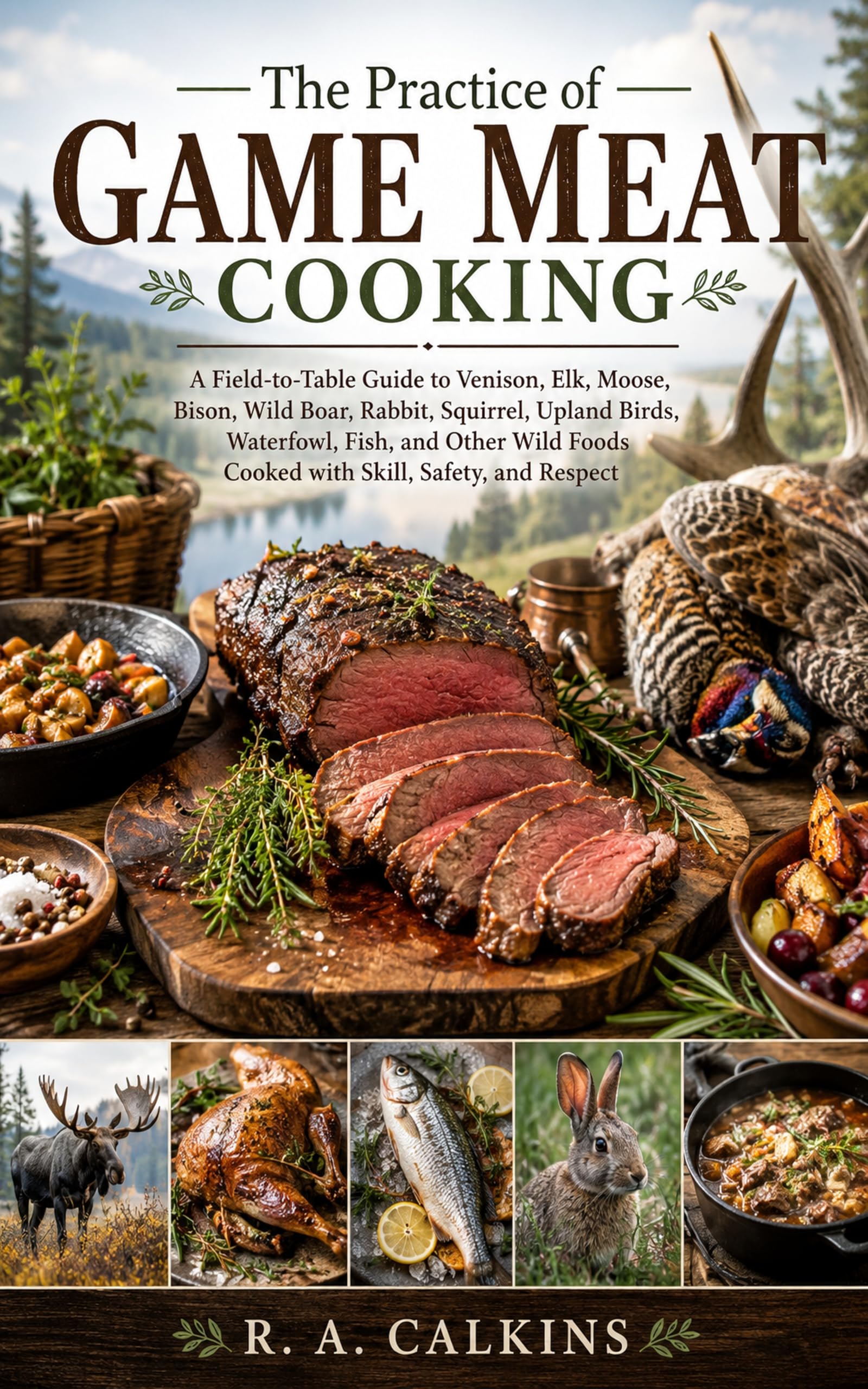
The Practice of Game Meat Cooking is a complete field-to-table guide for cooks who want to handle wild meat with confidence, care, and skill.
This is a straightforward reading guide, written for Kindle and paperback use, with clear instruction throughout. It does not rely on picture sections, printable PDF downloads, or outside visual extras. Instead, it gives the reader practical, orderly guidance directly in the book, so the focus stays on understanding the meat, the method, and the meal.
Game meat is different from grocery-store meat. Venison is not beef. Wild duck is not chicken. Rabbit is not pork. Fresh fish is not just another fillet in a package. Each animal, cut, and catch has its own nature, and good cooking begins when the cook learns to respect those differences.
R. A. Calkins walks the reader through the full path from field to table: clean handling, quick cooling, careful trimming, proper storage, safe temperatures, seasoning, dry brining, browning, resting, slicing, grinding, braising, roasting, frying, smoking, stewing, and making the most of the harvest. This is not merely a collection of recipes. It is a practical cooking education for anyone who wants to understand why wild meat sometimes turns dry, tough, strong, muddy, livery, or unpleasant—and what to do differently.
Inside, readers will learn how to think through the important questions:
Is the meat lean or fatty?
Is the cut tender or tough?
Should it be seared quickly, cooked slowly, ground, smoked, stewed, fried, roasted, or braised?
Does the fat belong in the dish, or should it be trimmed away?
Should the meat be salted ahead of time, marinated briefly, cooked gently, or handled with more heat?
How should fish, birds, small game, and large game be treated differently?
The book gives special attention to venison, elk, moose, bison, wild boar, bear, rabbit, squirrel, upland birds, wild turkey, duck, goose, freshwater fish, and other wild foods commonly brought into the home kitchen. It also explains why safety must come first, especially with ground game, wild hogs, bear, poultry, fish, and any meat that has been poorly cooled or mishandled.
For hunters, anglers, homesteaders, outdoor families, and home cooks who receive game meat from others, this book offers a calm and useful system. It teaches the reader to inspect meat carefully, trim wisely, choose the right method, preserve quality in the freezer, and stretch the harvest with good judgment. Steaks, roasts, shanks, shoulders, neck, trim, bones, organs where appropriate, birds, fish, and ground meat all have a place when the cook knows what each one is best suited to become.
The goal is simple: better meals from valuable food.
A venison backstrap should not be cooked like a pot roast. A shank should not be rushed like a steak. A duck breast should not be treated like dry chicken. A rabbit should not be dried out. A squirrel should not be hurried. A fish should not be neglected. A wild hog should be handled with caution. A freezer full of game should not become a pile of mystery packages.
The Practice of Game Meat Cooking helps readers move beyond guesswork and build dependable kitchen judgment. With plain instruction, respect for traditional foodways, and attention to modern food safety, this book gives wild meat the careful treatment it deserves—from the moment it is brought home to the moment it reaches the table.