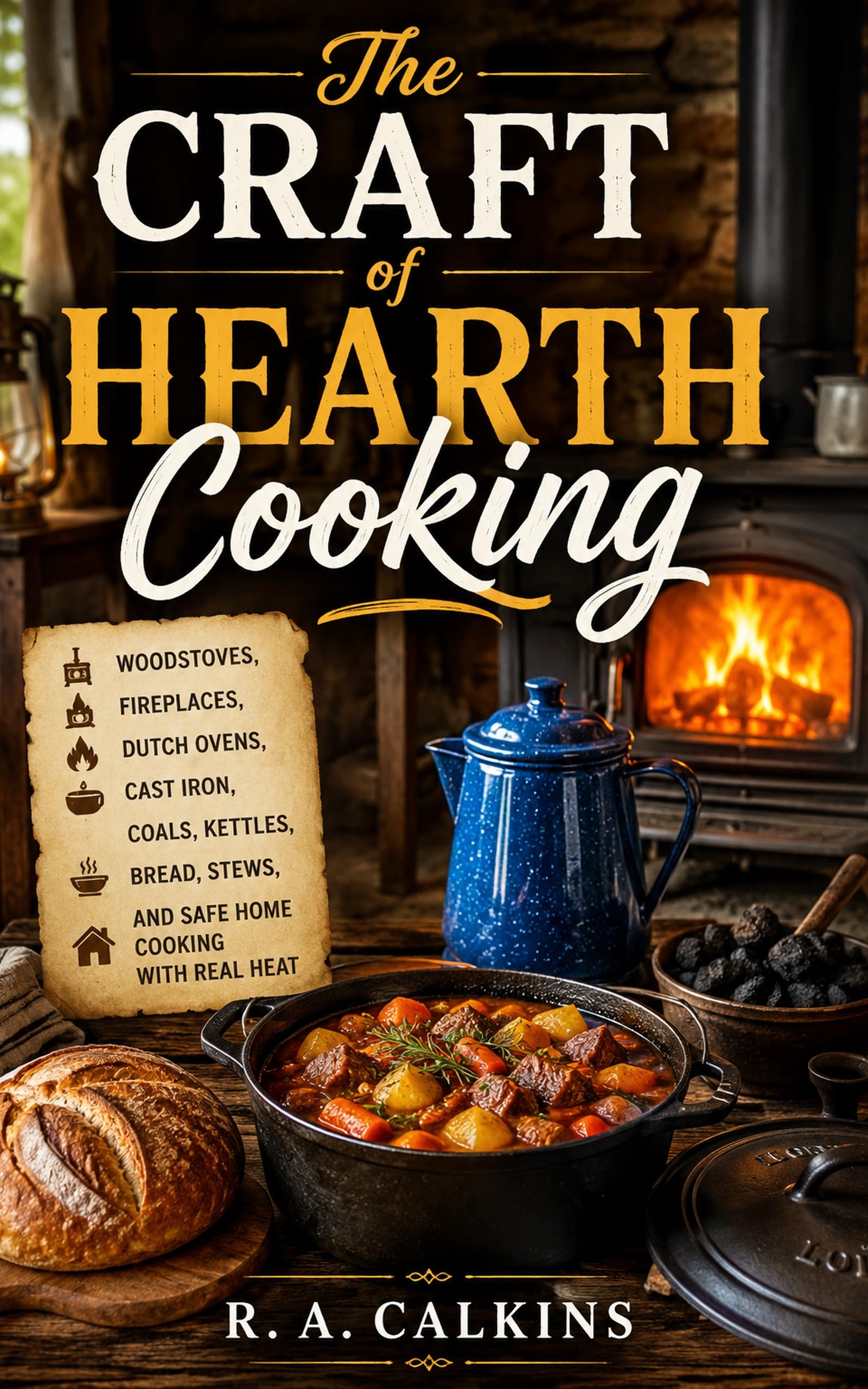
The Craft of Hearth Cooking is a practical guide to cooking with real heat: woodstoves, fireplaces, Dutch ovens, cast iron, coals, kettles, bread, stews, and the steady household skills that help a cook prepare food when the heat source is not a button, but a living fire.
This is a text-based instructional book, designed to stand on its own without separate PDF downloads, picture files, or outside materials. The guidance is written directly into the chapters with clear explanations, practical signs to watch for, and usable cooking direction, so readers can learn from the words on the page and apply the skills in their own kitchen, cabin, camp, homestead, or wood-heated home.
Inside, readers will find instruction for safe and useful hearth cooking, along with common, practical foods suited to this kind of cooking: breads, stews, beans, potatoes, vegetables, kettle foods, skillet meals, Dutch oven dishes, and other simple, hearty preparations that belong naturally around coals, iron, covered pots, and steady heat. Rather than being a glossy picture cookbook, this is a hands-on cooking guide for people who want to understand the method, not merely follow a timer.
Hearth cooking begins with a plain truth: real heat must be respected. A modern stove can be adjusted with a dial, and an electric oven can be set to a number, but a hearth asks the cook to pay attention. Flame, coal, ash, iron, air, distance, moisture, and time all matter. A good hearth cook learns the difference between fast flame and steady coals, between fierce heat and holding heat, between food that is simmering well and food that is beginning to scorch.
This book teaches that judgment.
Readers will learn how to think about the hearth as a map of heat. One place may boil a kettle. Another may hold soup at a gentle simmer. Another may warm bread or finish a covered pot. A Dutch oven may need heat beneath and above. A skillet may need to be moved, turned, lifted, or allowed to rest. A stew may need patience. Bread may need stored heat. Beans may need time and steady care. In hearth cooking, the recipe may guide the cook, but the cook must still watch.
The Craft of Hearth Cooking is especially useful for readers interested in:
woodstove cooking
fireplace cooking
Dutch oven cooking
cast iron cooking
off-grid cooking
blackout meals
homestead kitchens
camp and cabin food
cold-weather cooking
traditional household skills
safe cooking with flame, coals, and iron
The book also emphasizes safety. Real heat can feed a household, but it must be handled with care. The reader is reminded to watch the fire, the food, the cookware, and the surrounding area. Clearances, children, pets, sleeves, towels, paper, baskets, hot lids, heavy pots, and live coals all matter. Hearth cooking is not careless cooking. It is attentive cooking.
This guide is not about making the past into a museum piece. It is about recovering useful skills for the present. Whether the reader lives with a woodstove, cooks outdoors, keeps cast iron, prepares for power outages, enjoys old-fashioned kitchen methods, or simply wants to understand how food behaves around real heat, this book offers a grounded, practical path forward.
With steady instruction and a plainspoken style, R. A. Calkins leads the reader into the craft of fire, coals, kettles, iron, bread, stew, and safe home cooking. This is a book for the cook who wants more than convenience. It is for the cook who wants skill, patience, judgment, and the satisfaction of preparing good food with heat that must be watched, respected, and understood.