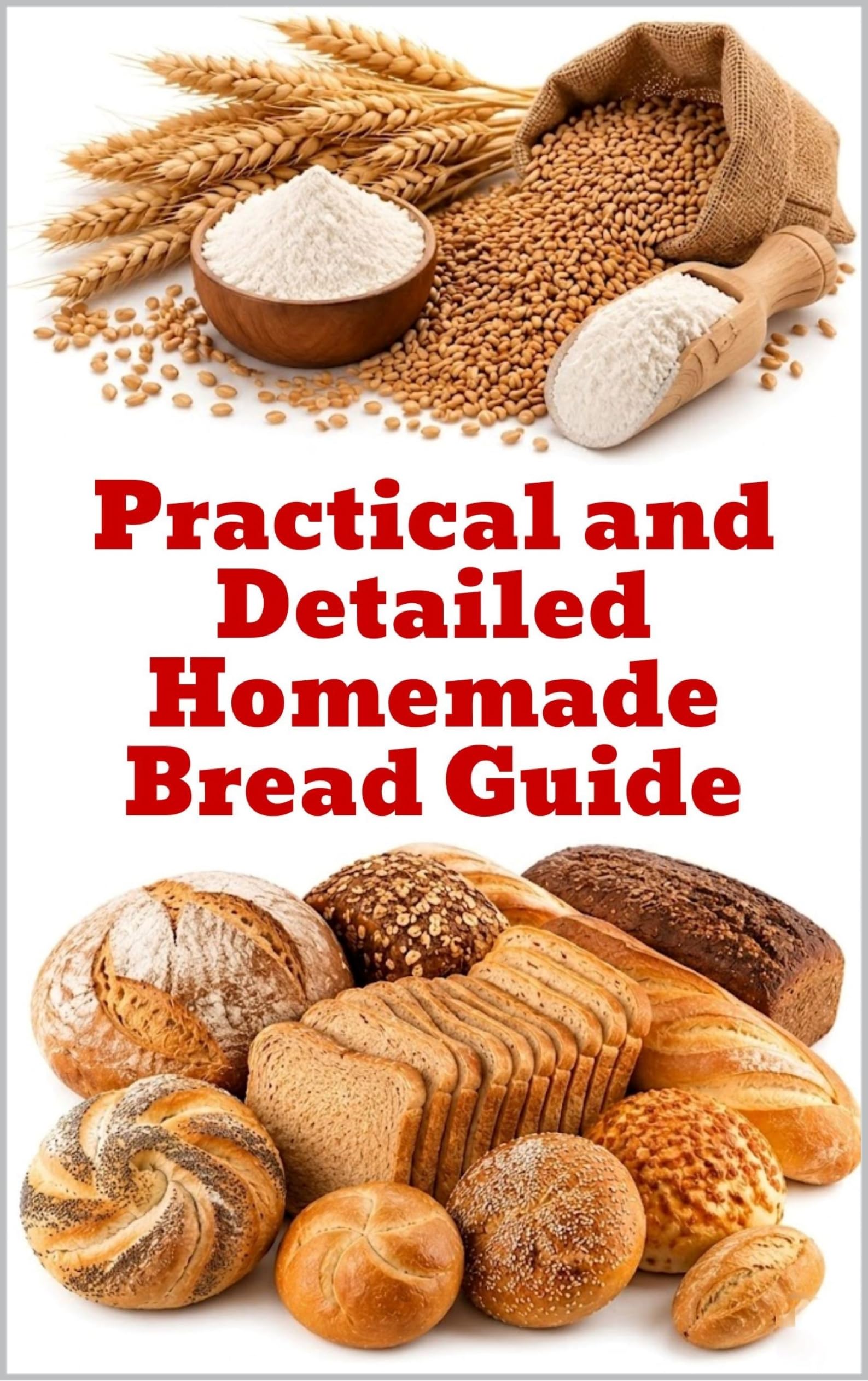
“Practical and Detailed Homemade Bread Guide” by Zulfiqar Khan, has been written after a focused study of bread making as a complete practical kitchen process, covering how simple ingredients are transformed into different types of bread through controlled steps of mixing, dough development, fermentation, shaping, and baking. It brings together how common flours such as wheat, along with other grain-based flours, behave in real baking conditions, and how changes in ingredients and proportions directly affect structure, softness, and texture.
The book follows bread making as a continuous process, starting from preparing dough and understanding kneading techniques, moving through fermentation stages where dough develops flavor and strength, and continuing into shaping and proofing before baking. It also explains how different baking methods such as oven baking, pan baking, clay pot baking, and traditional high-heat methods influence the final bread, especially in terms of crust formation, internal softness, and overall consistency. Different bread forms such as loaves, rolls, buns, and flatbreads are included as natural outcomes of the same core process rather than separate recipes.
It also focuses on practical improvement in home baking, including how to identify and correct common problems such as poor rise, dense texture, or uneven baking, and how small adjustments in ingredients and handling can change results significantly. Storage, freshness, and basic preservation are also included to help understand how bread behaves after baking. The overall purpose of the book is to give a clear, practical understanding of bread making as a skill that can be controlled and improved with practice in a home kitchen.