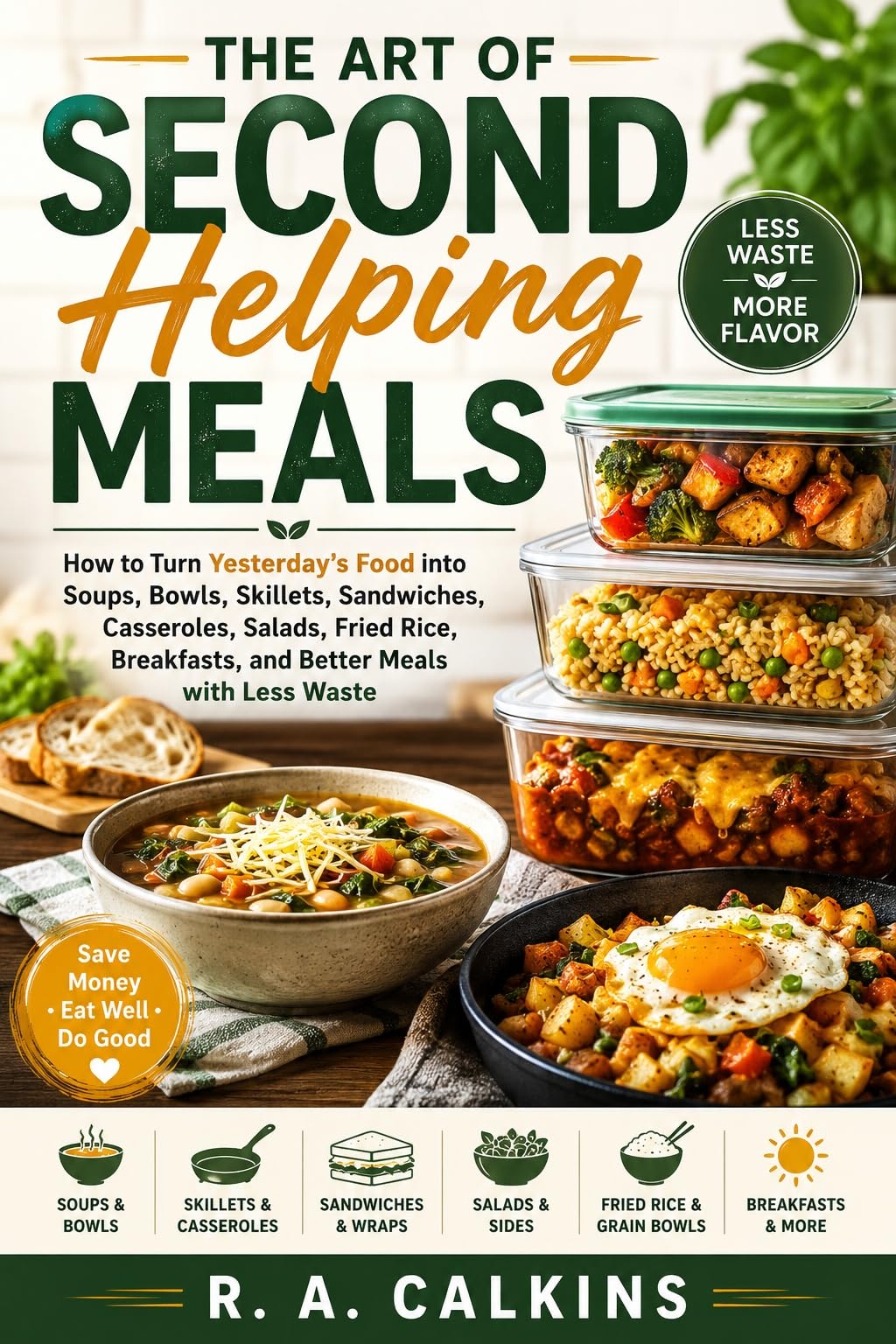
The Art of Second Helping Meals is a practical household cooking guide for anyone who wants to turn yesterday’s food into useful, satisfying meals instead of letting good food disappear in the refrigerator. R. A. Calkins teaches a simple but powerful way of thinking: leftovers are not failed meals; they are ingredients waiting for their next form.
This book is for families, busy households, single cooks, budget-conscious readers, home cooks with crowded refrigerators, and anyone who wants to waste less food without eating the same plate over and over again. Rather than relying on complicated techniques or specialty ingredients, this guide shows how ordinary cooked food can become soups, bowls, skillets, sandwiches, casseroles, salads, fried rice, breakfasts, tacos, toast meals, pasta dishes, potato meals, bean meals, freezer starters, packed lunches, sauces, and more.
Inside, you will learn how to look at cooked rice and see fried rice, soup, bowls, casseroles, and breakfast. You will learn how to turn chicken and turkey into moist soups, salads, wraps, gravies, skillet meals, and casseroles instead of dry reheated slices. You will see how beans and lentils can become tacos, bowls, soups, spreads, salads, rice meals, and freezer packs. Potatoes, pasta, bread, grains, vegetables, sauces, broths, and small portions are all given practical second-helping uses.
The recipes are household-focused and flexible. They include clear-broth chicken and rice soup, tomato bean vegetable soup, creamy potato and ham soup, roasted vegetable puree soup, chicken rice bowls, bean and rice bowls, potato hash, skillet pasta, chicken salad wraps, bean tacos, casseroles, breakfast scrambles, fried rice, pasta salads, freezer soup starter bags, gravy toast, loaded potato bowls, leftover egg bakes, and many more. The recipes are written to help the cook understand the method, not simply follow a rigid formula.
This is not a picture-heavy cookbook, and it does not send the reader away to chase extra PDF downloads. The instruction is kept directly in the book so the reader can focus on the kitchen work itself: seeing what is available, judging what it can become, storing it wisely, seasoning it well, and serving it in a form the household will actually eat.
The book also teaches the systems that make second-helping cooking work: cooling food properly, labeling containers, using a “use-first” zone, keeping bridge ingredients on hand, freezing with purpose, planning meals that create useful second helpings, packing lunches realistically, and troubleshooting common problems like dry meat, bland beans, soggy vegetables, salty ham, tired casseroles, soft textures, and too-small portions.
At its heart, The Art of Second Helping Meals is about stewardship, order, and practical home cooking. It helps the reader protect money, reduce waste, save time, and bring yesterday’s food back to the table with care. With clear patterns and many adaptable recipes, this book gives home cooks a dependable way to turn what remains into meals worth serving.