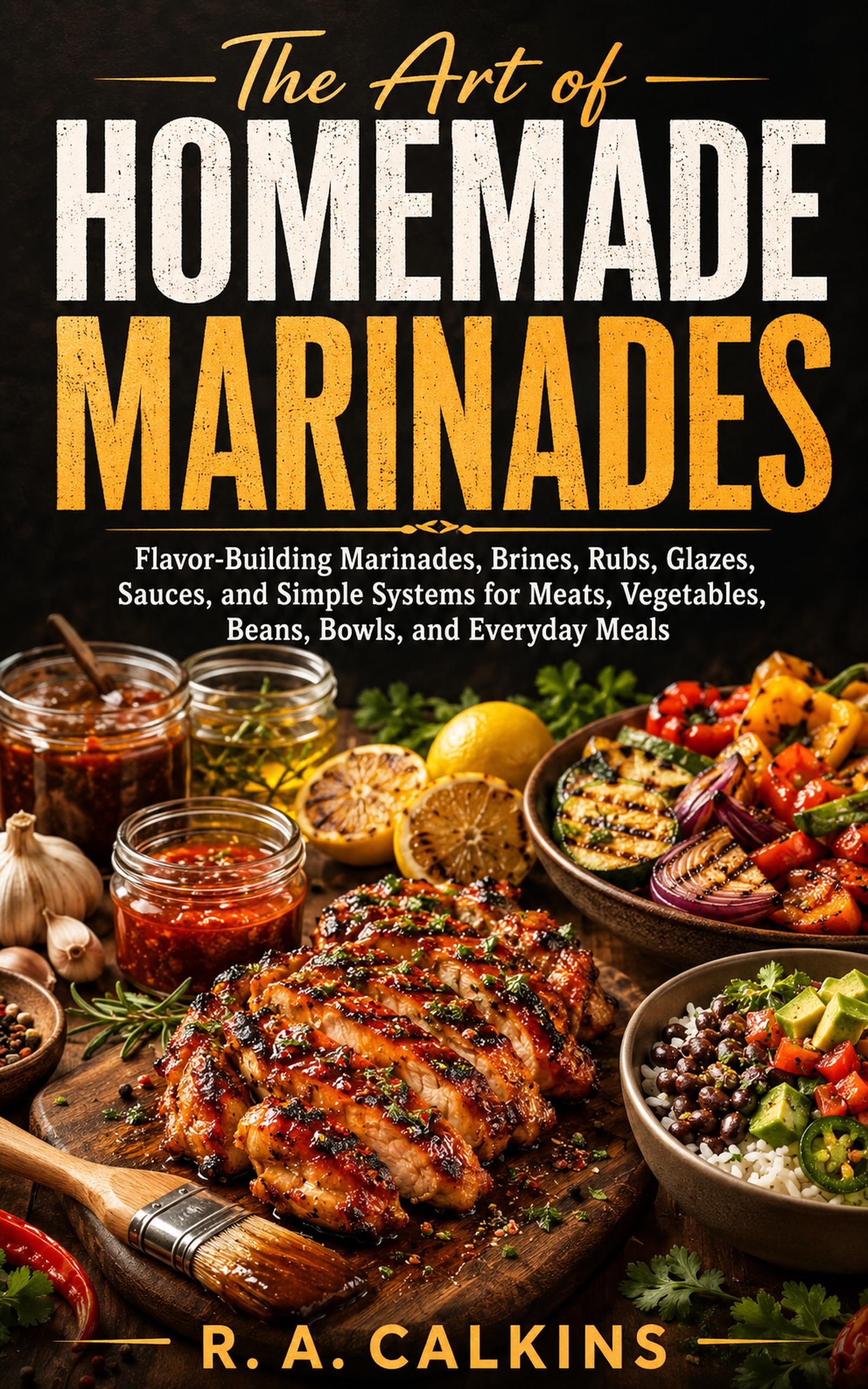
Transform ordinary meals into deeply seasoned, flavorful dishes with The Art of Homemade Marinades, a practical guide to building better marinades, brines, rubs, glazes, finishing sauces, and flavor systems from simple kitchen ingredients.
A good marinade is more than liquid in a bowl. It is a way to season with purpose, balance salt and acid, carry herbs and spices, protect food from harsh heat, improve browning, and bring life to everyday meals before they ever reach the pan, oven, grill, skillet, broiler, air fryer, or slow cooker. This book teaches the working parts of marinades clearly, so the reader is not dependent on bottled products, guesswork, or one-size-fits-all recipes.
Inside, readers will learn how salt, brines, acids, oils, aromatics, herbs, spices, sweetness, umami, fermentation, dairy, paste marinades, dry rubs, and glazes all work together. The book explains why some foods need a long rest while others need only minutes, why seafood should not be treated like beef, why sugar can burn if used carelessly, why acid can brighten or damage depending on timing, and how to build flavor without overpowering the food itself.
This is a complete reading-and-cooking guide designed to stand on its own. There are no PDF downloads or pictures in this book; instead, the instruction, formulas, recipes, timing guidance, troubleshooting help, and practical cooking systems are all written directly into the pages for easy use in the kitchen.
The recipes in this book include marinades for chicken, turkey, pork, ham-style meals, sausage-style meals, beef, lamb, fish, shrimp, seafood, vegetables, mushrooms, potatoes, beans, grains, pasta, bowls, tofu, cabbage, carrots, cauliflower, squash, eggplant, rice bowls, pantry meals, roasted suppers, skillet meals, grilled foods, and make-ahead meal planning. Readers will find bright citrus marinades, savory soy-ginger marinades, yogurt and buttermilk marinades, mustard and vinegar systems, miso and umami-rich marinades, smoky rub-style pastes, herb oils, vegetable finishing marinades, bean and grain marinades, sweet-and-savory glazes, pantry-friendly sauces, and master recipes that can be adapted again and again.
Rather than offering only isolated recipes, The Art of Homemade Marinades teaches a flexible system. A lemon-herb marinade can become a chicken marinade, a bean dressing, a vegetable finish, or a bowl sauce. A soy-ginger mixture can season beef, mushrooms, tofu, rice bowls, or noodles. A mustard-cider marinade can work with pork, potatoes, cabbage, turkey, or roasted vegetables. Once the reader understands the structure, new combinations become easier and more dependable.
The book also covers safe marinade handling, clean reserved portions, proper refrigeration, container choices, timing charts, raw-meat safety, how to avoid over-marinating, how to fix flat or harsh marinades, and how to save meals that taste too salty, too sour, too sweet, too smoky, too weak, or too strong.
Written in a plain, practical style, this guide is for home cooks who want food that tastes intentional without becoming complicated. Whether preparing grilled chicken, roasted vegetables, pork chops, steak tips, shrimp skewers, bean bowls, potato sides, pantry meals, or make-ahead suppers, readers will learn how to build flavor with confidence.
The Art of Homemade Marinades is for anyone who wants better everyday meals, stronger kitchen judgment, and a dependable way to turn simple ingredients into seasoned, balanced, memorable food.