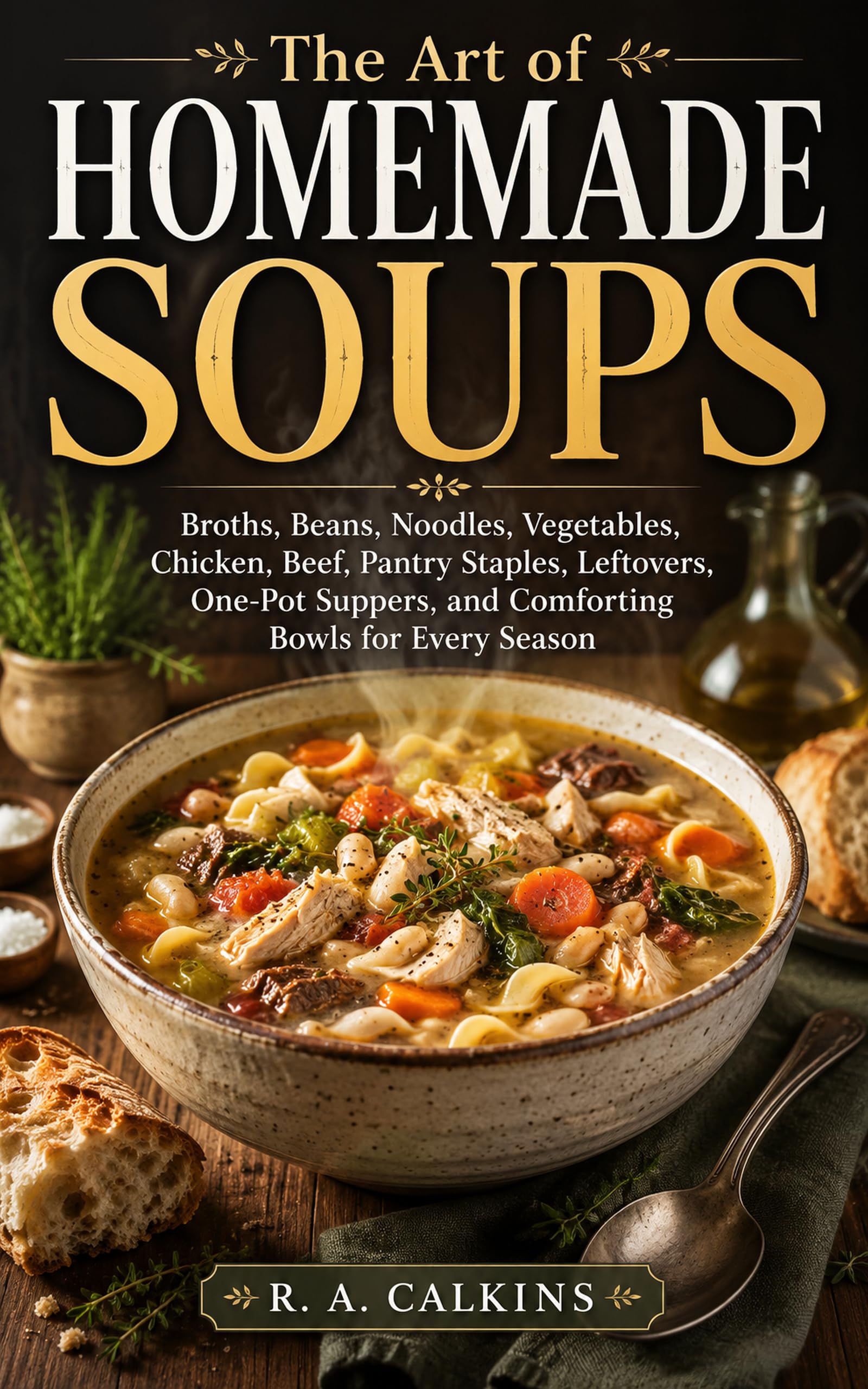
Discover how one good soup pot can turn everyday ingredients into deeply satisfying meals for every season.
The Art of Homemade Soups is a generous, practical guide to broths, beans, noodles, vegetables, chicken, beef, pantry staples, leftovers, one-pot suppers, creamy chowders, and comforting bowls made for real home kitchens. R. A. Calkins brings together dependable recipes and clear cooking judgment so home cooks can do more than follow instructions—they can understand what makes a soup rich, balanced, flavorful, and worth serving again.
This book begins with the foundations: building broth and stock, cooking aromatics properly, browning meat and vegetables, using tomato paste and spices for depth, managing salt, creating natural body, and finishing a pot with the right touch of acidity, herbs, richness, or texture. Readers learn how to recognize what a soup needs and how to correct common problems such as weak broth, tough meat, hard beans, mushy noodles, excessive salt, greasy liquid, separated dairy, or a soup that simply tastes flat.
Designed as a complete text-based kitchen companion, this book keeps every recipe, method, and useful explanation directly on the page. There are no outside PDF downloads or picture sections to interrupt the cooking experience—just substantial written guidance that is easy to keep beside the stove and follow with ordinary kitchen tools.
Inside are recipes ranging from easy weeknight soups to more developed weekend pots. You will find chicken noodle soup, turkey and wild rice soup, vegetable beef soup, beef and barley soup, ham and bean soup, split pea soup, lentil soups, black bean soups, white bean soups, sausage and kale soup, tomato soups, mushroom soups, cabbage soups, potato soups, corn chowders, seafood chowders, creamy vegetable soups, dumpling soups, rice soups, pasta soups, pantry soups, leftover-based soups, freezer-friendly bases, slow-cooker soups, pressure-cooker soups, and seasonal bowls for spring, summer, autumn, and winter.
The recipes use familiar, flexible ingredients such as onions, carrots, celery, garlic, potatoes, canned tomatoes, beans, rice, noodles, barley, chicken, turkey, beef, pork, ham, sausage, vegetables, milk, broth, herbs, and pantry seasonings. Some recipes begin with fresh ingredients. Others make excellent use of canned goods, frozen vegetables, rotisserie chicken, leftover roast meat, cooked rice, baked potatoes, ham bones, chicken carcasses, stale bread, or whatever the household already has.
This is not a book that treats economy as deprivation. It shows how a modest amount of meat can flavor many bowls, how beans and grains can stretch a meal without weakening it, how leftovers can become something new, and how broth, vegetables, and seasoning can turn simple ingredients into a complete supper.
Each chapter builds useful skills. Readers learn when to cook noodles separately, how to prevent rice and barley from absorbing the entire pot, how to thicken soup naturally with beans or potatoes, how to use dairy without curdling it, how to keep cheese smooth, how to roast vegetables for deeper flavor, how to cook dried beans properly, and how to freeze, store, reheat, and serve soup safely.
Whether you want a light vegetable bowl, a creamy chowder, a sturdy bean soup, a slow-simmered beef pot, a quick pantry meal, or a comforting chicken soup for the family table, The Art of Homemade Soups offers the recipes, structure, and practical confidence to make it well.
A good soup does more than warm the kitchen. It stretches what you have, reduces waste, feeds people generously, and turns ordinary ingredients into a meal worth gathering around.