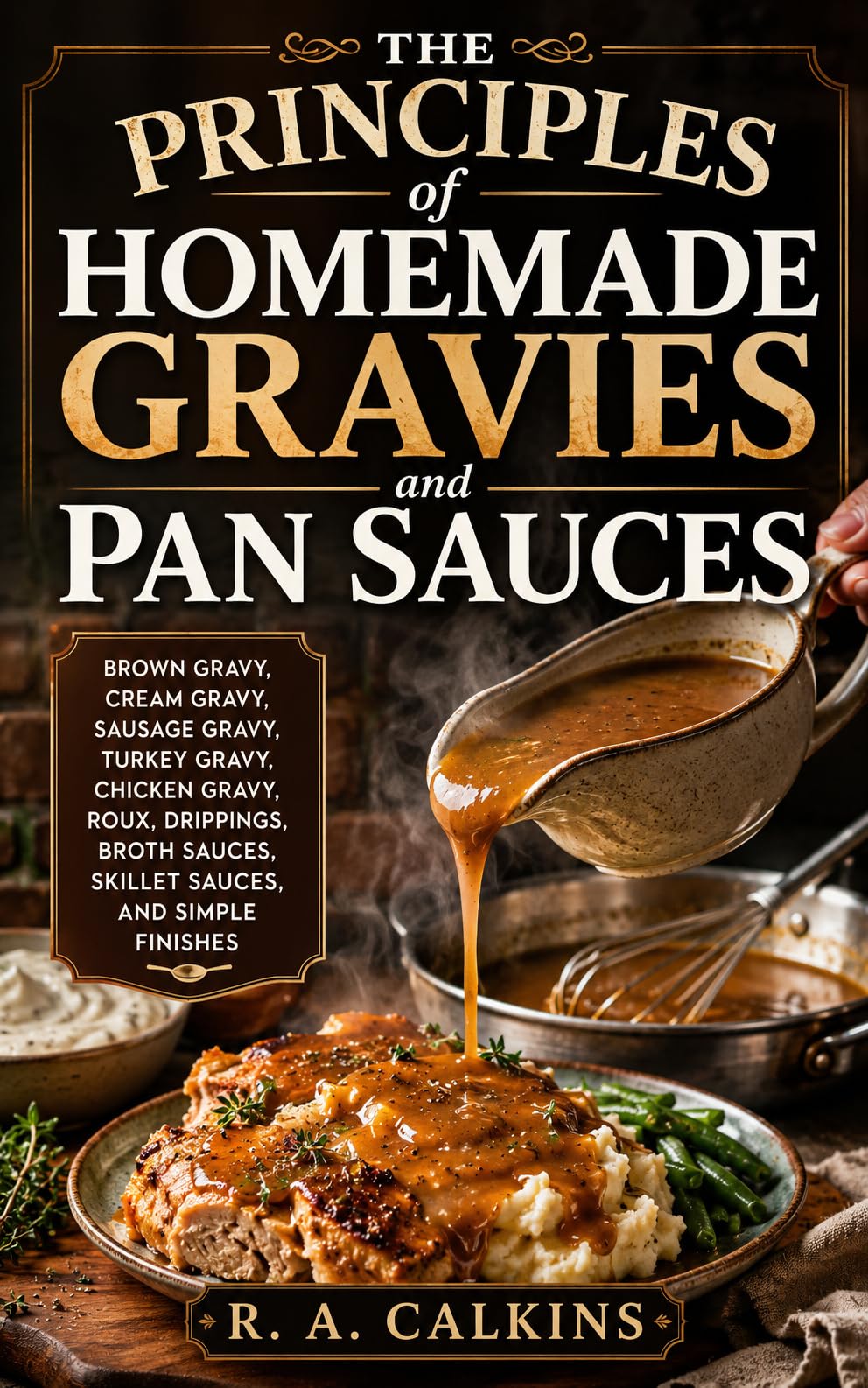
Homemade gravy is one of the most practical kitchen skills a cook can learn. It can rescue dry meat, bring leftovers back to life, stretch simple ingredients, and turn potatoes, biscuits, rice, noodles, dressing, vegetables, and roast meats into a complete, satisfying meal.
The Principles of Homemade Gravies and Pan Sauces is a clear, practical guide to understanding gravy from the ground up. Instead of treating gravy as a mysterious last-minute task, this book teaches the dependable principles behind it: fat, flour, starch, liquid, drippings, fond, broth, milk, heat, seasoning, reduction, and balance. Once those foundations are understood, a cook can stop guessing and begin making better gravies with confidence.
Inside, you will learn how to build smooth roux gravies, quick slurry gravies, cream gravies, broth sauces, skillet pan sauces, and roast-pan gravies from everyday ingredients. The book explains how to use pan drippings, browned bits, sausage fat, poultry juices, beef broth, milk, butter, onions, mushrooms, herbs, and simple pantry seasonings to create sauces that actually fit the meal in front of you.
This is a kitchen instruction book built for reading, cooking, and learning directly from the page. There are no PDF downloads or pictures included in this book, so the focus stays on clear written guidance, dependable ratios, practical recipes, and the kind of explanation that helps you understand what is happening in the pan.
The recipes range from familiar everyday gravies to more developed sauces that teach timing, flavor, and judgment. You will find brown gravy, cream gravy, sausage gravy, turkey gravy, chicken gravy, pork gravy, hamburger steak onion gravy, mushroom brown gravy, fried chicken cream gravy, roast beef pan gravy, pot roast gravy, broth gravies, leftover chicken and biscuit gravy, skillet pan sauces, lemon butter chicken sauce, onion and mushroom gravies, holiday gravies, make-ahead gravies, large-batch gravies, and practical rescue methods for gravies that turn out too salty, too thin, too thick, lumpy, greasy, bland, pasty, or scorched.
The book also teaches how to choose the right method for the meal. Some dishes need a hearty gravy that clings. Some need a lighter pan sauce that brightens the plate. Some need a creamy country gravy. Some need a savory brown sauce. Some need reduction before thickening. Some need only broth, butter, and the flavor left behind in the skillet. By learning the principles, you will know which direction to take.
Whether you are making biscuits and gravy, turkey dinner, pork chops, meatloaf, hamburger steaks, roast chicken, beef and noodles, mashed potatoes, rice plates, open-faced sandwiches, or simple leftovers, this book gives you a dependable way to think through the sauce.
The goal is not just to follow recipes. The goal is to understand gravy well enough to stand at the stove, look at the fat, flour, drippings, broth, milk, and browned bits in front of you, and know what to do next.
Warm, practical, old-fashioned, and useful, The Principles of Homemade Gravies and Pan Sauces is for home cooks who want better everyday meals without complicated methods, expensive ingredients, or unnecessary fuss. It is a guide to making simple food taste cared for, one pan at a time.