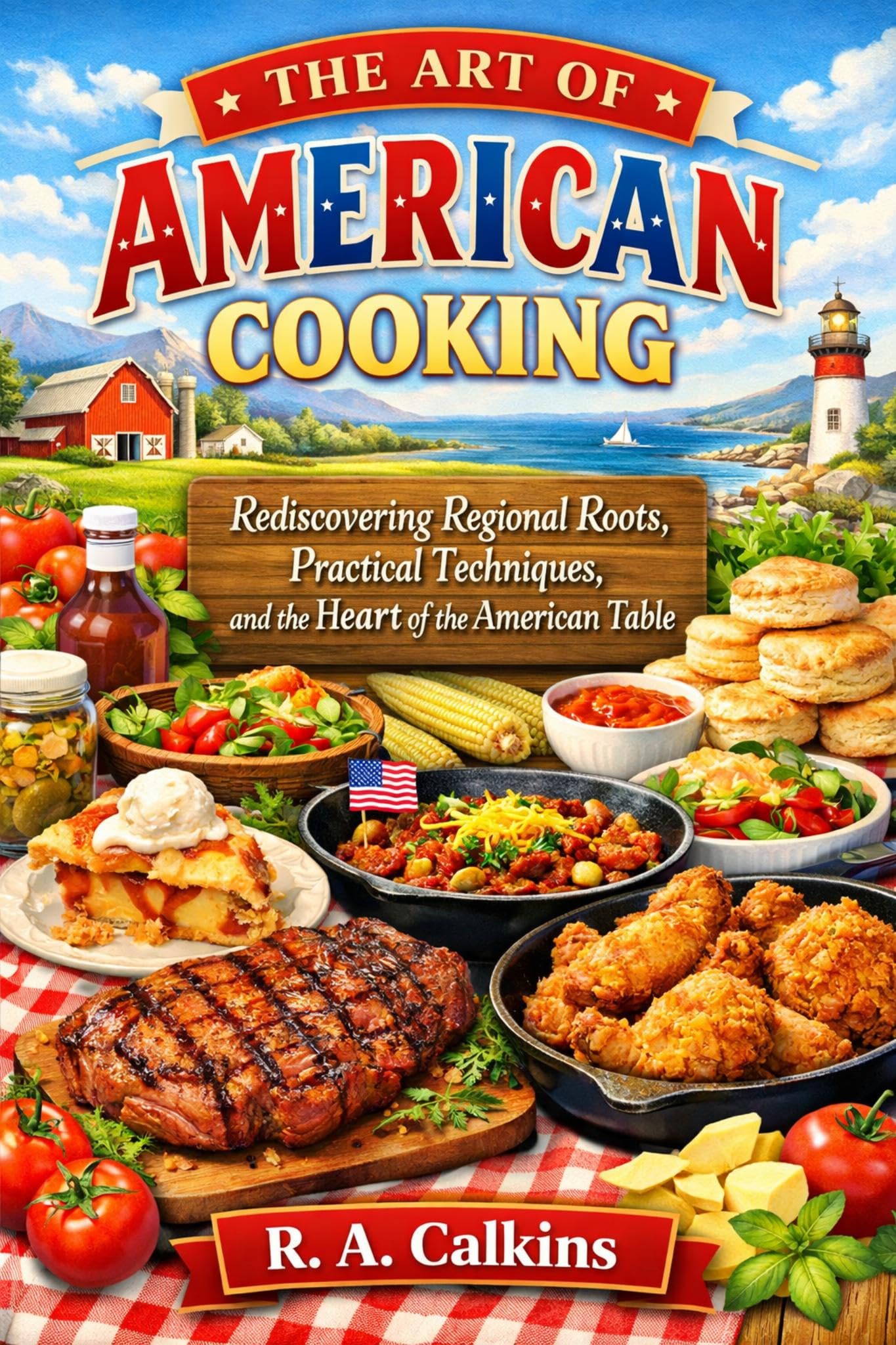
THE ART OF AMERICAN COOKING — Rediscovering Regional Roots, Practical Techniques, and the Heart of the American Table
America’s cooking is not a single style; it is a living archive of place, work, and welcome. In The Art of American Cooking R. A. Calkins gives readers a compact, workmanlike guide to those regional grammars — what to expect from New England to the Southwest, how to convert inexpensive ingredients into unforgettable meals, and the dependable techniques that turn routine cooking into reliable, generous food.
This book is written for the home cook who wants to move beyond recipes-as-instructions and instead learn the principles that make food behave: clear, repeatable techniques for roasting, braising, pan work, and preservation; foundation ratios and measures you can trust; and a pantry and tool list that turn good intentions into good food. You’ll find the practical numbers and small rules cooks actually use — a baker’s hydration anchor, the classic vinaigrette ratio, conservative brine guidelines, sensible smoking and roasting temperatures, and the simple math that prevents undersalting and waste.
Organized by region and by the technique that matters there, the book balances history and practicality. Each regional chapter explains what the table values and which staples to keep on hand; technique chapters build the skills you’ll use every week; and recipe sequences show how to assemble meals that stretch, preserve, and feed well. There’s a short but thorough butchery primer, clear directions for stocks and sauces, a chapter on preserving and canning for households who want to keep the harvest, and troubleshooting tips that get you out of common pitfalls without drama.
The Art of American Cooking refuses nostalgia when it hinders usefulness and refuses novelty when it distracts from the work. Instead it promises competency — the steady, calm ability to feed family and friends with economy and taste. The approach is plainspoken, exact where it must be, and generous where it counts: menus, timing guides, batch-cooking strategies, and short planning checklists that let you cook on purpose.
If you want to understand why a long, slow smoke works, how to make a simple pantry sing, and how to cook so that leftovers become assets rather than afterthoughts, this book is for you. Read it at the stove, in the market, and at the planning table — it’s a cookbook built around how Americans actually cook and how they feed one another with skill, thrift, and hospitality.