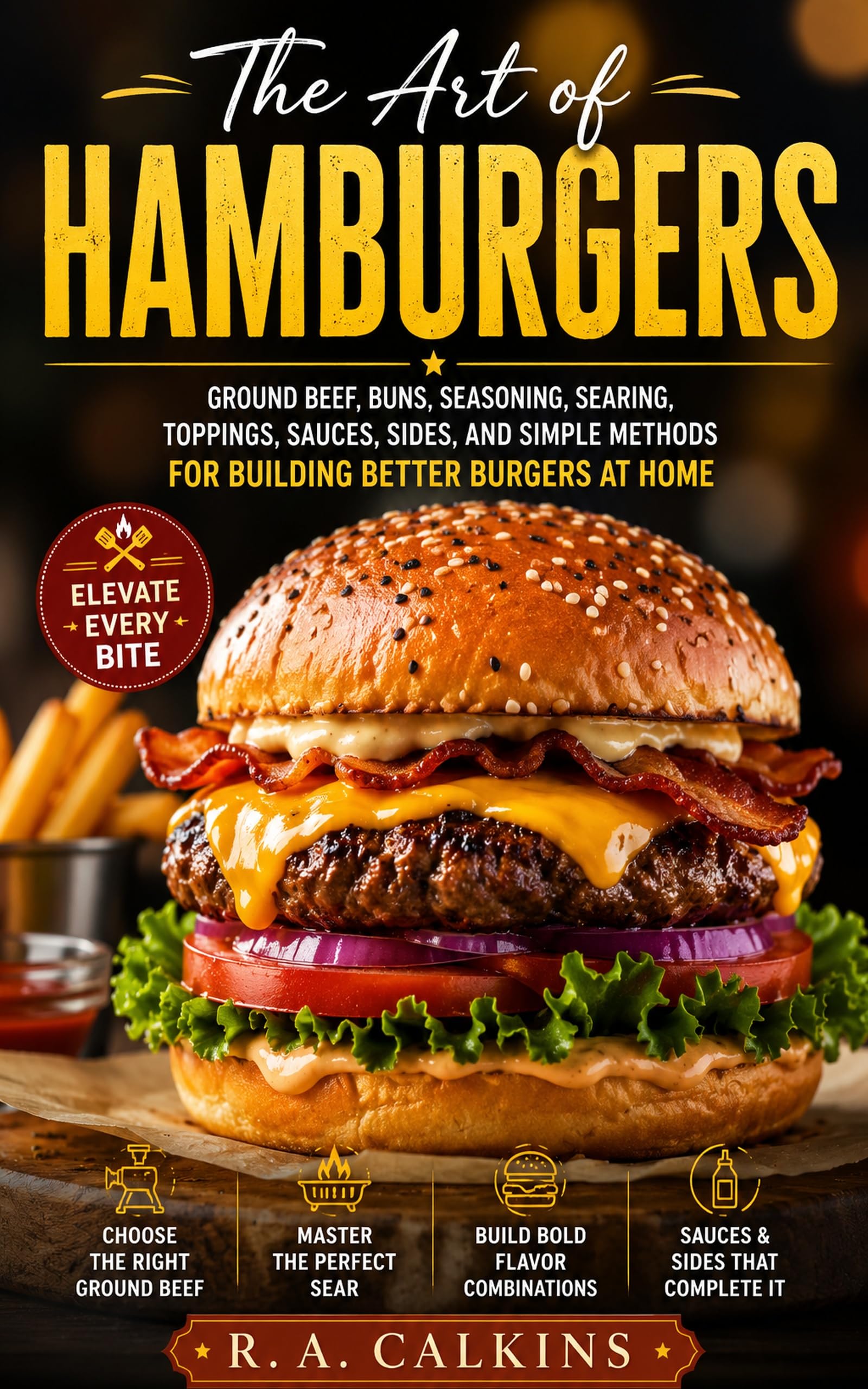
The Art of Hamburgers is a practical, plainspoken guide to making better burgers at home—without unnecessary fuss, complicated chef talk, or hard-to-find ingredients.
This is a text-based cooking guide designed to explain the craft clearly. It does not include PDF downloads, bonus picture files, or photo sections; instead, it focuses fully on teaching the reader how to understand and build a better hamburger from the inside out.
A hamburger may look simple, but a great one depends on dozens of small choices: the beef, the fat content, the way the patty is shaped, when the salt is added, how hot the pan or grill should be, when to melt the cheese, how to toast the bun, which toppings actually help, and how to keep the whole burger balanced from the first bite to the last.
In this book, R. A. Calkins walks through the hamburger with careful attention and common sense. The goal is not to make burgers complicated. The goal is to make them better.
Inside, readers will learn how to:
Choose ground beef that fits the burger being made
Understand fat content, grind, texture, and handling
Shape patties without making them dense or tough
Season burgers properly without overpowering the beef
Cook thin burgers, thick burgers, smash burgers, grilled burgers, and patty melts
Build better crust with the right heat and cooking surface
Melt cheese at the right time and choose cheese that belongs
Pick buns that hold together and improve the bite
Use onions, pickles, lettuce, tomato, bacon, mushrooms, chiles, and other toppings with purpose
Control sauce, moisture, richness, acid, and crunch
Serve safe, satisfying burgers for family, guests, children, and crowds
Build everyday burgers, special burgers, house burgers, and simple no-fuss burgers
Avoid common mistakes that lead to dry patties, soggy buns, weak crust, heavy toppings, or confused flavors
This book treats the hamburger as common food worth doing well. It explains why a soft bun may be better than a fancy roll, why pickles and onions matter more than many people realize, why two thin patties can sometimes beat one thick one, why a burger should be built for the hand and mouth instead of just appearance, and why the best burger is not always the biggest or most loaded.
Whether the reader cooks in a skillet, on a griddle, over charcoal, on a gas grill, or on an outdoor flat-top, the principles remain the same: good beef, gentle handling, proper salt, real heat, a toasted bun, toppings that belong, sauce with restraint, and prompt serving.
The Art of Hamburgers is for home cooks who want dependable results. It is for anyone who has made dry burgers, greasy burgers, bland burgers, messy burgers, or burgers that looked good but did not eat well. It is also for readers who already love burgers and want to understand them more clearly.
From the everyday cheeseburger to the double smash burger, from the backyard cookout burger to the mushroom Swiss burger, from the green chile cheeseburger to the patty melt, this book gives readers a complete foundation for building burgers with confidence.
A better hamburger does not require excess.
It requires attention.
And once the reader understands what each part is doing, the next burger can be better than the last.