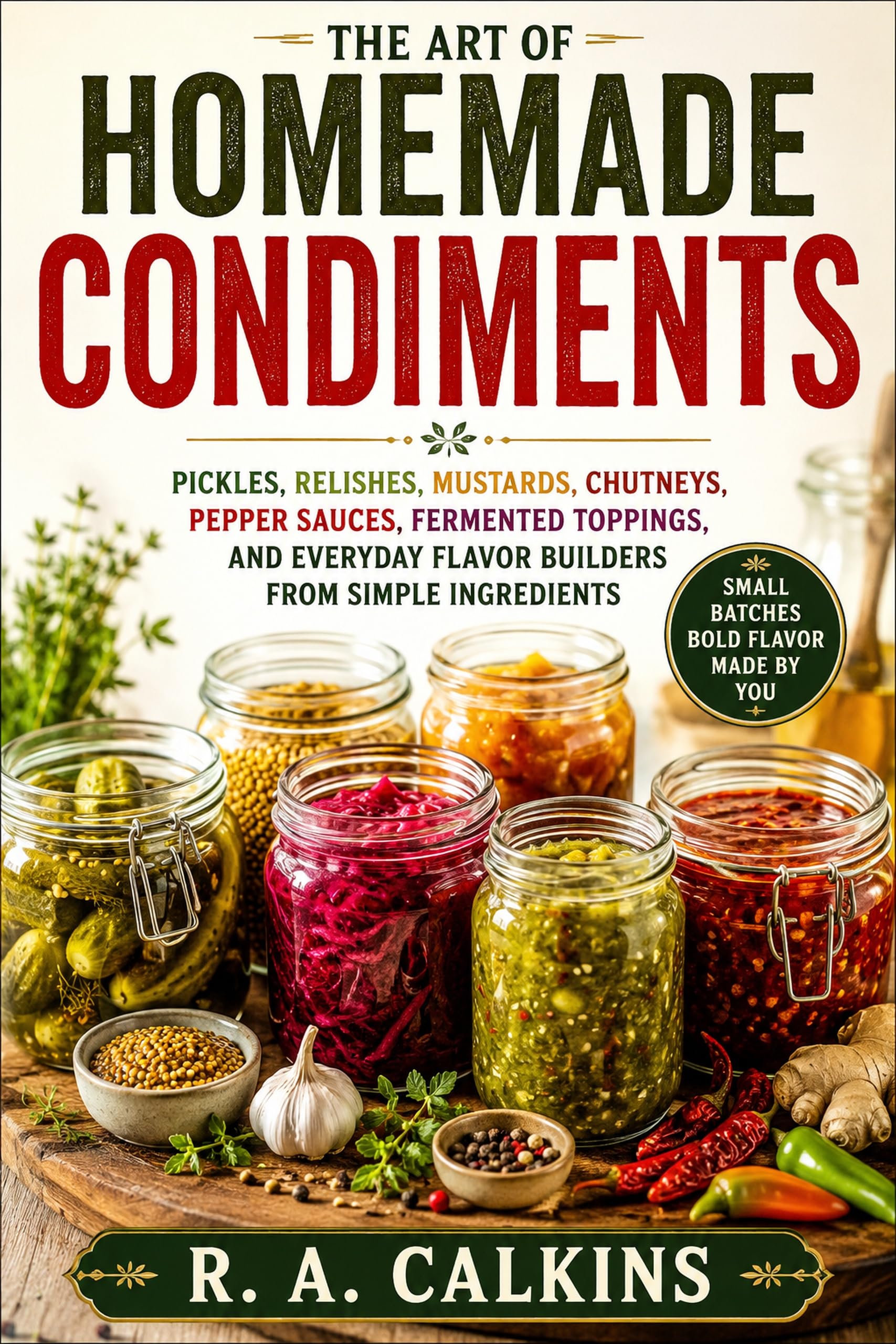
Homemade condiments are small in quantity, but they can change the whole meal.
The Art of Homemade Condiments is a practical kitchen guide for cooks who want brighter plates, better sandwiches, livelier beans, sharper eggs, richer roasted meats, and more satisfying everyday food—without depending on complicated methods or expensive specialty ingredients. With vinegar, salt, sugar, mustard, spices, onions, garlic, peppers, seasonal produce, and clean jars, a cook can build a working pantry of flavor one small batch at a time.
This book walks through the useful world of pickles, relishes, mustards, chutneys, pepper sauces, fermented toppings, fresh spoonable condiments, and everyday flavor builders. Instead of treating condiments as afterthoughts, it shows how they supply what a meal may be missing: acid when food tastes dull, salt when it tastes flat, sweetness when sharpness needs rounding, heat when richness needs pressure, crunch when softness becomes monotonous, and savor when inexpensive ingredients need depth.
Designed as a clear, text-first kitchen book, everything needed is carried in the recipes, explanations, measurements, methods, and practical guidance on the page. There are no picture sections, separate PDF downloads, or required visual extras; the focus stays on clear instruction, simple ingredients, safe handling, and dependable flavor.
Inside, readers will find many practical recipes and flexible patterns, including quick pickled red onions, everyday cucumber refrigerator pickles, sweet pepper relish, apple onion chutney, whole-grain refrigerator mustard, pepper vinegar, fresh cucumber scallion relish, carrot jalapeño quick pickles, tomato sandwich relish, refrigerator pickle brines, fermented toppings, pantry condiments, seasonal combinations, and more. These are the kinds of preparations that help ordinary meals feel more finished: a spoonful beside beans, a few pickled onions over eggs, a bright relish on a sandwich, mustard stirred into a sauce, chutney with roasted meat, or pepper vinegar over greens.
The book also teaches the structure behind each condiment so cooks can understand what they are doing rather than simply follow instructions. A pickle is built from vegetable, acid, salt, sometimes sugar, and time. A relish depends on chopped ingredients, seasoning, moisture control, and balance. Mustard improves with liquid, salt, acid, and rest. Chutney brings fruit or vegetables together with vinegar, sweetness, spice, and cooking. Fermented toppings require salt, cleanliness, submersion, and patient observation.
Safety and honesty are part of the instruction. This is not a book that pretends every homemade jar is shelf-stable. It explains the difference between refrigerator condiments, fresh condiments, fermented foods, cooked condiments, and canning, while encouraging careful storage, clean handling, and common-sense judgment. The goal is food that is useful, flavorful, and dependable.
The Art of Homemade Condiments is for the practical cook, the frugal cook, the curious beginner, the gardener with extra vegetables, the pantry-minded home cook, and anyone who wants to make plain food more complete. It is not about making the kitchen fussy. It is about learning how one small jar can bring balance, contrast, and purpose to the food already on the table.