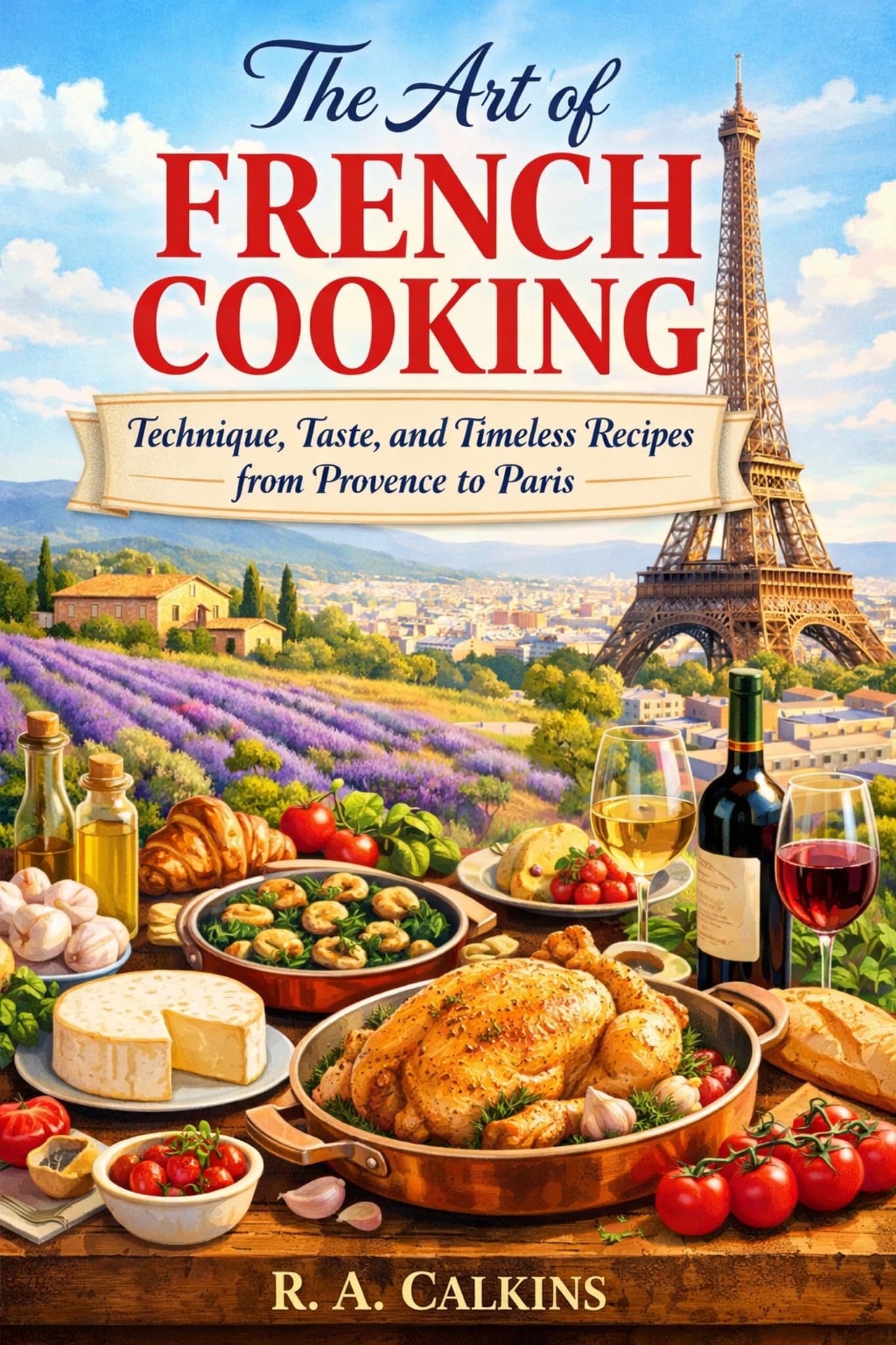
The Art of French Cooking — Technique, Taste, and Timeless Recipes from Province to Paris
R. A. Calkins
Master the grammar of French cooking and turn everyday ingredients into reliably excellent meals. This is not a catalog of fussy recipes; it is a clear, practical manual that teaches the repeatable rules, numbers, and gestures that make French technique portable to a home kitchen. You’ll learn how stocks, roux, and the five mother sauces work as a compact vocabulary; how heat, seasoning, and mise en place turn scattered steps into dependable outcomes; and which precise temperatures, timings, and equipment choices remove guesswork from searing, braising, and baking.
The book begins with foundations you can use at once: canonical ratios, thermometer targets, and the household toolset that makes technique teachable (recommended knife sizes, sauté pan dimensions, Dutch-oven volumes, and simple pastry and baking tools). Each technical point is paired with practical numbers — egg timings, sear windows, oven roasting temperatures, and internal doneness targets — so you learn by doing rather than by hopeful imitation. The emphasis is always on reproducible results: how to build a stock that carries a sauce, the roux math for a dependable velouté or béchamel, and the steady emulsion that yields a stable hollandaise.
Technique leads to dishes. The book moves from the technical heart of French cooking into regional practice, translating province flavors into accessible weeknight and entertaining recipes. Normandy’s butter-and-cider logic, Burgundy’s pan sauces and braises, Provence’s olive-oil and herb clarity, Lyon’s charcuterie and bistro repertoire, Alsace’s cream-and-smoked-meat tradition, and the smoky, peppered notes of the Basque coast are all given in a home-friendly form: what to keep on the pantry shelf, what to buy fresh, and how to make pragmatic substitutions that preserve spirit without requiring pro equipment. Throughout, the text teaches sequencing: seasoning in layers, finishing with acid or fat, and the small gestures that lift a plate.
If you want a concise technique reference, a sensible weeknight repertoire, or a confident framework for entertaining, this book is built for you. It is part workshop and part regional travelogue — a book that shows you how to think like a French cook: to respect the ingredient, to trust temperature and timing, and to fold reliable technique into the quiet generosity of the table. Read it at the workbench, practice the core numbers, and watch familiar recipes become repeatable, deliberate, and excellent.