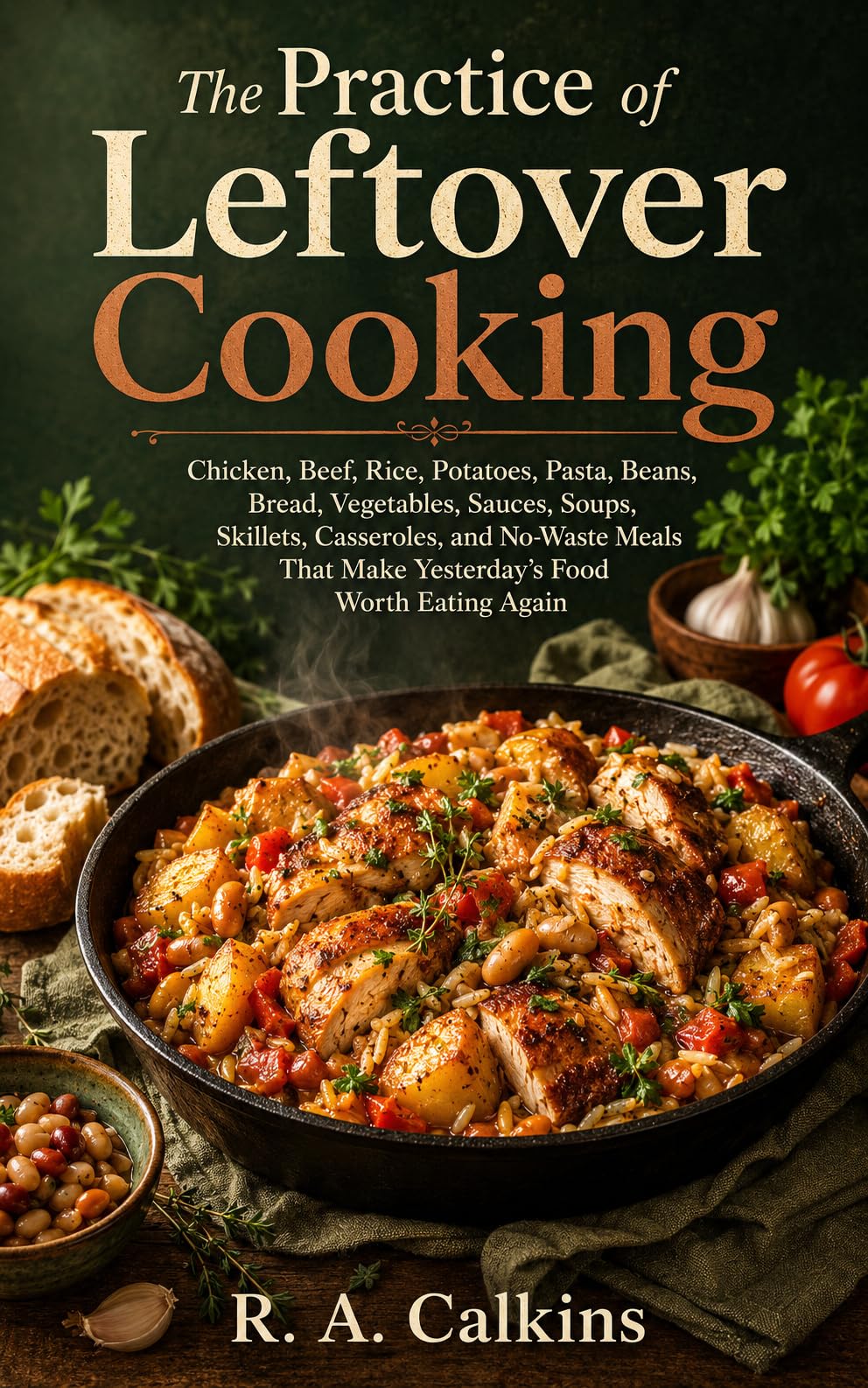
Yesterday’s roast chicken, cooked rice, mashed potatoes, pasta, beans, vegetables, bread, gravy, and sauces are not merely remains from another meal. In a capable kitchen, they are prepared ingredients waiting for a new purpose.
The Practice of Leftover Cooking is a practical, substantial guide to turning yesterday’s food into satisfying meals that feel newly made. R. A. Calkins shows how to evaluate what remains, restore moisture and texture, balance seasoning, choose compatible ingredients, and decide whether a leftover should be reheated, transformed, frozen, or discarded. Instead of offering a short collection of predictable reheating ideas, this book teaches the working principles that help ordinary cooks make better decisions with the food already in their refrigerators.
Readers will learn how cooked chicken and turkey can become skillets, soups, pasta dishes, croquettes, sandwich fillings, and savory pies; how beef and pork can be renewed with gravy, mushrooms, onions, potatoes, beans, rice, and noodles; and how small amounts of meat can flavor complete family meals without needing to dominate the plate.
Designed as a self-contained kitchen companion, the book relies on clear written guidance rather than PDF downloads or pictures. Detailed descriptions of texture, moisture, heat, timing, binding, browning, and doneness allow the instructions to remain useful right beside the stove.
The recipes range from approachable everyday meals to more developed home-kitchen projects. Each is assigned an experience level on a ten-point scale, allowing readers to choose according to their time and confidence. The collection includes creamy chicken, mushroom, and spinach pasta; turkey, stuffing, and vegetable croquettes; roast beef and mushroom noodles; chicken fried rice; beef and bean rice skillets; crisp mashed potato cakes; potato dumplings; pasta gratins; bean-and-lentil patties; cornbread dressing; vegetable fritters; rebuilt gravies; chowders; stuffed peppers; biscuit-topped skillet pies; layered tortilla casseroles; breakfast hashes; freezer-ready pot-pie filling; and a complete refrigerator-supper formula.
Beyond the individual recipes, readers will discover how to rescue dry rice, loosen stiff pasta, give soft vegetables a useful new form, turn stale bread into crumbs or custard-based dishes, extend a small amount of gravy, use bean liquid intelligently, and build soups without creating a confused mixture. Separate chapters cover chicken and turkey, beef and pork, rice, potatoes, pasta, beans and lentils, breads, vegetables, sauces and cooking juices, soups, skillets, casseroles, savory pies, breakfasts, lunches, freezing, portioning, and meal planning.
This is no-waste cooking grounded in judgment rather than guilt. The book explains when saving food is sensible, when freezing is the better choice, and when questionable food must be discarded. It also shows how fresh onions, peppers, herbs, mustard, lemon, vinegar, crisp crumbs, or a newly made sauce can give a second meal its own aroma, contrast, and character.
Whether cooking for one, feeding a family, stretching a grocery budget, or simply trying to stop useful food from disappearing at the back of the refrigerator, The Practice of Leftover Cooking offers a dependable system for making what remains worth anticipating.
Cook once. Preserve what is good. Give every useful ingredient a clear role. Then turn yesterday’s food into today’s satisfying meal.