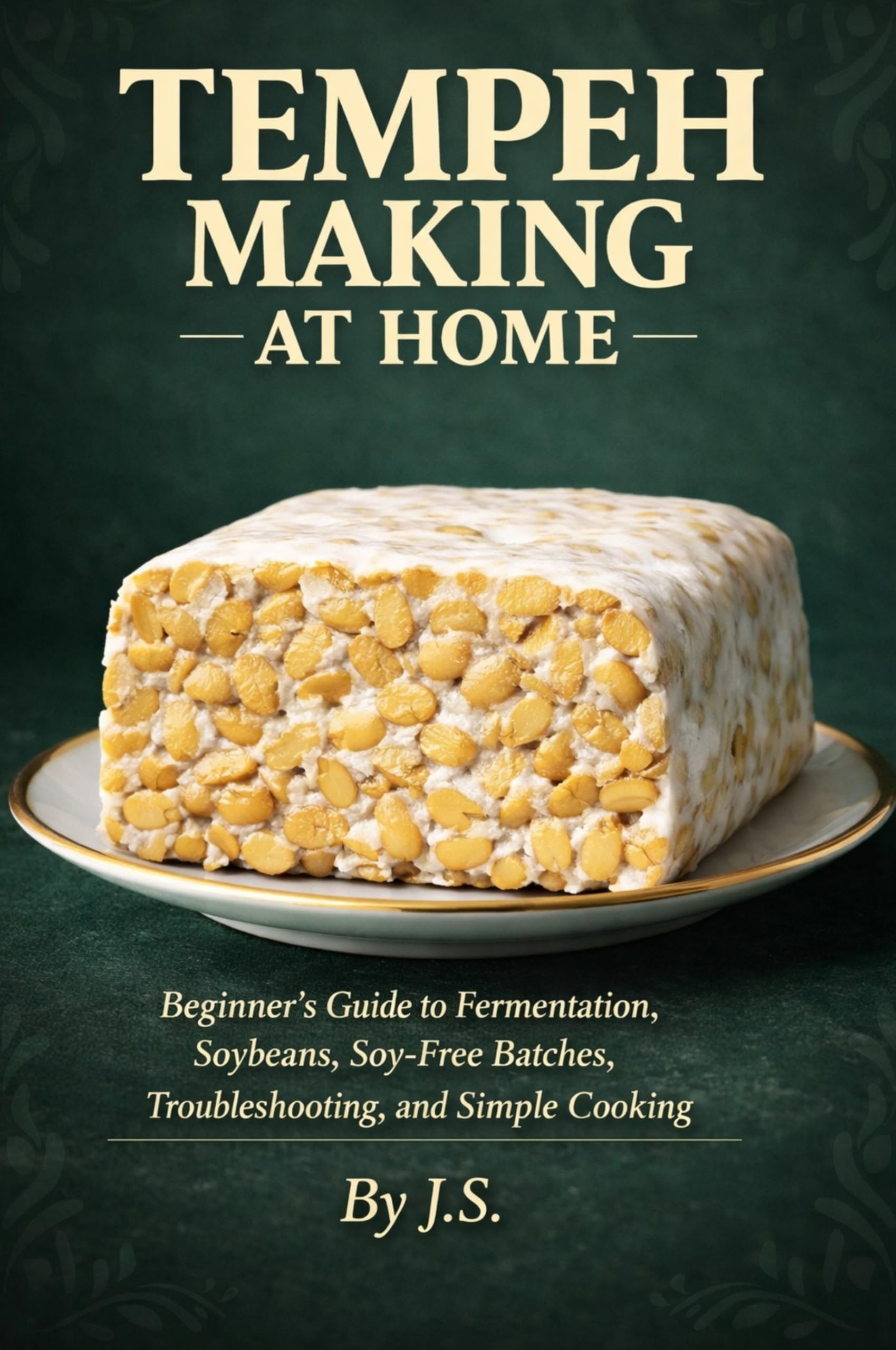
Skip the confusion and learn to make tempeh with a method that actually makes sense.
Tempeh Making at Home is a practical beginner’s guide for anyone who wants to make firm, flavorful tempeh without expensive equipment, vague instructions, or unnecessary filler. Whether you are starting with classic soybeans or want to explore soy-free batches later, this book walks you through the full process in a clear, usable way.
Instead of overwhelming you with broad fermentation theory or recipe-heavy padding, this book stays focused on what matters most: getting a successful batch, understanding why it worked, and knowing how to fix it when it does not.
Inside, you will learn how to:
• choose the right beans for better results
• prepare soybeans correctly for fermentation
• use tempeh starter with more confidence
• manage moisture, airflow, warmth, and batch thickness
• recognize healthy growth and know when a batch is ready
• troubleshoot weak binding, patchy growth, overheating, and off results
• store homemade tempeh properly
• cook it in simple ways that make the texture and flavor worth the effort
• move beyond soybeans into chickpeas, black beans, mixed legumes, and soy-free options
This book is especially useful for:
• first-time tempeh makers
• home cooks who want a step-by-step method
• readers looking for a tempeh-specific guide instead of a broad fermentation reference
• plant-based cooks who want a versatile ingredient they can make themselves
• anyone tired of guessing why one batch works and another does not
What makes this guide different is its focus on repeatable results.
You will not just learn the steps. You will learn how to think through the process: how the beans should feel before inoculating, why surface dryness matters, how airflow affects fermentation, what healthy development looks like, and when a batch is truly finished. That makes this book useful not only for your first batch, but for your second, fifth, and tenth.
If you have tried homemade tempeh before and ended up with wet beans, weak binding, uneven growth, or uncertainty about whether the batch was ready, this guide helps you identify the likely cause and improve the next attempt. If you are completely new to tempeh, it gives you a cleaner path from the start.
The goal is simple: help you make homemade tempeh that is firm, trustworthy, and worth cooking.
If you want a practical, beginner-friendly tempeh book focused on fermentation basics, soy and soy-free batches, troubleshooting, and everyday use, this is the guide built for that job.
Make your first batch with more clarity-and every batch after that with more confidence.