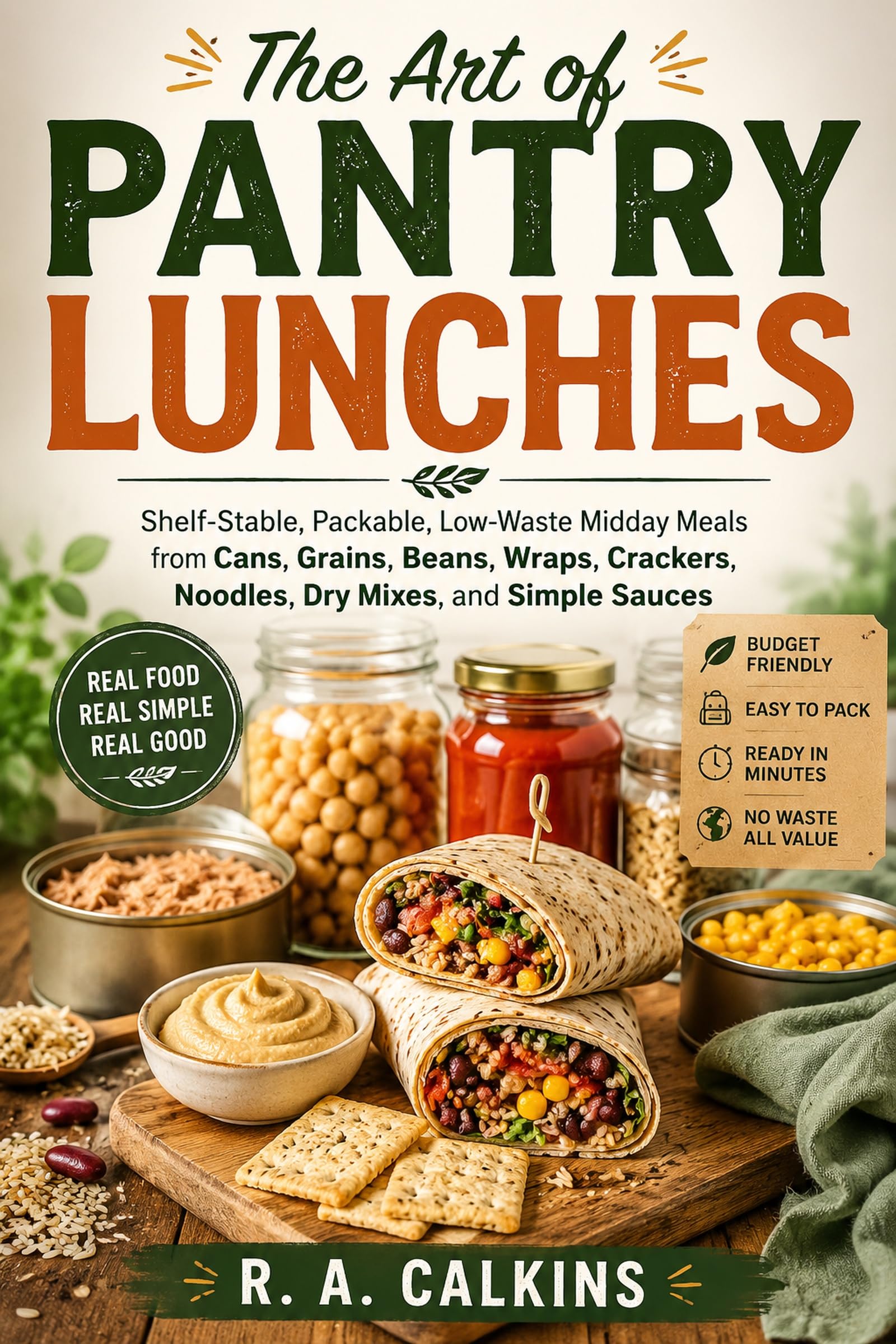
The Art of Pantry Lunches is a practical, text-based guide to making dependable midday meals from the foods many households already keep on hand: cans, grains, beans, wraps, crackers, noodles, dry mixes, pouches, jars, simple sauces, and shelf-stable staples.
This is not a picture book, and it does not require extra PDF downloads. There are no photo sections, no separate files to chase, and no outside worksheets needed to use the book. Everything is carried in the words, recipes, patterns, rotations, lunch-building methods, packing guidance, and pantry systems on the page.
Lunch is often the meal that causes the most trouble. It gets skipped, bought in a hurry, repeated until everyone is tired of it, or assembled from whatever happens to be closest. This book treats lunch as real cooking, even when the ingredients begin on the shelf. A can of beans, a pouch of tuna, a cup of rice, a sleeve of crackers, a tortilla, a noodle packet, a jar of salsa, or a spoonful of peanut butter can become a useful meal when it has structure.
The central method is simple:
base, protein, sauce, contrast, finish.
From that pattern, the book builds bowls, wraps, cracker plates, bean salads, pasta salads, rice salads, noodle cups, soup cups, thermos meals, hot-water lunches, desk-drawer kits, cold lunches, low-waste lunches, fast lunches, budget lunches, and pantry rotations.
The recipes include beginner, intermediate, and advanced pantry lunches. Some are intentionally simple because real lunch often has to be made while a person is busy, tired, short on time, or working from what is already in the cabinet. Others go deeper, teaching dry mix lunch kits, shelf-stable meal starters, sauce systems, low-waste planning, thermos packing, hot-water meals, lunch rotations, pantry prep, and ways to turn repeated ingredients into different meals.
Inside, you will find recipes and methods using:
rice, pasta, couscous, oats, instant potatoes, noodles, tortillas, crackers, crispbreads, tuna, salmon, sardines, canned chicken, beans, lentils, chickpeas, peanut butter, tomato sauce, salsa, mustard, oil and vinegar, bouillon, pickles, olives, roasted peppers, corn, dried fruit, seeds, nuts, and simple seasonings.
You will also find practical lunch forms such as tuna cracker boxes, salsa rice and bean bowls, lemon chickpea spreads, couscous cups, tomato white bean pasta, black bean wraps, peanut noodles, chicken potato bowls, lentil tomato thermos lunches, cold pantry salads, desk-drawer backup kits, dry couscous jars, budget rotations, family lunch cores, and fast five-minute lunches.
This book is especially useful for readers who want lunches that are:
affordable enough to repeat,
easy enough for real weekdays,
packable for work, school, travel, or home,
flexible enough for different eaters,
built from shelf-stable and long-keeping foods,
low-waste without being complicated,
and varied without requiring constant shopping.
The book also covers the parts that make pantry lunch work in real life: how to keep crackers from getting soggy, how to pack wet and dry ingredients, how to use half cans and open jars, how to rotate a lunch shelf, how to build no-microwave meals, how to use hot water, how to plan desk-drawer lunches, how to stretch proteins, how to fix meals that are dry or bland, and how to choose the right lunch for the place where it will be eaten.
The Art of Pantry Lunches is for the cook who wants the pantry to do more than sit on a shelf. It is for households that want lunch to be simpler, steadier, less wasteful, and more dependable.
The goal is not fancy lunch.
The goal is useful lunch.
A pantry that moves is a pantry that feeds.