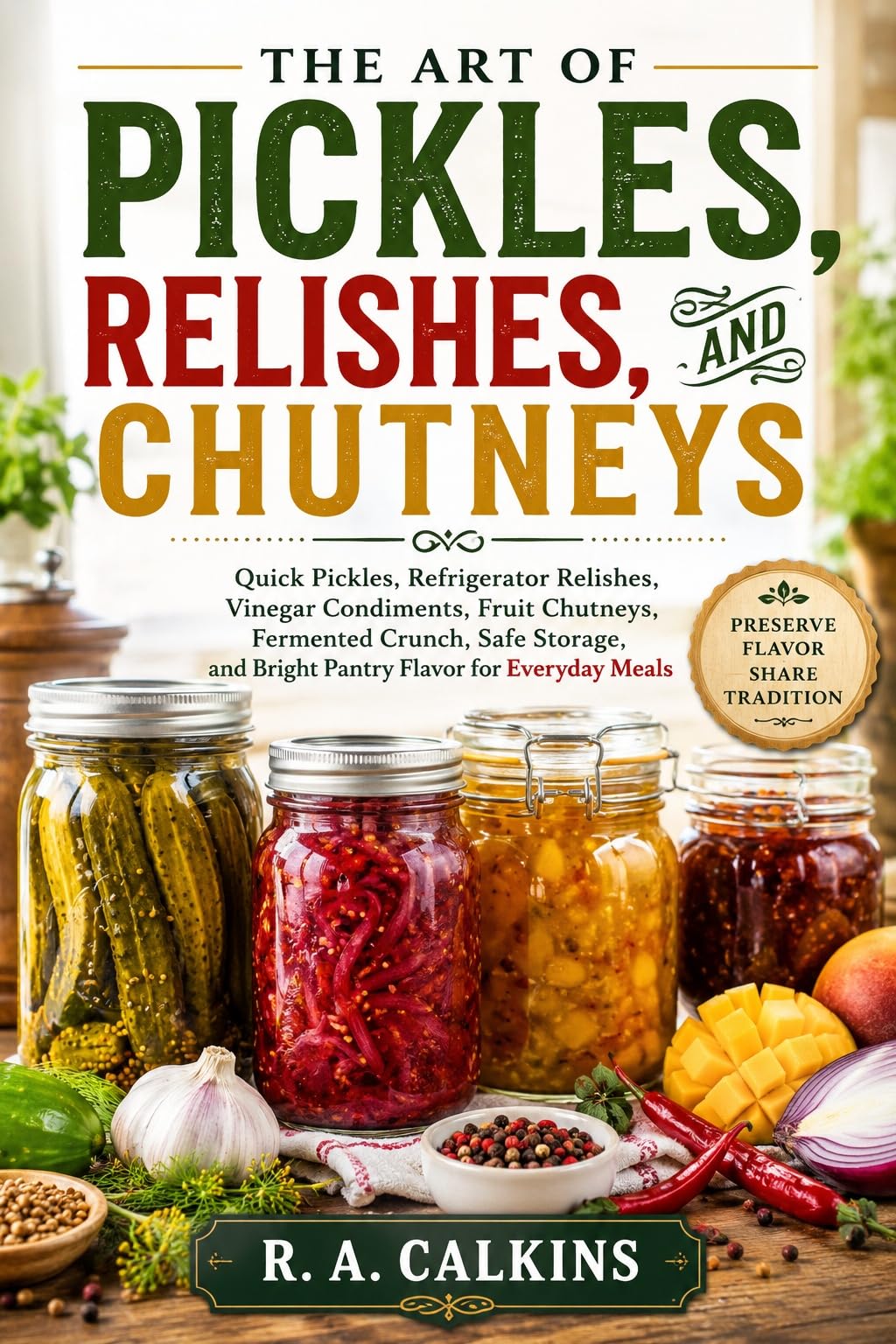
The Art of Pickles, Relishes, and Chutneys is a practical cookbook for anyone who wants to bring brighter, sharper, more useful flavor to everyday meals. Instead of focusing on complicated equipment or picture-driven presentation, this book teaches the reader how to make dependable jars that improve the food already on the table: quick pickles for sandwiches and bowls, refrigerator relishes for beans and burgers, fruit chutneys for roasted meats and vegetables, vinegar condiments for greens and potatoes, and fermented crunch for depth, texture, and tang.
This book is designed for real kitchens. There are no outside PDF downloads to chase, no picture sections required to understand the recipes, and no hidden extras needed before the reader can begin. The focus is clear instruction, useful technique, safe storage, and recipes that can be made with ordinary tools: a knife, cutting board, saucepan, clean jars, vinegar, salt, sugar, spices, produce, and careful attention.
Inside, readers will find a wide range of recipes, from simple beginner-friendly jars to more involved preparations that build confidence over time. Some recipes can be made quickly and used the same day, such as pickled red onions, radish-lime quick pickles, cucumber relish, onion vinegar, or fresh tomato-cucumber relish. Others ask for more time and judgment, such as cooked fruit chutneys, green tomato relish, fermented cucumber spears, cabbage ferments, pepper vinegars, and layered seasonal condiments. The variety is intentional. A useful kitchen needs both common household staples and more distinctive jars that keep cooking interesting.
The book also makes an important safety distinction throughout: not every jar is shelf-stable. Many recipes are refrigerator recipes and should be kept cold. Fresh relishes, quick pickles, cooked chutneys, vinegar condiments, and ferments each have their own storage needs. The book explains labeling, use-by dates, clean utensils, refrigeration, signs of spoilage, and the difference between refrigerator storage and tested shelf-stable canning. Readers who want pantry-stable canned goods are reminded to use tested canning formulas, proper acidity, jar preparation, headspace, and correct processing guidance. This clear boundary helps the cook enjoy creative small-batch jars without pretending that every homemade condiment belongs on a pantry shelf.
Beyond the recipes, this book teaches the reader how to think about flavor. A bright jar should solve a meal problem. If food is too rich, add acid. If it is too soft, add crunch. If it is too bland, add salt, spice, or vinegar. If it is too dry, add a spoonable relish or chutney. If leftovers feel repetitive, add a new direction with pickled onions, corn relish, apple chutney, pepper vinegar, or fermented cabbage. The book shows how to use these jars with sandwiches, eggs, potatoes, beans, rice bowls, roasted meats, salads, soups, snack plates, and simple weeknight meals.
Readers will also learn how to design their own refrigerator pickles, relishes, chutneys, and vinegar condiments with good judgment. The book explains brine balance, vinegar choice, salt, sugar, spice, texture, cut size, draining, simmering, fermenting, troubleshooting, seasonal planning, and refrigerator organization. By the end, the cook is not only following recipes but understanding why they work.
The Art of Pickles, Relishes, and Chutneys is for readers who want practical flavor within reach: a jar of crisp cucumber chips for sandwiches, a spoonful of green tomato relish for beans, a cranberry chutney for turkey, a pepper vinegar for greens, a carrot ferment for lunch plates, or a quick pickle for whatever vegetables need using. It is a book about small jars with real purpose—bright, sharp, useful condiments that make everyday meals taste more complete.