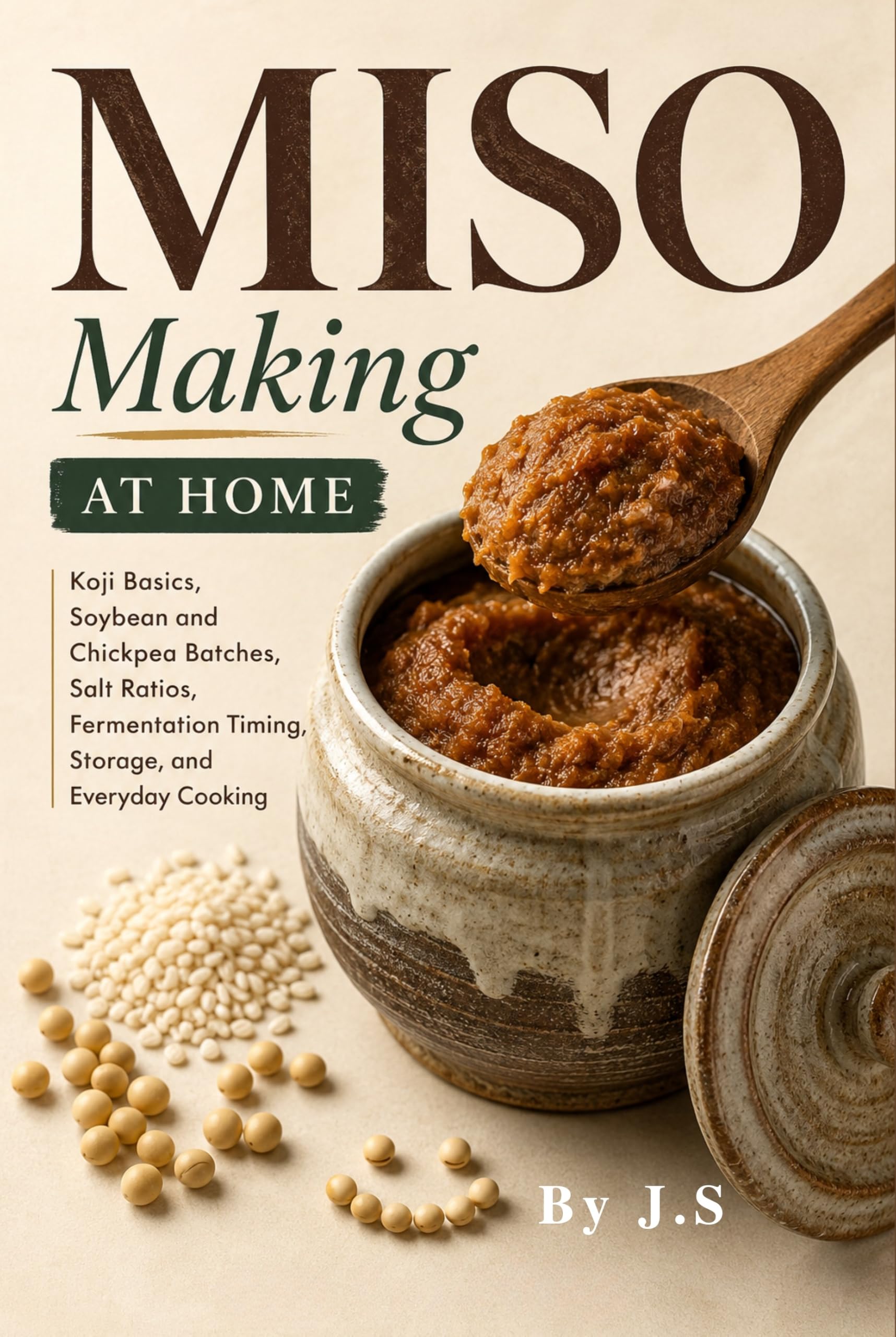
Make miso at home with a process you can understand, repeat, and adjust with confidence.
Miso looks simple beans, koji, salt, moisture, and time but the results depend oans be? Which koji should you use? How is salt calculated? What should the paste feel like before packing? Which surface changes are normal, and which ones mean the batch should be checked or discarded?
Miso Making at Home gives beginners a practical path from choosing ingredients to openinto copy a recipe without understanding it, this guide explains what each ingredient does, what to notice at every stage, and how to make sound decisions when a batch develops differently than expected.
Inside, you will learn how to:
• Understand the roles of beans, koji, salt, moisture, and aging time
• Choose rice, barley, fresh, or dried koji for the formula you are following
• Prepare soybeans and chickpeas until they mash evenly without hard centers
• Calculate ingredient proportions and keep salt ratios consistent when scaling
• Adjust a dry mixture carefully without turning it into a loose paste
• Pack miso firmly, reduce trapped air, and fit the surface cover correctly
• Choose an aging location and manage seasonal temperature changes
• Compare mild, balanced, koji-rich, bean-forward, and longer-aged styles
• Make practical soybean, chickpea, rice-koji, barley-koji, blended-grain, and small-batch variations
• Recognize gradual darkening, softening, grain texture, surface liquid, and other expected changes
• Respond to cracks, shifted covers, uneven color, strong aromas, moisture errors, and stalled development
• Know when to continue aging, seek qualified guidance, or discard a questionable batch
• Harvest, portion, refrigerate, freeze, label, and handle finished miso cleanly
• Use homemade miso in soups, dressings, dips, sauces, marinades, glazes, vegetables, grains, noodles, eggs, and everyday meals
The instructions focus on practical judgment. You will learn how properly cooked beans should crush, how a packable mixture should hold together, how to check the vessel before filling it, and how to evaluate aroma, flavor, texture, and surface condition together rather than relying on color alone.
Three core batch styles help you understand how proportions shape the finished paste. Balanced formulas provide a versatile starting point. Koji-rich batches lean milder and more aromatic. Bean-forward versions develop a fuller legume character. Separate chapters cover soybean miso, chickpea miso, grain variations, and smaller quantities that are easier to mix, pack, compare, and store.
Troubleshooting is built into the process rather than saved for the moment something goes wrong. Clear stop points explain why random additions of water, salt, beans, or koji can make an uncertain batch harder to evaluate. Careful guidance also addresses vessel damage, unidentified growth, contamination, pressure, allergen uncertainty, and other situations where guessing is not appropriate.
Once the miso is ready, the book shows how to harvest it without unnecessary exposure, choose storage containers, keep part of a batch aging, manage rustic or smooth textures, and protect the paste during regular use. The final cooking chapter helps you match mild or strong miso to the dish, dissolve it smoothly, control salt, prevent scorching, and correct common seasoning mistakes.
This book is designed for curious home cooks, first-time fermenters, pantry-project enthusiasts, and anyone who wants a focused guide to homemade miso rather than a broad fermentation collection that gives the subject only a few pages.
Begin with a manageable batch. Follow the weights. Notice the texture. Keep clear notes. With a dependable process, miso becomes less mysterious and far more practical.